You are on our International website. Please select your region to see content specific for your location





 Profile
 Orders
 Wishlist
 Change Password
 Logout


LATEST BLOGS
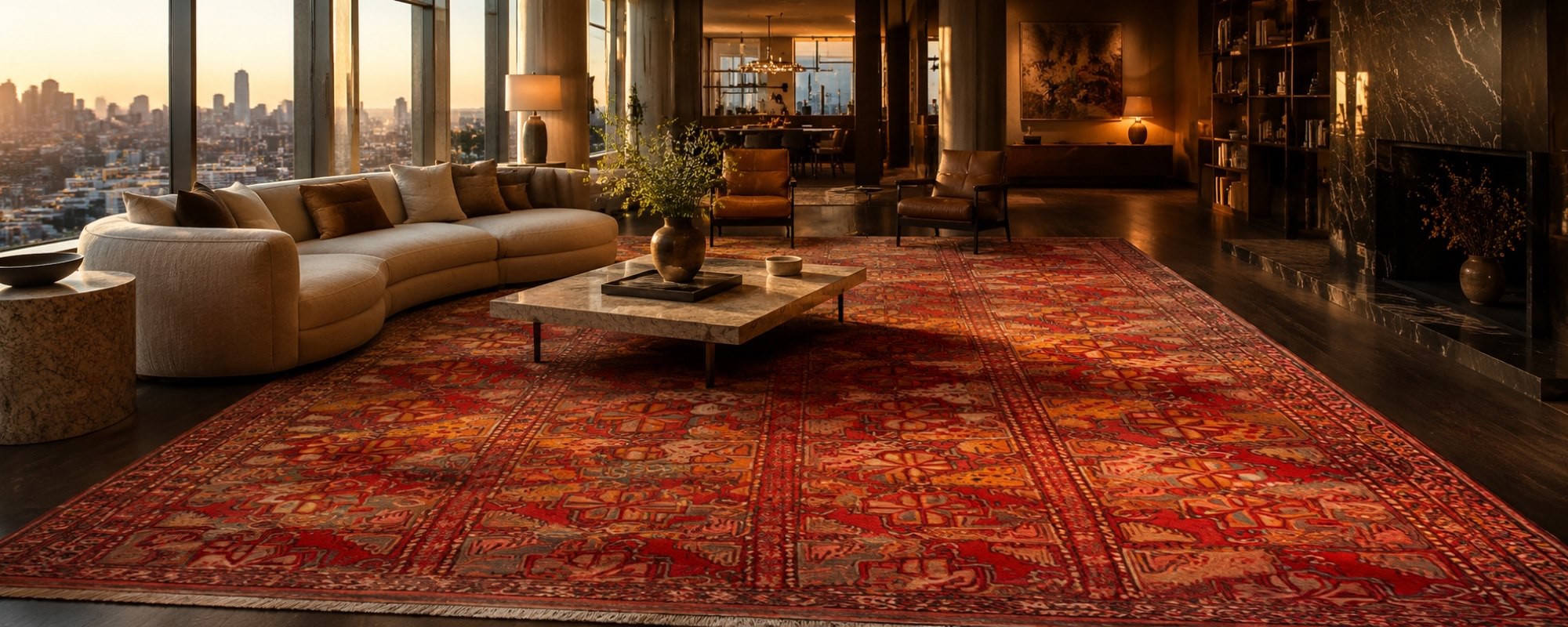
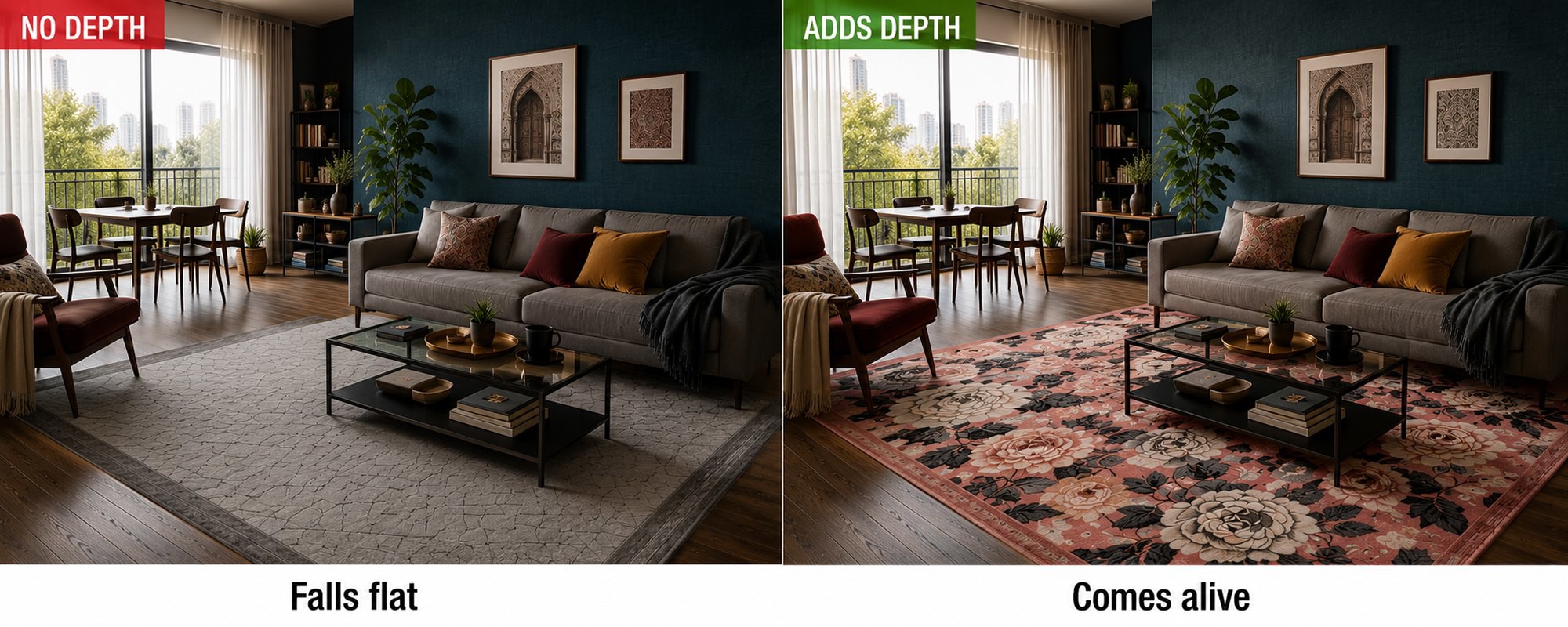
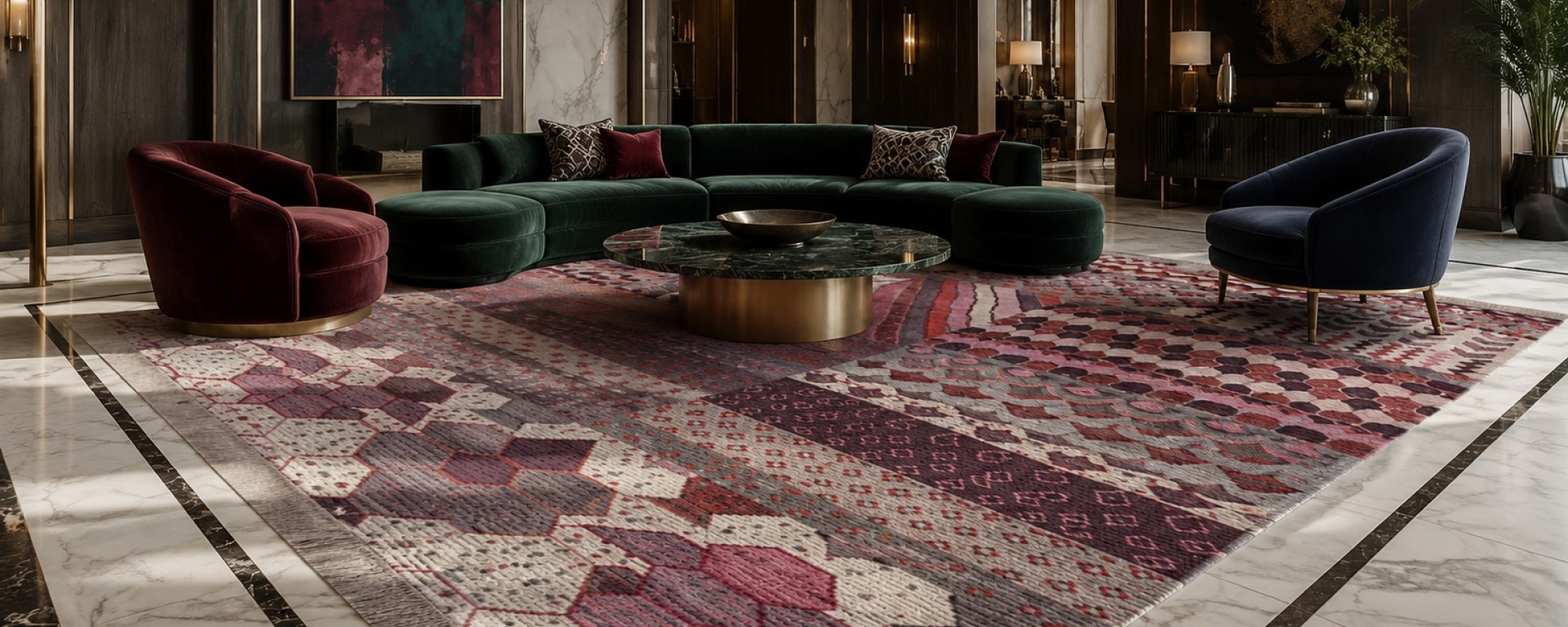
How to Tell If a Rug Is Handmade: 7 Signs Experts Look For (Abrash Is One of Them)
- 07 July 2026
- 9 Min Read
- By Jaipur Rugs
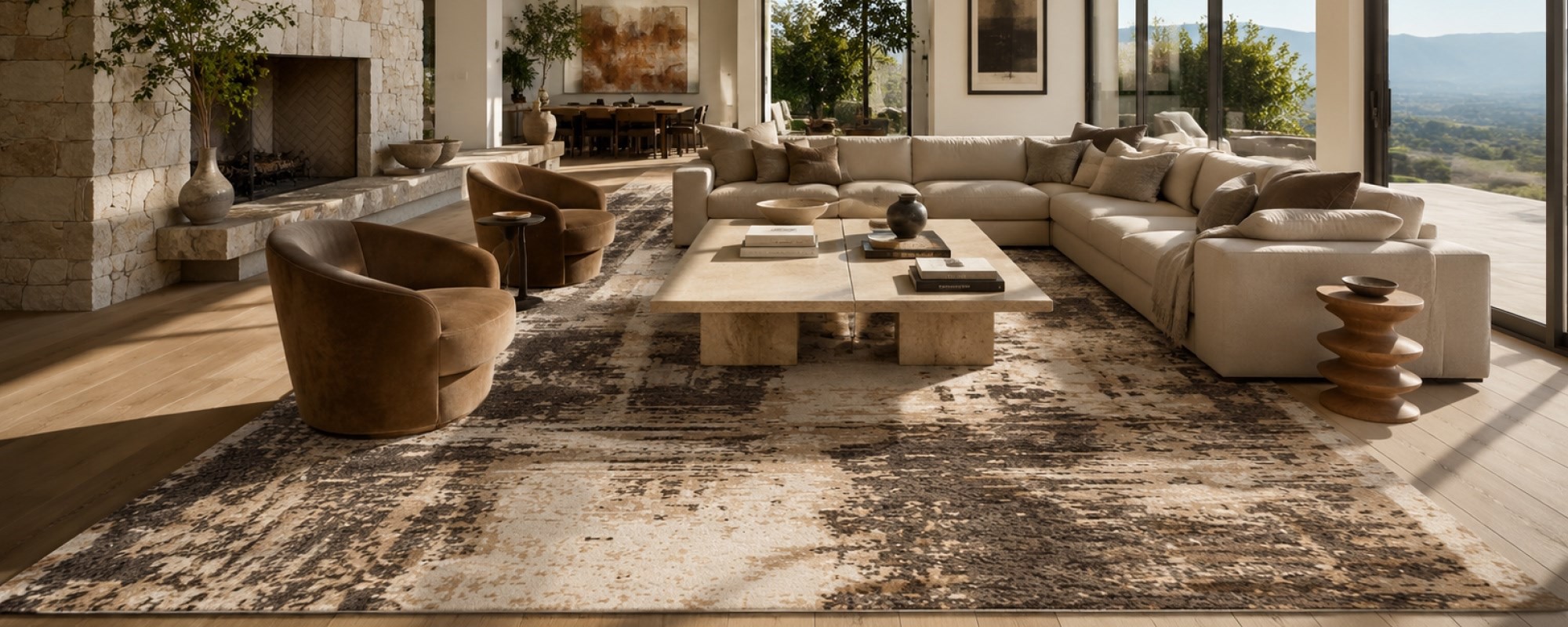
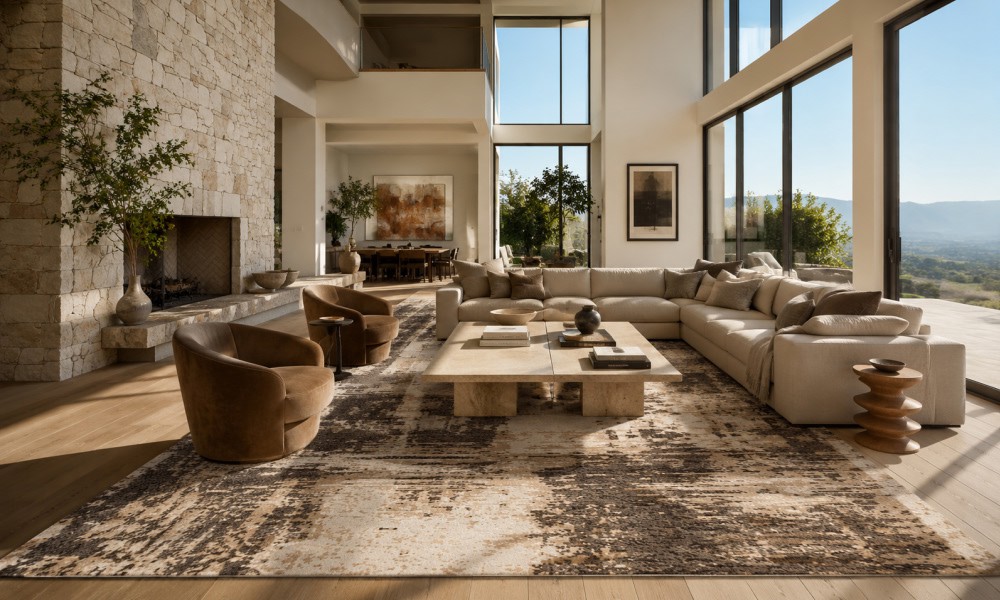
Wondering how to know if a rug is handmade? Get an overview of 7 key characteristics that will help you identify if a rug is truly handmade and learn about its differences compared to machine-made rugs, and why they do not lose their value. Here is what to keep in mind when buying a handmade rug.
Now let's talk about the truth. Investing in a rug means being able to distinguish between what is real and what is not. The rug industry is loaded with machine-made rugs posing as the authentic ones. It's frustrating when you think you got a handmade deal but find out you're dealing with twenty-minute factory-made stuff.
The positive side of the story? Handmade rugs will tell you the truth each and every time if you know where to look. And as soon as you learn those telltale signs, you'll be able to tell in just 10 seconds whether a rug is a fraud or not.
We at Jaipur Rugs specialize in hand-knotted, hand tufted, flatweaves and handloom rugs and have seen enough to know these signs. Here's the list of 7 things to watch out for. One of them is an amazing feature called abrash.
Quick tip: If a rug is handmade, the back will have slight irregularities in the hand-knotted knots; color changes smoothly throughout the rug (abrash effect); the dye colors are soft-looking; the fringe is woven into the rug; and the design has slight flaws. The machine-made rug looks too perfect and has a hard, printed backing.
Flip It Upside Down First
You always begin with the back side. There is nothing faster to determine it.
Flip over an authentic rug and notice thousands of knots that are slightly different from one another since every knot is tied by a human being. The image is quite clear from the back, just like you could see it through the window. This is the sign of authentic hand-knotted rugs.

Now, flip over a machine-made rug. The back is rigid and sometimes glued. The pattern on the back side is blurry or not even printed. If you see that the knots are a bit uneven and not regular, it is the right thing to do.
Abrash: The One Most People Miss
Time for the tricky one. Have you ever heard the term 'abrash' and had no idea what it meant? It’s quite simple, really. Abrash is the slight shift in color that you'll see across your handmade rug, appearing as light color streaks or bands of one color in your rug.
What causes it? Our artisans dye the wool in small batches, and each batch varies in color. As the rows in the rug build up, the color tone changes slightly. Abrash is when it happens. Blue rugs show abrash best – you might have a deeper indigo in one part of the rug, while the other is lighter.
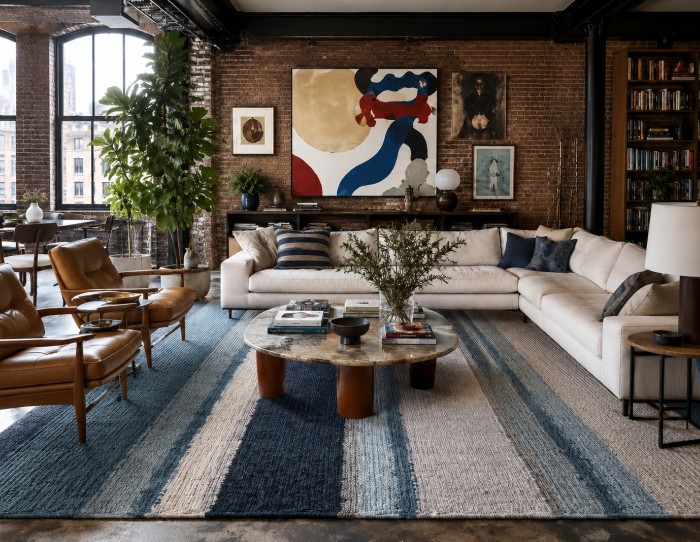
Don't worry, it's not a defect of any kind. In fact, collectors specifically look for the abrash rug because its changing color tones add a whole new dimension to the rug. No machine can replicate that effect. The color of the machine-made rug is even and uniform throughout.
Antique abrash rugs are the most desired items available for this very reason. "Character" of the rug refers to abrash.
Also read: Why Top Interior Designers are Switching to Indian Handmade Rugs
The Colors Should Be Natural
Authentic handmade rugs are generally colored with natural dyes derived from plants, roots, and minerals. Red and warm orange rugs are made using the madder root. Blue colors are achieved using indigo, while pomegranate and turmeric are used to get soft yellow rugs.
Natural-dye rugs have a warm, slightly subdued glow. These colors do not harm your eyes, and they grow better over time, unlike synthetic dyes, which give a good, even, neon-like effect under store lights. They age well without fading into nothingness.
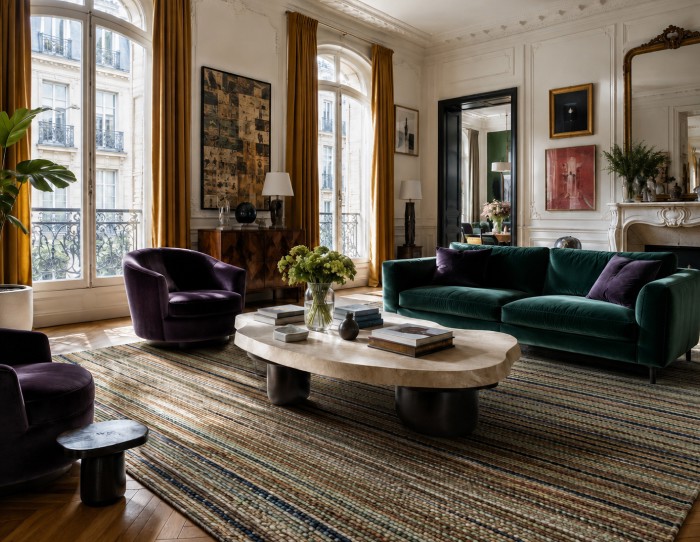
One thing to keep in mind is that natural dyeing is generally associated with abrash. If you spot a natural dye coloration in the rug, it is a good indicator of the point mentioned above.
The Touch of Hand Spun Yarn
Take a closer look at the wool itself and check it by running it through your fingers. In a handmade rug, the yarn is usually hand spun; thus, it will be slightly irregular, and sometimes thicker, sometimes thinner.
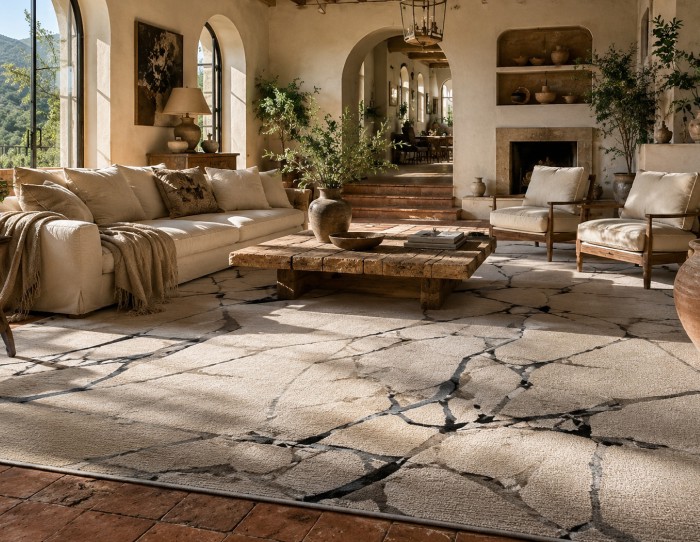
This is what you should expect. Hand-spun yarn absorbs dye in a slightly different manner; therefore, it contributes to the development of the abrash effect. Hand-spun wool rugs have more character and soul than machine-made ones. They can be slightly rustic, while machine-spun yarn is identical throughout and quite boring.
Also read: The Power of Subtle Rugs in Bold Interiors: Inside the Abrash Collection
Pull the Fringe
Fringe is crafty, but it reveals quite a bit. In a handmade carpet, the fringe is not a decorative element added later. The fringe is the warp threads that go all the way across the rug, which have been knotted.

So pull the fringe, gently. It will not come off in an authentic piece since it holds the rug together. But it can be found in many machine-made and hand-tufted rugs, as it was added later.
Find the Imperfections
When you think of handmade, you probably think of something that's a little rough around the edges - and that's exactly what you get. Handmade is human-made, after all, and we're not talking about robots here.
So you're likely to find small, honest imperfections that come with the territory - a line that wobbles ever-so-slightly, a shape on the left that doesn't quite match its twin on the right, a border that's off by a hair.
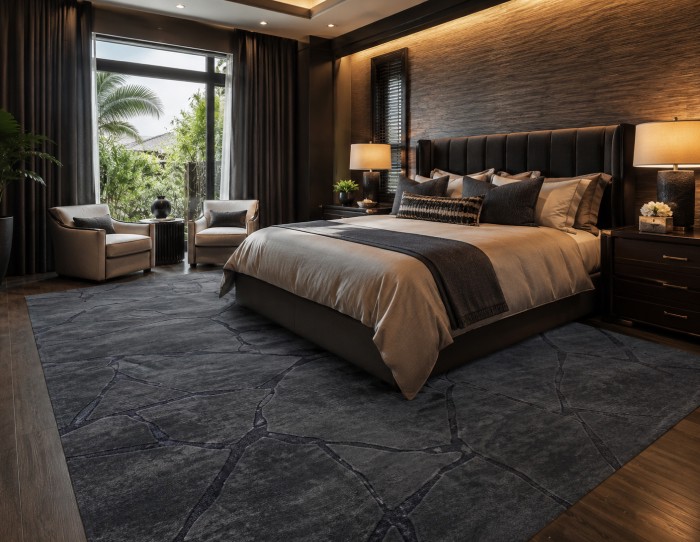
This is actually what the experts are looking for. Even on high-quality pattern rugs, there's usually a bit of a mismatch between the two halves - and that's the whole point.
Whether you're in the market for an ornate traditional rug or something chic and modern, those tiny little human touches are what prove its authenticity. And if everything is just too darn perfect, you can bet your bottom dollar it was printed by a machine.
Trust Your Instincts on the Material
Last thing to consider: what exactly is the rug made of? Most high-quality handmade pieces are made of wool, silk, or cotton.
Quality wool rugs have a really nice, springy feel - and they bounce right back when you press down. You'll also notice they're pretty darn tough and stain-resistant, which is why they last for decades. Silk rugs, on the other hand, have a cool, shiny feel and a bit of a shimmer as you walk past.

And then there are cotton rugs, which tend to be a bit lighter and are often flatweave.
And let's not forget the machine-made pieces - they usually lean on synthetics that feel plasticky and just kind of flat-out lose their shape under your feet in no time.
So, Why Do You Need to Pay More for Handmade?
Once you start noticing these little signs, the price tag makes a lot more sense. Every single knot, every batch of natural dye, every streak of abrash on that rug is the result of real human skill - and real hours of hard work. Factories might be able to copy the look, but they can't replicate the actual work that went into making it.
And the good news is that a good handmade rug doesn't just wear out - it actually gets better with age. It softens, it ages, and it usually looks even more beautiful as the years go by.
You're not really just buying a floor covering, by the way - you're buying a small, truly unique piece of art that your family may be fighting over someday. Handmade carpets and rugs retain their value unlike anything else on the floor.
Ready to Find Your Dream Rug?
Now that you know the 7 signs to look for, you can actually shop as you mean it. Got your heart set on a timeless, oriental rug?
Want something soothing and neutral for the living room, or maybe a soft pink rug tucked away in a bedroom?
Just look for that hand-tied back, the subtle abrash, and that warm glow of natural dyes.
Got something specific in mind? A round rug looks great under a dining table, a grey rug and a black rug can really ground a modern space, and a custom rug lets you choose the exact size, color, and design you're after.
Check out the Jaipur Rugs handmade collection and bring home a rug that's truly one of a kind.
Frequently Asked Questions
What does abrash mean in a rug?
Abrash is that nifty color variation you see across a handmade rug - soft bands or streaks that pop up in one color. It's pretty simple - the wool is hand-dyed in small batches, and you'd be surprised how different the same batch can look from one to another - no two are ever a perfect match. And that's exactly what makes a rug so genuine.
Is abrash actually a defect?
No. In fact, abrash is a big giveaway that a rug is the real deal. It's a totally natural occurrence that happens when the wool is hand-spun and hand-dyed - big deal. Many collectors love abrash rugs because the way the colors shift just adds to the rug's character - just like how a handmade rug is the only one of its kind.
How do I know if a rug is hand-made or machine-made?
Well, here's the trick: flip it over. Handmade rugs are pretty easy to spot - those hand-tied knots might be slightly uneven, and the design appears on the back, all clear as day. And if you see a stiff or printed backing on the back, that's a pretty good sign it's been made on one of those big machines. And of course, look out for abrash, those lovely hand-spun yarns, and a few little imperfections in the pattern - these are surefire signs that your rug has been lovingly handmade.
Do all handmade rugs have abrash?
Not every time. Abrash tends to show up most in rugs that have been made with hand-spun wool and natural dyes - old and tribal pieces especially. It is a pretty strong clue that a rug has been handmade, though - if it's there, then that's a good sign that your rug has been made with some great skill and care. But it's worth noting that a rug can still be handmade without much in the way of abrash.
Are handmade rugs worth all the money?
Absolutely. A handmade rug will last you for years, withstand some serious wear and tear, and - the best part - will actually just get more beautiful and valuable with time. Every single knot and every batch of natural dye that goes into making a handmade rug is a genuine human effort, which is why a good handmade rug is honestly worth every penny and then some - it's a work of art, not just a throwaway rug.
What are these natural dyes in rugs?
So you want to know about natural dyes? Well, they're just that - colors made from plants, roots, or minerals like madder root for red, indigo for blue, and turmeric for yellow. Natural-dyed rugs have this gorgeous, warm look that just gets richer with time - no surprise, really, that they're one of the reasons abrash starts to pop up in handmade pieces.


Pic Credits
Jaipur rugs / Abil Dase
Share
-
 Facebook
-
 Twitter
-
 Email
Email
Related posts
-
04 July 2026
-
8 Min Read
Coastal Grandmother Is Evolving: The 2026 "Coastal Heritage" Aesthetic and the Rugs That Define It
The coastal grandmother design is progressing into something new and exciting by 2026. Coastal Heritage introduces texture, craftsmanship, and handmade elements to this popular design style. Here are the various rug types, colors, and decorating ideas to know about this classic coastal design trend.
Read More >
-
22 June 2026
-
6 Min Read
Why Top Interior Designers are Switching to Indian Handmade Rugs
High-end interior designers have begun using handmade carpets from India in place of machine-made carpets to enhance their design portfolios and ensure product longevity. The following guide will help you understand why design professionals prefer Jaipur Rugs for creating customized, ethically produced wool-and-bamboo-silk carpet designs for luxurious homes.
Read More >
-
20 June 2026
-
8 Min Read
Contrast is Everything: The Best Rugs for Dark Wood Floors
A dark wood floor immediately adds elegance to any home interior, yet darker shades can absorb all natural light from outside and will “eat” any furniture that is not properly buffered. In this detailed guide, we are going to look at how to pick the right rugs for wood floors, considering color balance, light neutrals, texture, and size.
Read More >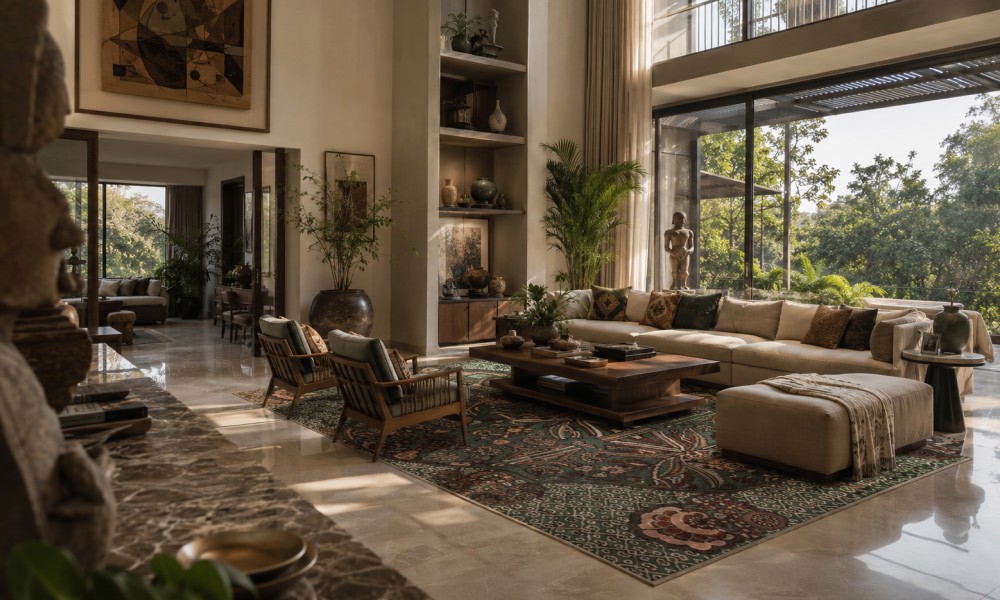
-
19 June 2026
-
11 Min Read
What Vastu Colours for Living Room Rugs Are Best? A Complete Directional Guide
Selecting the right vastu colors for living room rugs anchors your home layout with balance. This directional guide details the best shades for North, East, South, and West quadrants. Align your luxury decor with classic principles and shop premium hand-knotted, traditional, or custom accent rugs to perfectly match your home setup.
Read More >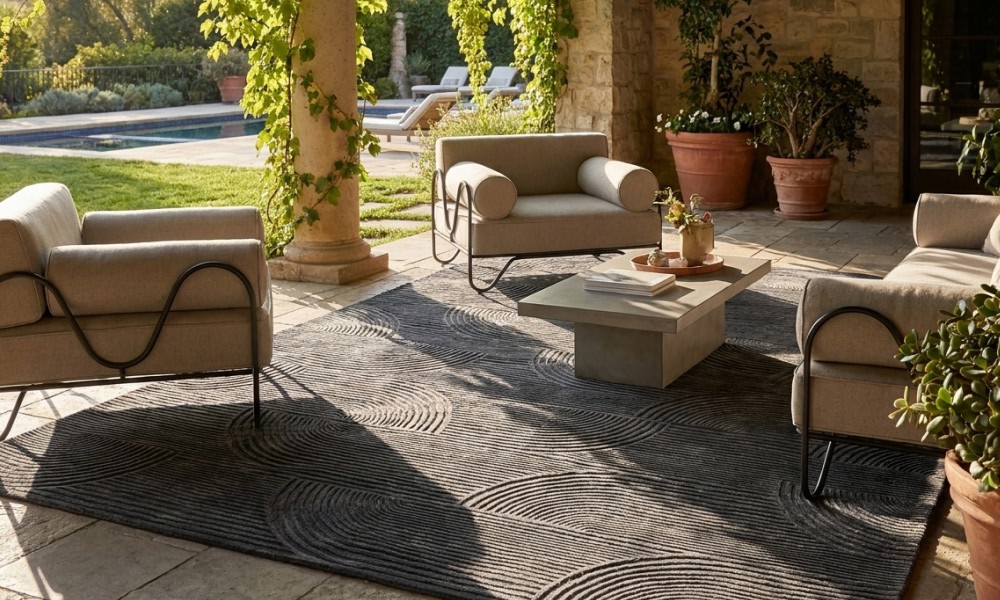
-
17 June 2026
-
5 Min Read
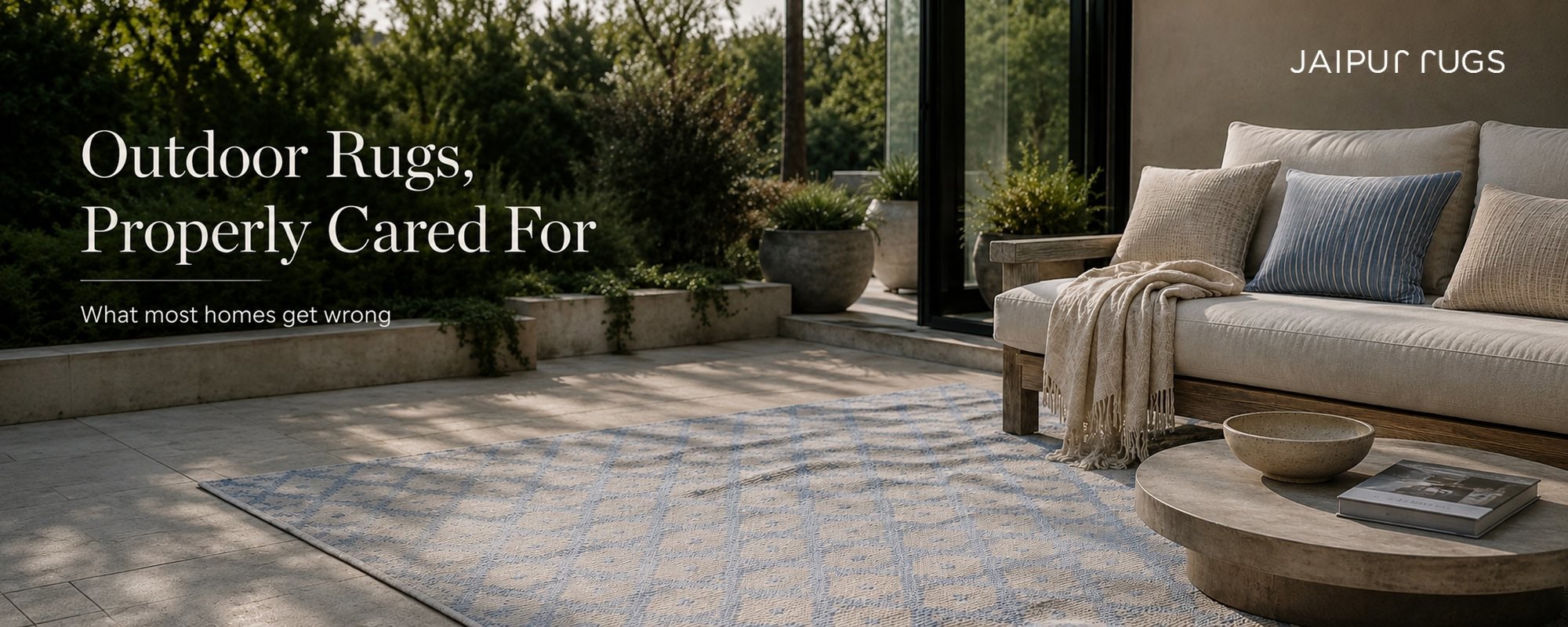
Why Most Patios Feel Incomplete Until You Add a 10x14 Outdoor Rug
Most people assume their patio feels incomplete because they need more furniture. That's usually not true. In many cases, the real issue is scale, not seating. Before spending thousands on another chair, sofa, or dining set, discover why a properly sized Outdoor Rug 10x14 can completely change how your patio looks, feels, and functions.
Read More >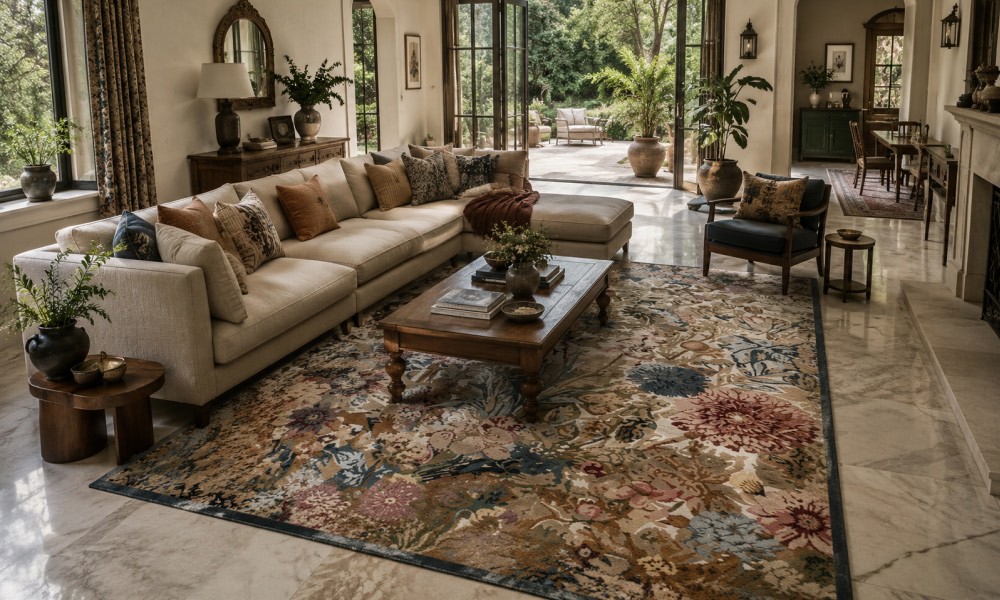
-
12 June 2026
-
10 Min Read
Master the Art of Indian Home Decor: Choosing the Best Rugs for Marble Floors
Polished marble floors add undeniable luxury to Indian homes but require strategic styling to manage cold surfaces and acoustics. This guide details how to choose premium wool, silk, and cotton rugs that complement light or dark stone. It also explains the absolute necessity of using high-quality, stone-safe non-slip rug pads to prevent dangerous slips and avoid floor discoloration.
Read More >