You are on our International website. Please select your region to see content specific for your location





 Profile
 Orders
 Wishlist
 Change Password
 Logout


LATEST BLOGS
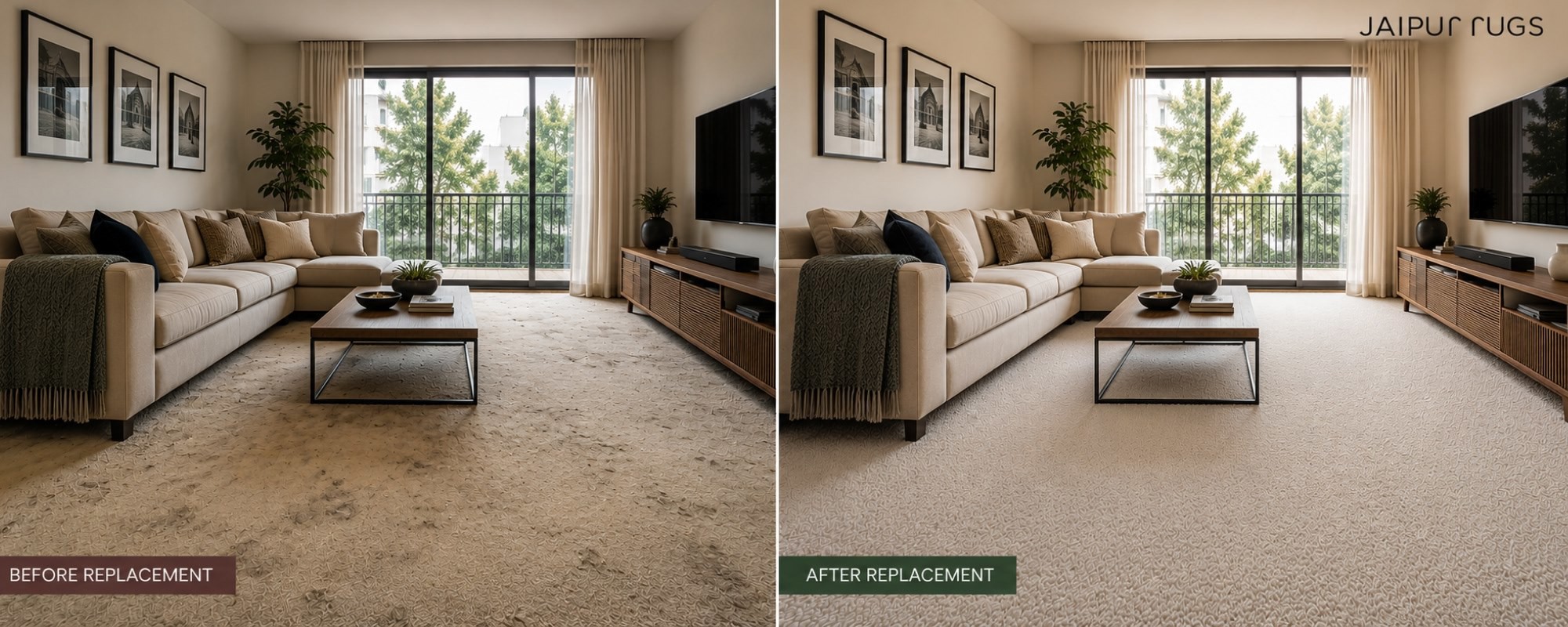
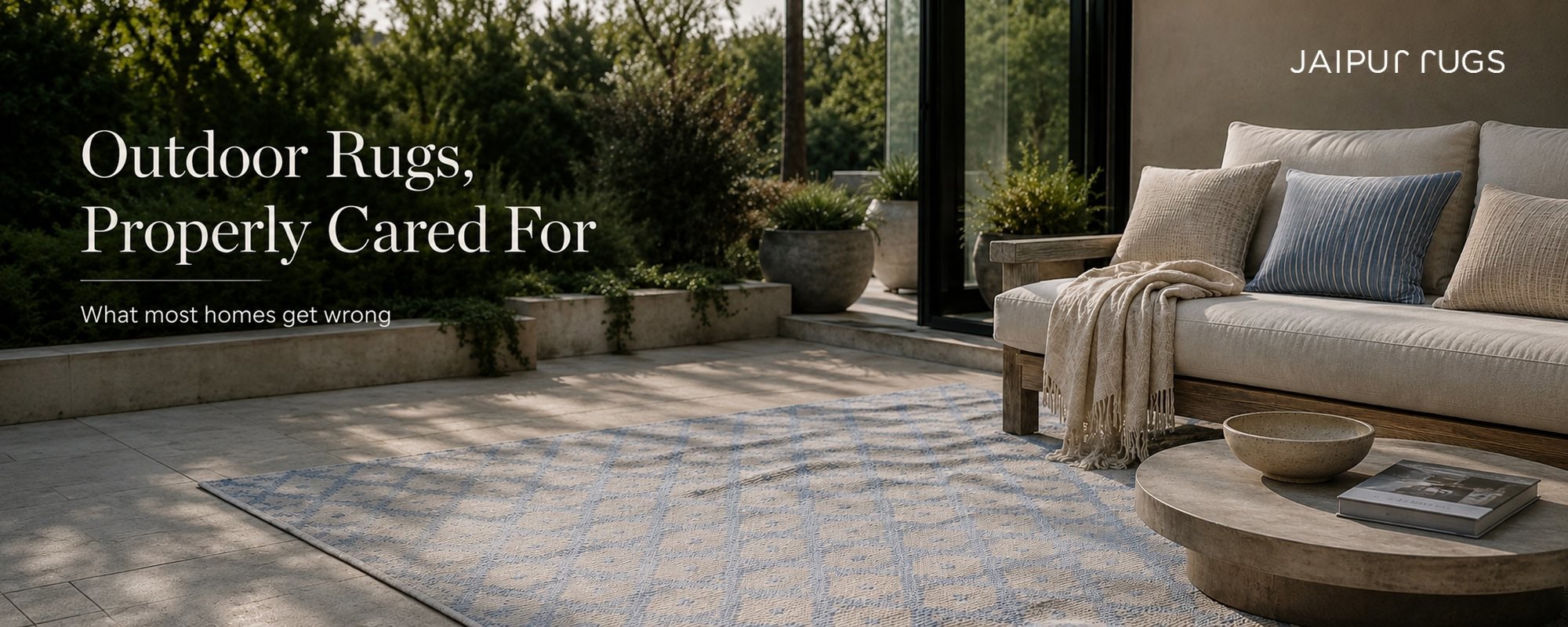
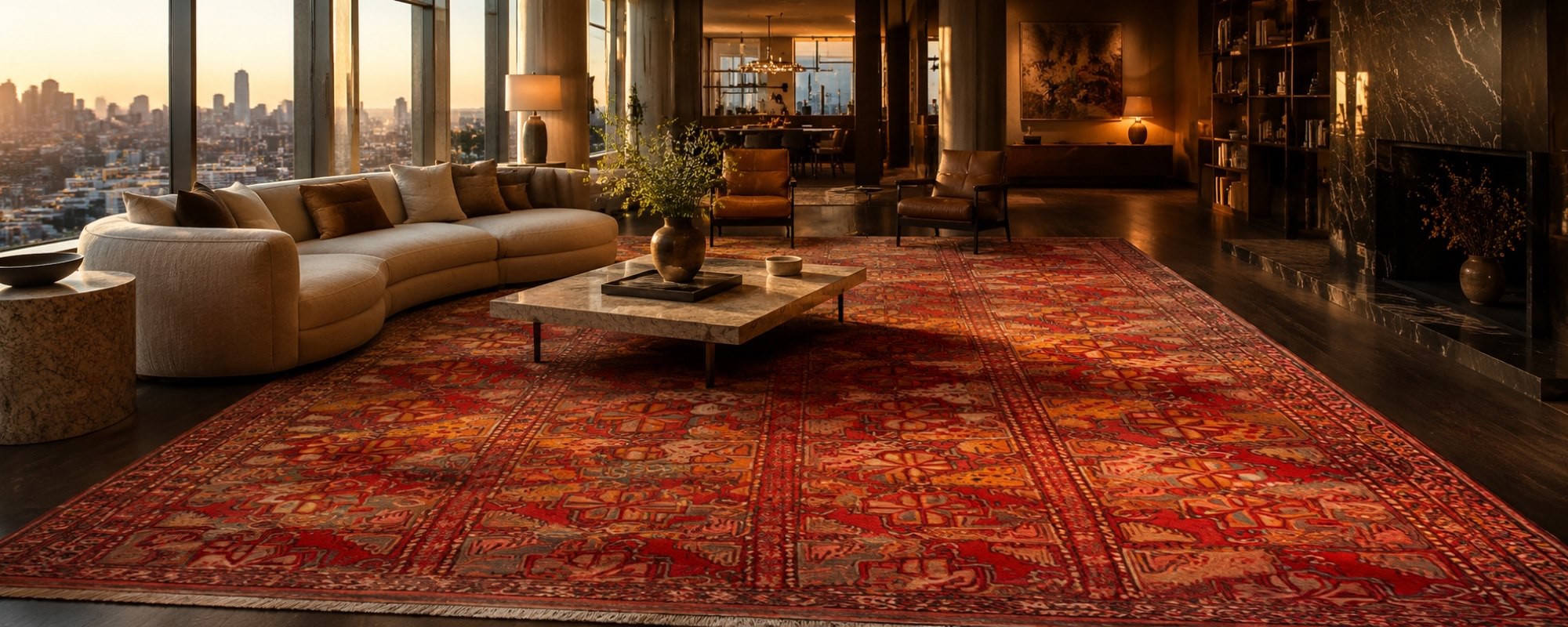
How to Pair Indian Wall Art with the Right Rug Pattern: A Room-by-Room Guide
- 10 July 2026
- 10 Min Read
- By Jaipur Rugs
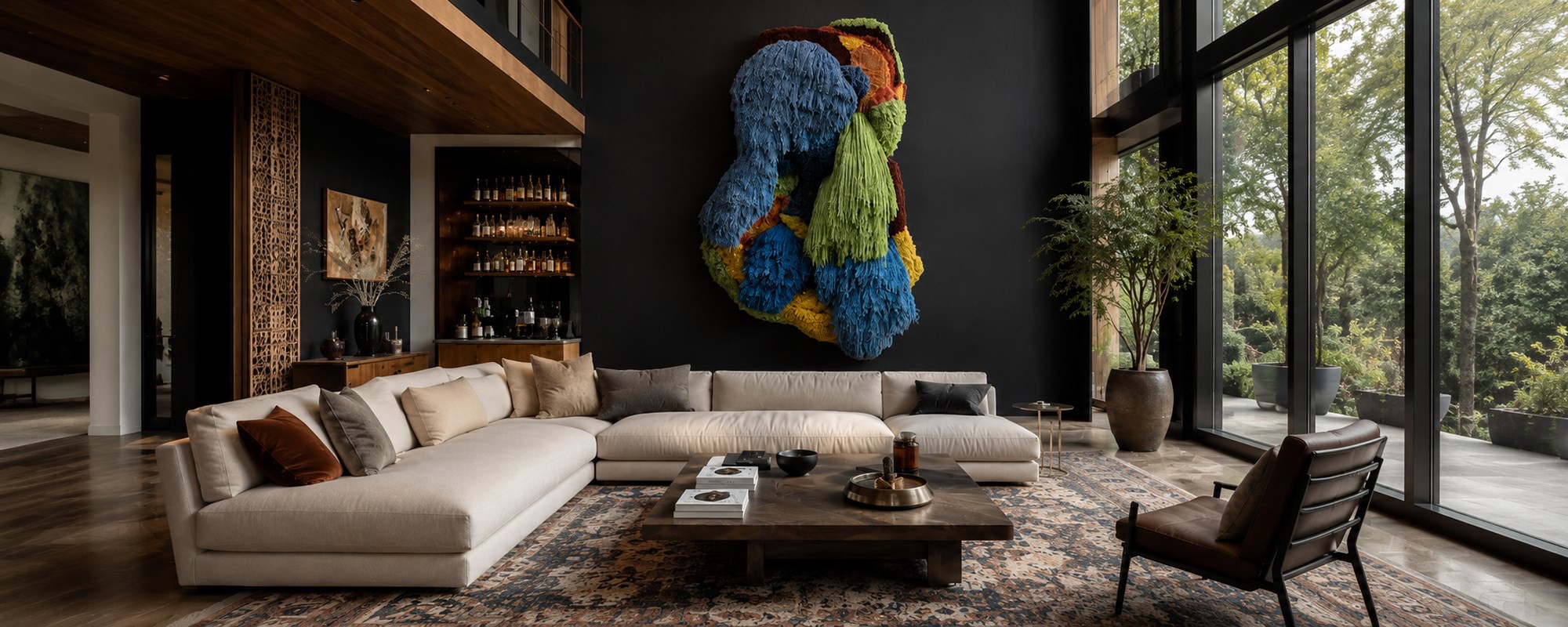
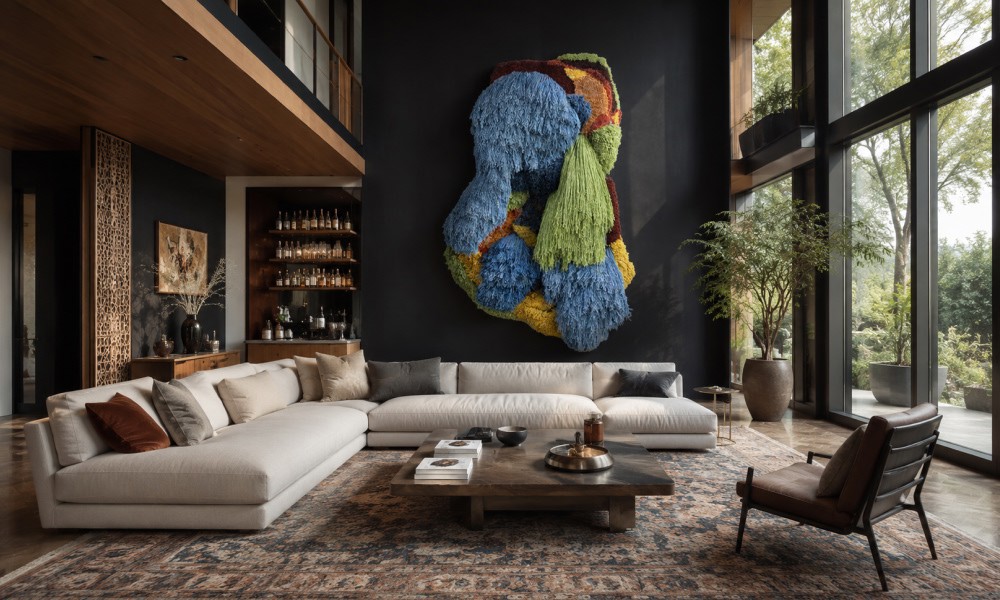
Choosing the right rug to go with your Indian wall art does not have to be guesswork. This guide breaks it down room by room, from the living room to the bathroom and outdoor spaces. Learn how to match colors, patterns, and scale so your wall art and rug always feel like they belong together.
Walk into any well-decorated home and something just feels right. You may not be able to pinpoint it immediately, but once you look around, you notice it. The art on the wall and the rug on the floor are working together. They are not fighting each other. They are not random. They feel like they belong in the same room.
That is the magic of pairing well. And if you love Indian wall art, this guide will help you do exactly that, room by room, without overcomplicating it.
Why the Wall and the Floor Need to Talk to Each Other
A lot of people treat wall art and rugs as separate decisions. They buy the art one day, find a rug another day, and hope for the best. Sometimes it works out. Often it does not.
Indian wall art decor is often rich. There is a lot going on, whether it is color, pattern, texture, or emotion. A good rug does not copy that. It responds to it. It either brings in a color from the art, or it calms things down so the art can breathe.
Once you understand that idea, the rest is pretty simp
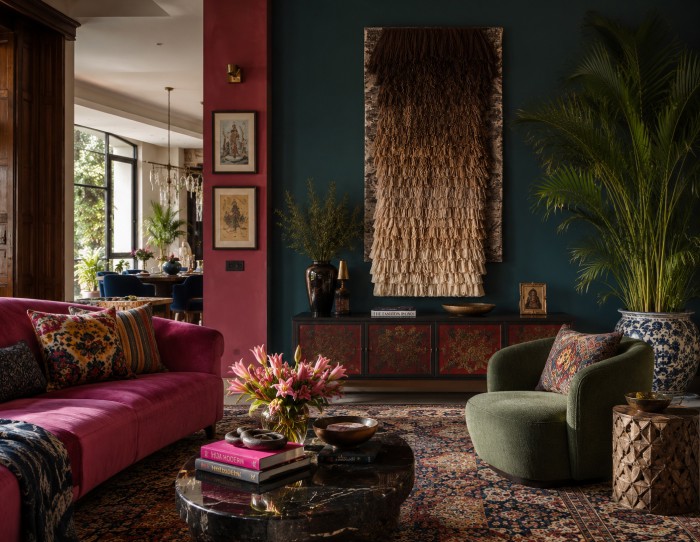
Living Room: This Is Where You Can Go Big
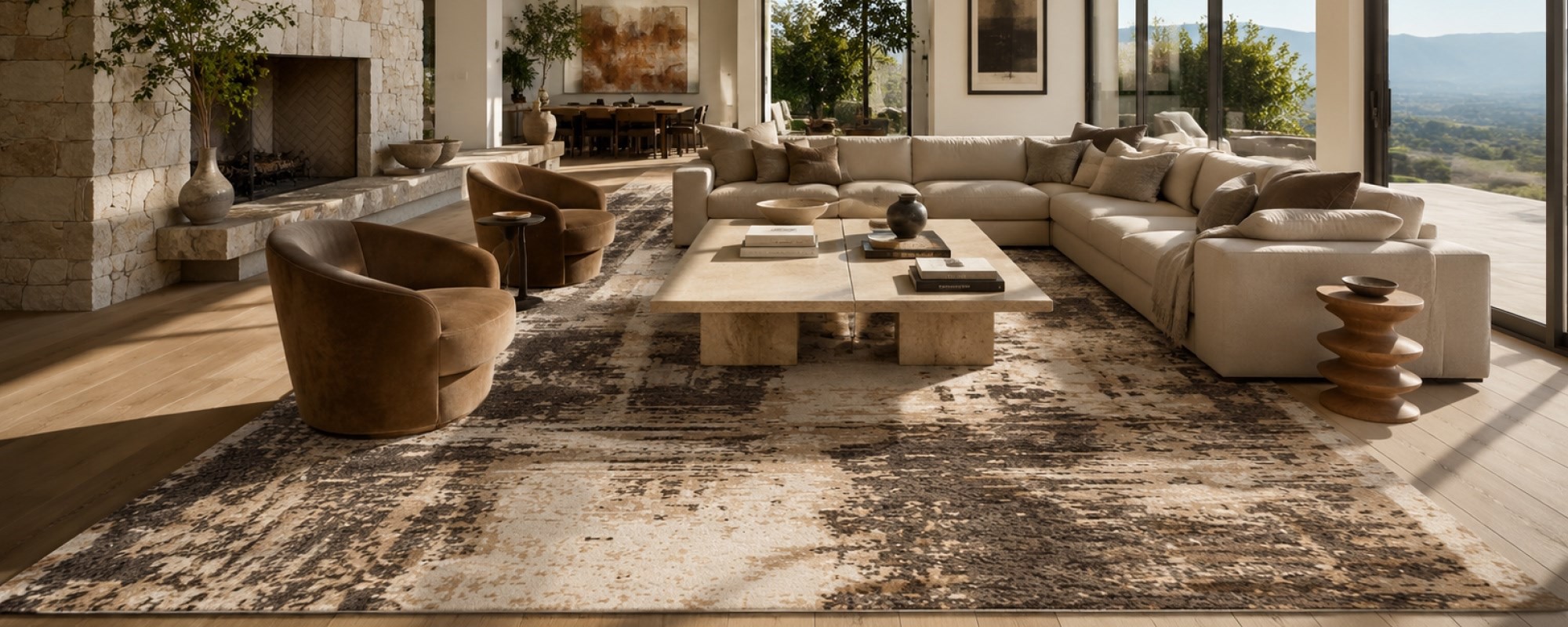
The living room is your main stage. It is where large wall art makes the biggest visual impact, and it is also where your rug covers the most ground, literally.
Say you have picked a colorful piece of Indian art, maybe something with a peacock or a tree of life in deep blues and gold. In that case, go for a neutral patterned rug. A diamond pattern rug in cream or warm beige works really well here. It gives the art room to be the star without anything competing below it.
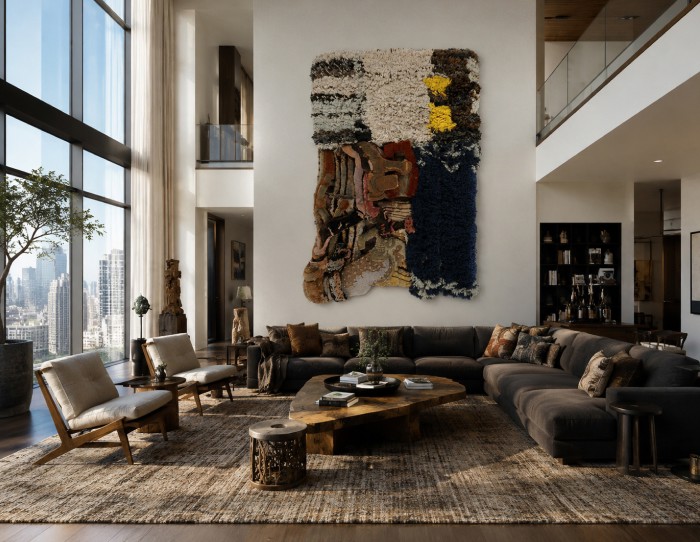
Now flip that around. If your wall art for the living room is on the quieter side, like a minimal line drawing or a single figure in muted ink tones, then your rug can do more of the work. A Persian rug pattern in rich reds or deep plum will bring life to the floor without clashing with what is on the wall.
For a bigger living room, you want the rug to match the scale of the art. An oversized wall art piece deserves an equally generous rug underneath. Hand-knotted rugs are a great choice here. Their texture adds warmth, and their traditional construction pairs naturally with the storytelling quality of Indian art.
If you prefer something more current, modern rugs with clean geometric lines work beautifully with contemporary Indian prints.
Bedroom: Calm Is the Goal
The bedroom is a different conversation altogether. Here, you are not trying to impress anyone. You are trying to rest.
Indian bedroom wall art often leans into softer themes like mandalas, lotus flowers, or gentle watercolor landscapes. These pieces already have a calming energy, and your rug should support that rather than disrupt it.
Floral pattern rugs are a natural match for this kind of art. They echo the organic shapes without adding chaos.
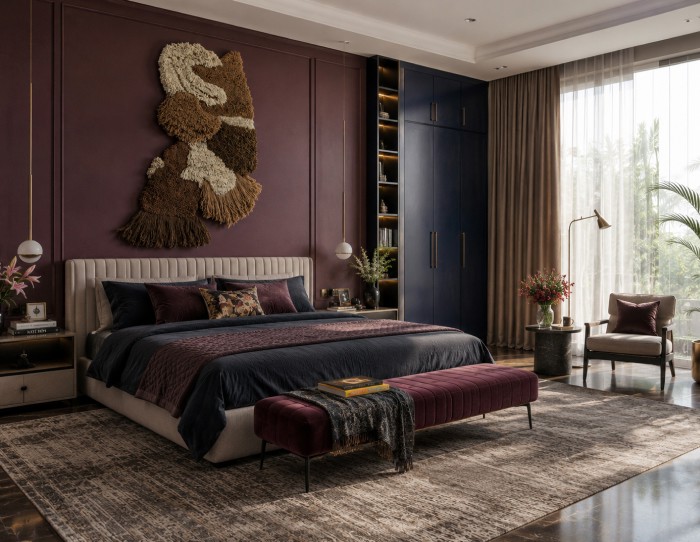
If your bedroom is mostly white or off-white and you have brought in boho wall art with terracotta and rust tones, try a jute rug. It stays earthy and grounded, letting the color in the art do the talking.
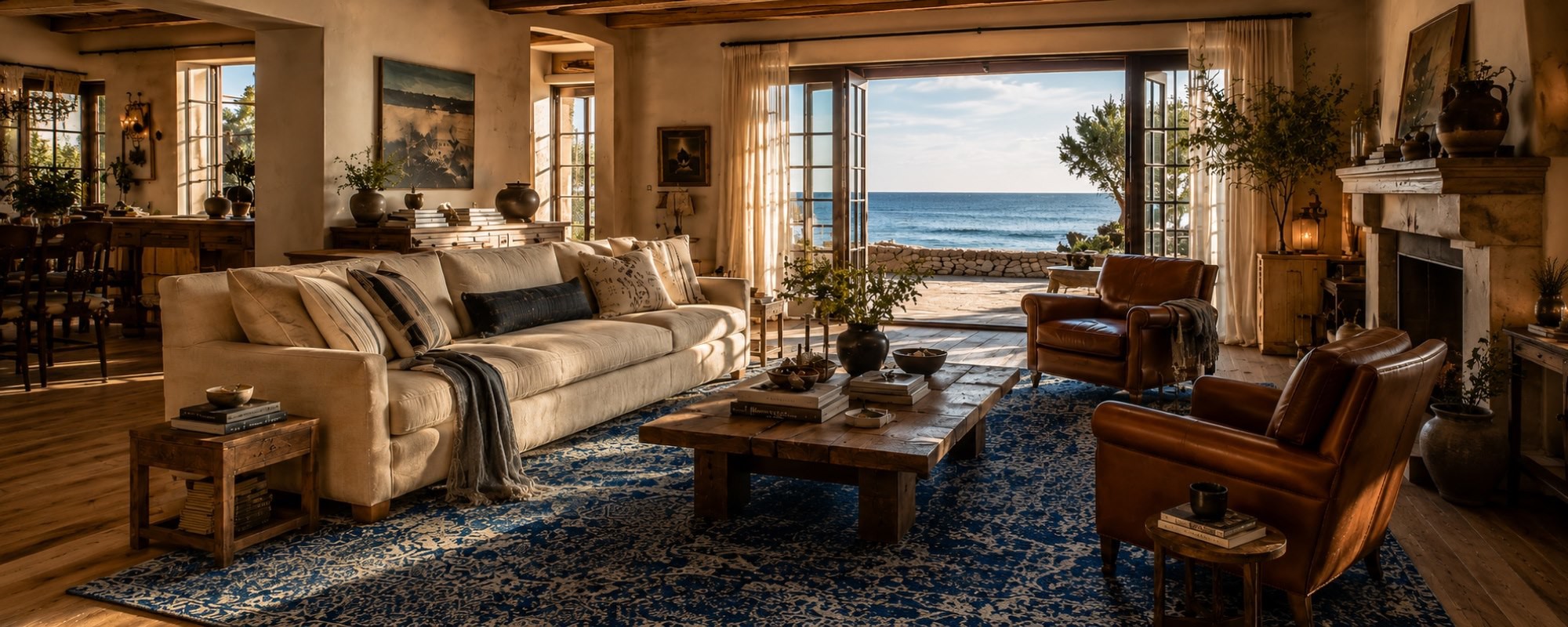
For a bedroom where the art is more bold, like abstract wall art with strong geometric shapes in navy and gold, a blue rug with a quiet pattern underneath ties everything together. It picks up a color from the art and creates a thread between the wall and the floor.
And for those who prefer softer rooms, pink rugs or neutral rugs in a simple weave pair beautifully with delicate Indian floral prints. They keep the mood gentle without making the room feel empty.
Bathroom: One Small Choice, Big Payoff
Bathroom wall art is almost always an afterthought. But it is honestly one of the easiest places to create a moment without spending much.
Pick one small piece of Indian art for the wall. A brass-inspired print, a tiny mandala, or even a simple block-print panel. Then find a patterned bath rug that picks up one of the tones from that art.
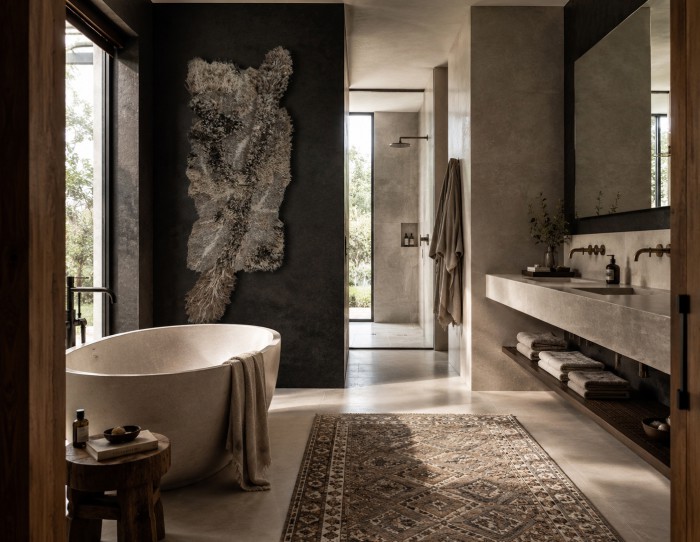
If the art has gold and warm brown tones, a brown rug in chocolate or caramel works perfectly. If the art is cooler, with blues or teals, a square rug in a similar shade pulls the look together.
That is really all there is to it in a bathroom. One piece of art, one good rug, and you are done.
Home Office: Grounded but Not Dull
People often decorate the home office last, and it usually shows. But this is actually a room where Indian art does really well.
Textured wall art with spiritual symbols, script, or hand-carved details brings a focused, grounded energy to a workspace. So does vintage wall art in earthy tones.
For this kind of art, traditional rugs with oriental rug patterns in deep green or burgundy create exactly the right atmosphere. Think of the feeling of a quiet library. That is what you are going for.
Hand-tufted rugs work especially well here because of their richness and softness underfoot.
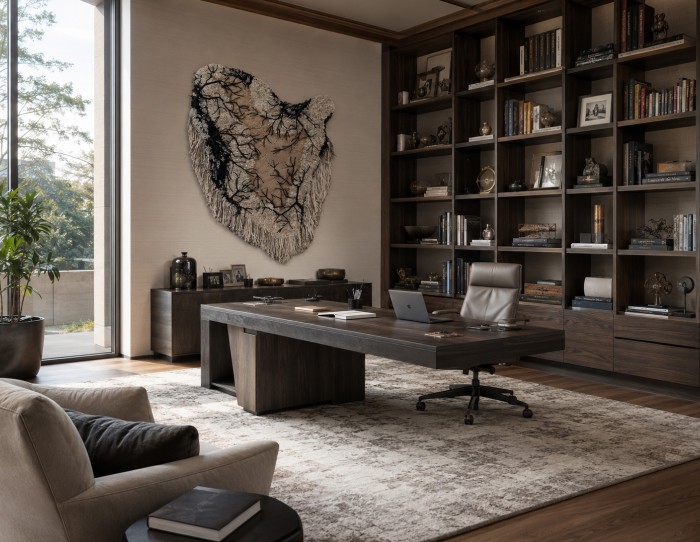
If your office is more streamlined and your Indian art is cleaner and more contemporary, go with gray rugs in a subtle pattern. Keep the room feeling sharp but not cold.
A leaf-patterned rug in olive or sage is another nice option if the art has any green or botanical elements.
Entryway: Set the Tone Before Anyone Steps Inside
The entryway is the first thing anyone sees when they walk into your home. A single strong piece of unique wall art here does more than decorate. It tells people what kind of home they are walking into.
Indian entryway art often features welcoming motifs. Ganesha, rangoli-inspired geometric shapes, or auspicious symbols all work beautifully in this space.
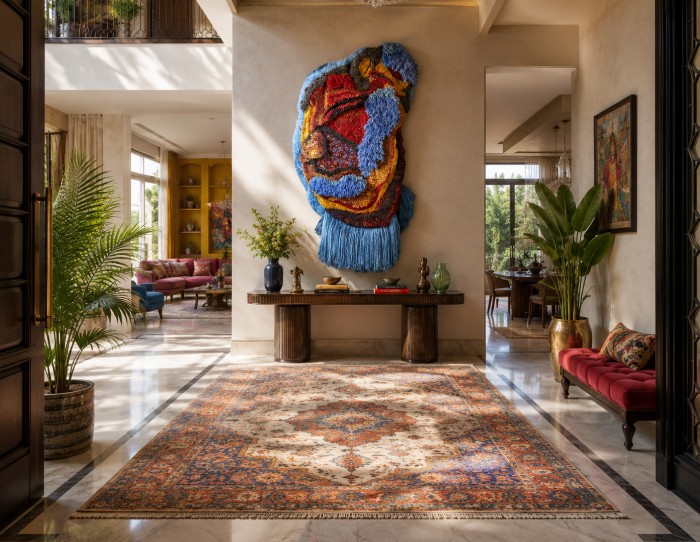
Pair this kind of art with geometric-patterned area rugs in a color that directly matches the artwork.
-
If the art has saffron or amber tones, yellow rugs in a warm honey tone make the entry feel inviting.
-
If the art is darker and more dramatic, black rugs with a bold geometric print can create a really striking first impression.
-
For high-traffic entryways, cotton rugs are a smart choice. They are easy to clean, and they hold their pattern well over time.
-
If you want something truly personal, custom rugs made to match a specific color or motif from your wall art are worth looking into.
Outdoor Spaces: Do Not Stop at the Door
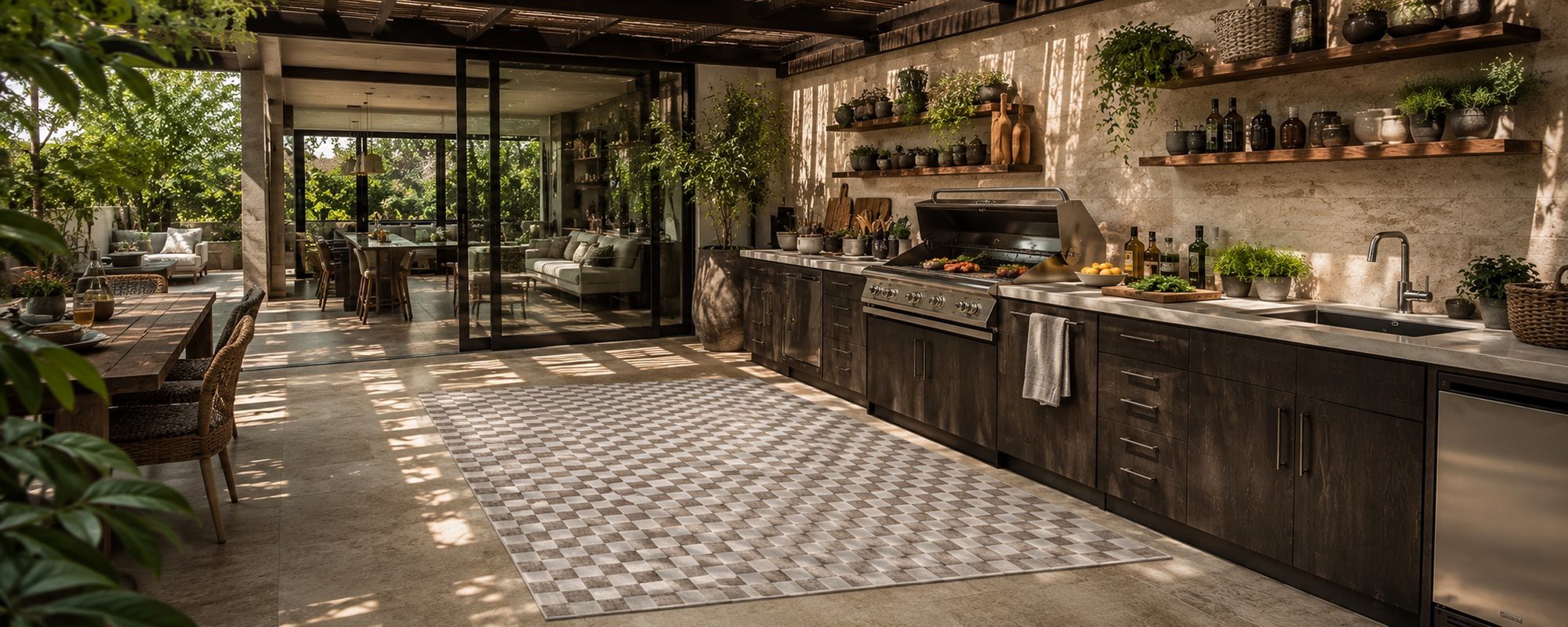
More people are treating their patios and gardens like real rooms now, and that is a great shift. Outdoor wall art in an Indian style, think carved metal panels, painted tiles, or terracotta relief work, can completely transform an exterior wall.
For outdoor spaces, green rugs with a nature-inspired pattern sit naturally alongside botanical Indian art. Area rugs with a floral pattern bring that garden feeling full circle.
If the art is bold and colorful, warm-toned orange rugs keep the energy going underfoot.
For patterned rugs going outside, choose UV-resistant, weather-safe options that hold up to sun and rain.
Common Questions People Ask Before They Buy
A lot of people are not sure where to buy wall art that is both high quality and genuine. For Indian wall art specifically, look for shops that work directly with artisans. That way, you are getting real craftsmanship, not a mass-produced print.
If you are just starting out and wondering where to shop for wall art, the easiest approach is to start with one anchor piece and build the room around it. Do not try to decorate everything at once.
For people in rentals or older homes, wondering how to hang wall art without nails, adhesive strips rated for heavier frames work well for most Indian art prints. For heavier pieces, picture rail hooks are a solid option. If you have a metal piece and are wondering how to hang metal wall art, always use two anchor points instead of one. This keeps it level and prevents it from tilting over time.
Where to get wall art that actually works with your existing rug? Bring a photo of your rug when you go shopping, or use room visualizer tools online before you commit to anything.
A Few Things to Keep in Mind Before You Shop
Before you finalize anything, run through these quickly.
Does the rug color respond to at least one color in the art? It does not have to match exactly. It just needs to acknowledge it.
Is the scale right? A small rug under a large piece of art will always look wrong. And a huge rug under a tiny framed print will look just as off.
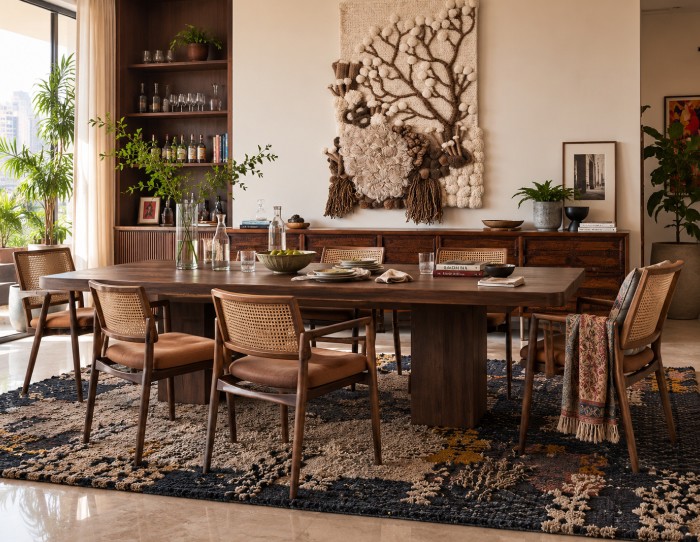
Are you layering too much? If both the art and the rug are very busy, the room will feel exhausting. One of them needs to be calmer.
Round rugs are worth considering if the room feels too boxy or rigid. They soften the geometry of a space and work especially well beneath a focused piece of Indian circular art, such as a mandala.
And finally, do not overlook blue rugs. They are incredibly versatile and pair well with a huge range of Indian art styles, from cool indigo block prints to warm gold and jewel-toned compositions.
Final Thoughts
This does not need to be complicated. Indian wall art is rich, layered, and full of character. All you need is a rug that listens to it.
Start with the art. Figure out what it is saying. Is it bold or soft? Warm or cool? Busy or simple? Then choose a rug that responds to exactly that.
When the wall and the floor are in sync, the whole room comes together. And once you see it, you will wonder why you ever treated them as separate decisions.
FAQs
What size rug is best for a kitchen?
For in front of the sink or stove, a 2x3 or 2x4 works well. For a galley kitchen, go with a 2x6 or 2x8 runner. The rug should fit the work zone without blocking cabinets or creating a trip hazard near doorways.
What type of rug material works best in a kitchen?
Cotton and polypropylene are your best bets. Cotton is soft and machine washable. Polypropylene is tough, stain-resistant, and handles heavy foot traffic well. Avoid wool or jute since moisture and spills can ruin them over time.
Should kitchen rugs have a non-slip backing?
Yes, always. Kitchens are one of the most slip-prone areas in the home. Look for rugs with a built-in grip backing, or use a non-slip rug pad underneath, especially on tile or hardwood floors.
How do I keep my kitchen rug clean?
Shake it out or vacuum it regularly. Most cotton and synthetic rugs are machine washable, so check the label before buying. For spills, blot immediately with mild soap and cold water. The faster you act, the less likely it is to stain.
Can I put a rug in front of the kitchen sink?
Yes, and it is actually one of the best places for one. Standing at the sink for long periods is hard on your back and feet. A cushioned rug or anti-fatigue mat here makes a noticeable difference in comfort. Just make sure it dries quickly so moisture does not build up underneath.
What colors and patterns work best for kitchen rugs?
Darker tones and busier patterns are the most practical since they hide crumbs and stains better than light solids. If your kitchen feels dark, a lighter rug can brighten it up. Either way, pick a color that ties into something already in the space, your cabinets, countertop, or backsplash.


Pic Credits
Jaipur rugs / Abil Dase
Share
-
 Facebook
-
 Twitter
-
 Email
Email
Related posts
-
07 July 2026
-
9 Min Read
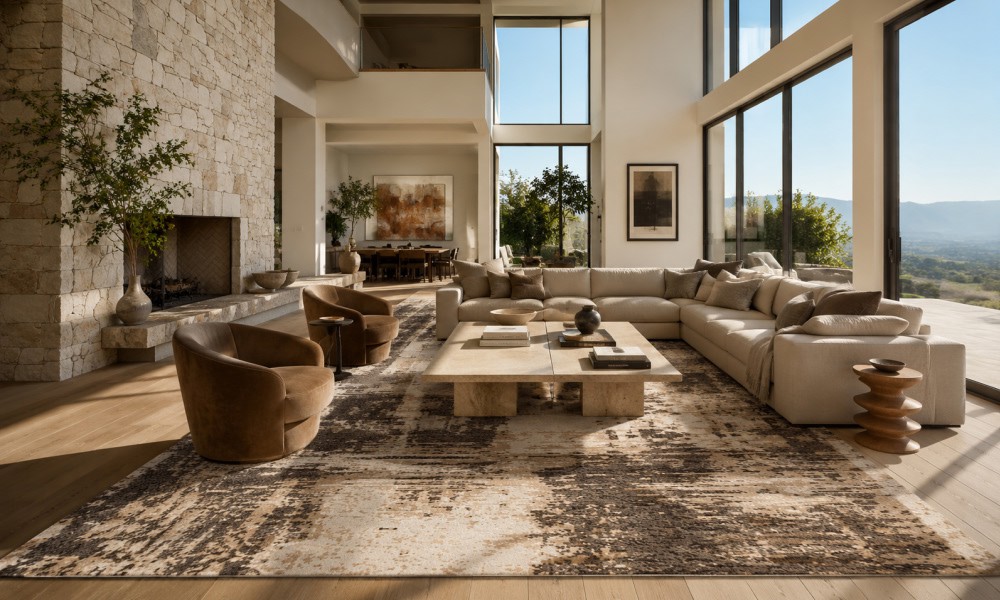
How to Tell If a Rug Is Handmade: 7 Signs Experts Look For (Abrash Is One of Them)
Wondering how to know if a rug is handmade? Get an overview of 7 key characteristics that will help you identify if a rug is truly handmade and learn about its differences compared to machine-made rugs, and why they do not lose their value. Here is what to keep in mind when buying a handmade rug.
Read More >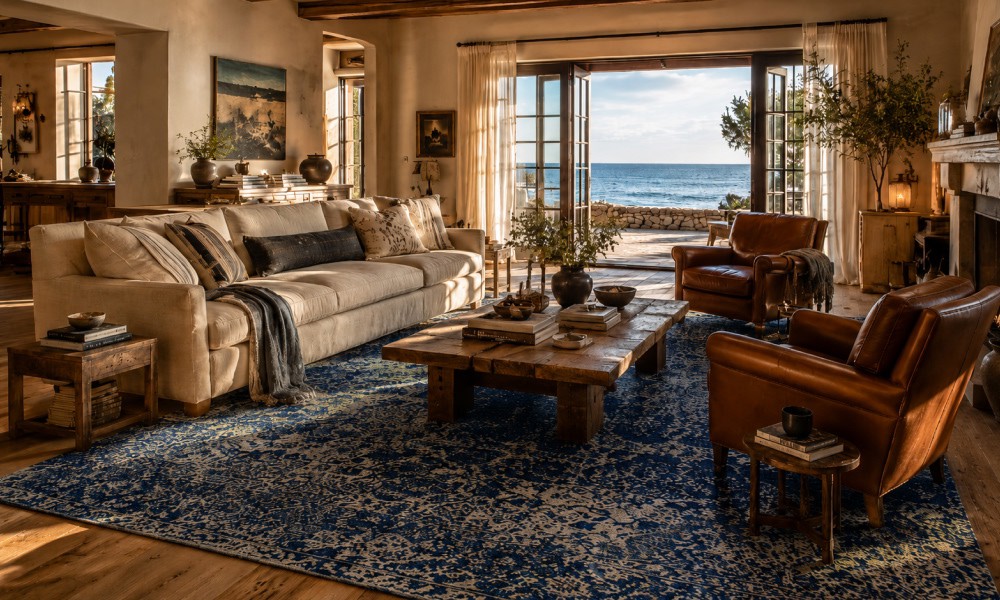
-
04 July 2026
-
8 Min Read
Coastal Grandmother Is Evolving: The 2026 "Coastal Heritage" Aesthetic and the Rugs That Define It
The coastal grandmother design is progressing into something new and exciting by 2026. Coastal Heritage introduces texture, craftsmanship, and handmade elements to this popular design style. Here are the various rug types, colors, and decorating ideas to know about this classic coastal design trend.
Read More >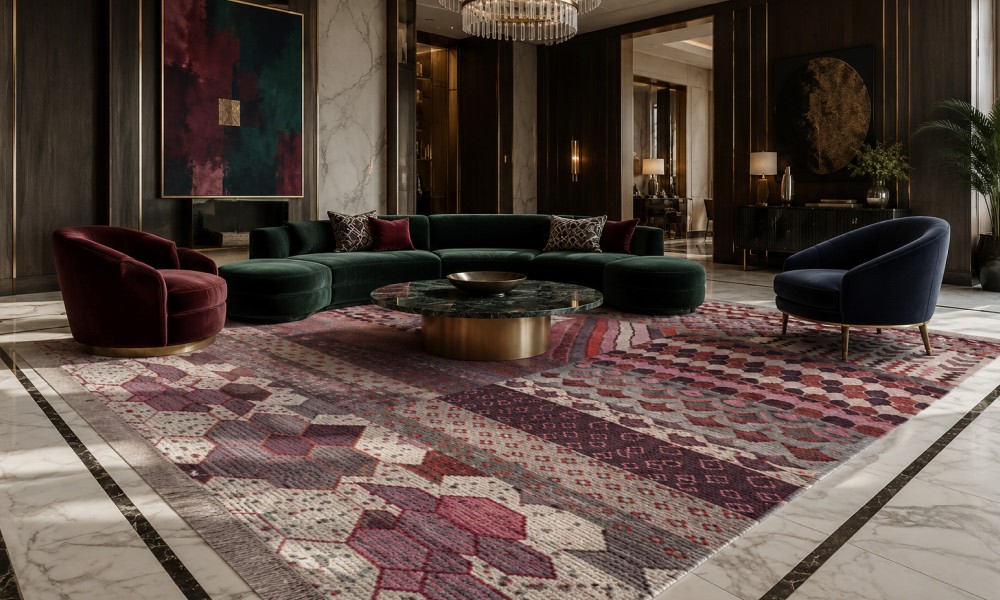
-
22 June 2026
-
6 Min Read
Why Top Interior Designers are Switching to Indian Handmade Rugs
High-end interior designers have begun using handmade carpets from India in place of machine-made carpets to enhance their design portfolios and ensure product longevity. The following guide will help you understand why design professionals prefer Jaipur Rugs for creating customized, ethically produced wool-and-bamboo-silk carpet designs for luxurious homes.
Read More >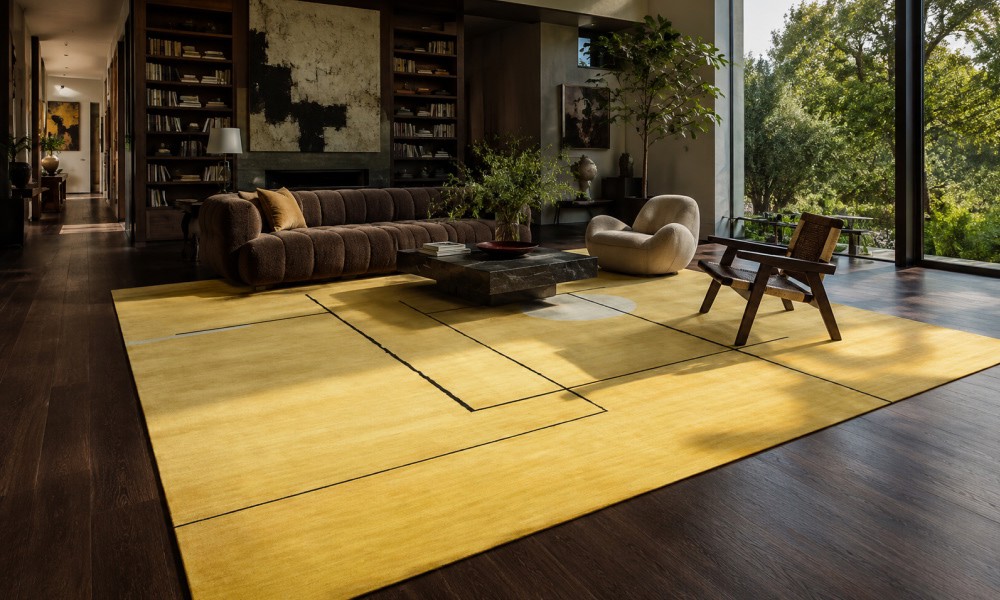
-
20 June 2026
-
8 Min Read
Contrast is Everything: The Best Rugs for Dark Wood Floors
A dark wood floor immediately adds elegance to any home interior, yet darker shades can absorb all natural light from outside and will “eat” any furniture that is not properly buffered. In this detailed guide, we are going to look at how to pick the right rugs for wood floors, considering color balance, light neutrals, texture, and size.
Read More >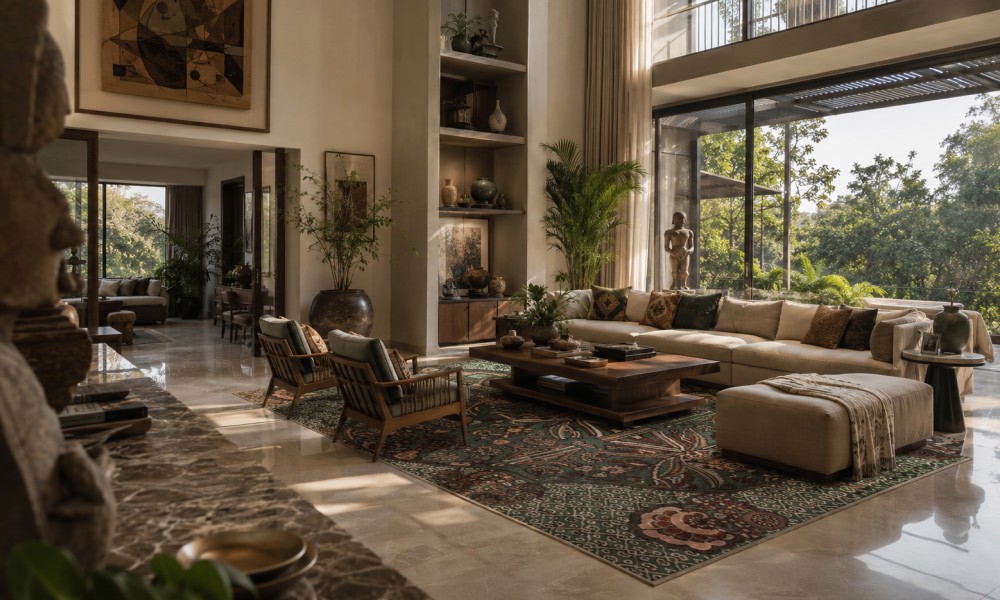
-
19 June 2026
-
11 Min Read
What Vastu Colours for Living Room Rugs Are Best? A Complete Directional Guide
Selecting the right vastu colors for living room rugs anchors your home layout with balance. This directional guide details the best shades for North, East, South, and West quadrants. Align your luxury decor with classic principles and shop premium hand-knotted, traditional, or custom accent rugs to perfectly match your home setup.
Read More >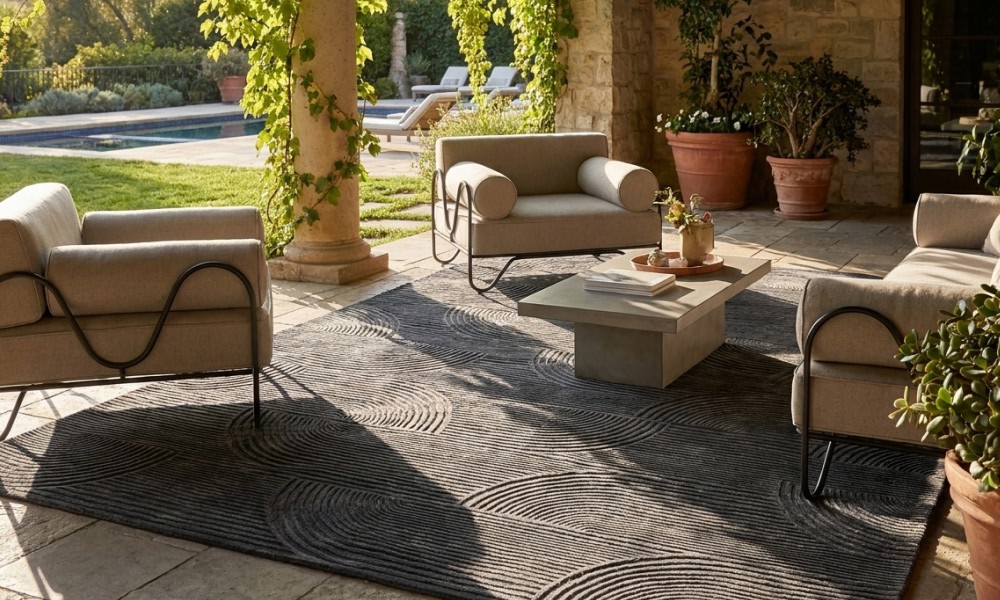
-
17 June 2026
-
5 Min Read
Why Most Patios Feel Incomplete Until You Add a 10x14 Outdoor Rug
Most people assume their patio feels incomplete because they need more furniture. That's usually not true. In many cases, the real issue is scale, not seating. Before spending thousands on another chair, sofa, or dining set, discover why a properly sized Outdoor Rug 10x14 can completely change how your patio looks, feels, and functions.
Read More >