You are on our International website. Please select your region to see content specific for your location





 Profile
 Orders
 Wishlist
 Change Password
 Logout


Latest Blogs
ideas and inspiration
The $500 vs $5,000 Rug: An Honest Side-by-Side That No Brand Will Show You
- 15 July 2026
- |
- 8 Min Read
- |
- By Jaipur Rugs
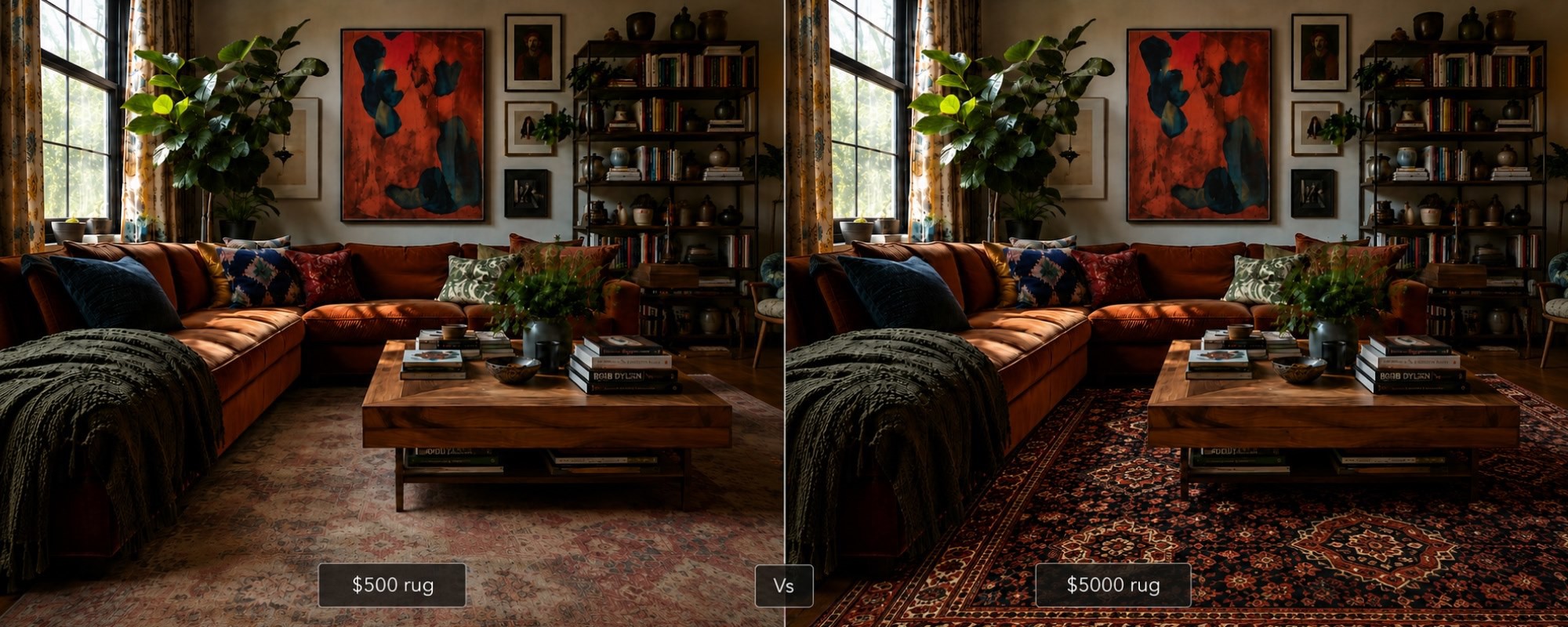
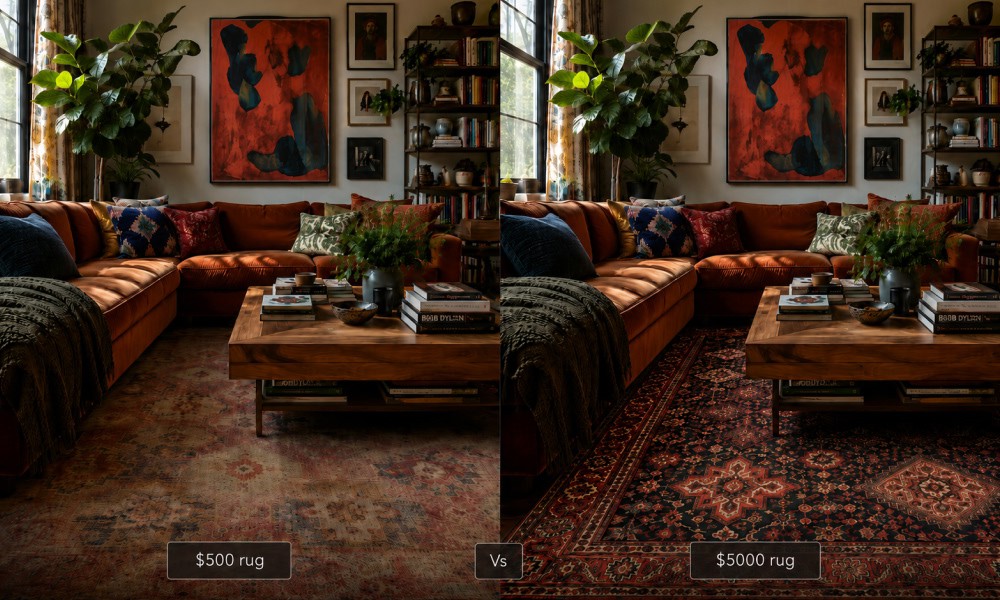
Why do some rugs cost ten times more than others? This honest side-by-side looks at what actually separates a $500 rug from a $5,000 one: knot density, fiber quality, pile depth, and finishing. No brand bias, no marketing language. Just a clear breakdown to help you decide which one is worth it for your space and budget.
You’ve probably stood in a rug store or scrolled through one at 11pm, and wondered why one rug costs ten times more than another. They look similar. Same kind of pattern. Both are handmade. Both are pretty.
Most brands won’t do this comparison because it makes their pricing uncomfortable to explain. So here’s an honest breakdown, one layer at a time.
Why This Comparison Actually Matters
Most people buy a rug the same way they buy furniture: by how it looks in the photo. That’s completely reasonable. But if you’re spending anywhere between $500 and $5,000, you should know what’s actually changing at each price point, and whether that change is worth it for your specific situation.
The answer isn’t always “buy the expensive one.” But once you understand what you’re paying for, the guesswork goes away pretty quickly.
Knot Density: 60 KPSI vs 150 KPSI
This is the first number worth understanding. KPSI stands for knots per square inch, and it’s probably the single biggest factor that separates a good rug from a great one.
A $500 rug typically sits around 60 KPSI. A $5,000 rug is closer to 150 KPSI, sometimes more.
Put the same geometric or floral design on both. On the 60 KPSI version, the edges of the pattern look slightly stepped. You’ll notice it if you look closely. On the 150 KPSI version, the same motif has clean, sharp curves. The design resolves. It’s like the difference between a high-res photo and a pixelated one, technically the same image, but not really.
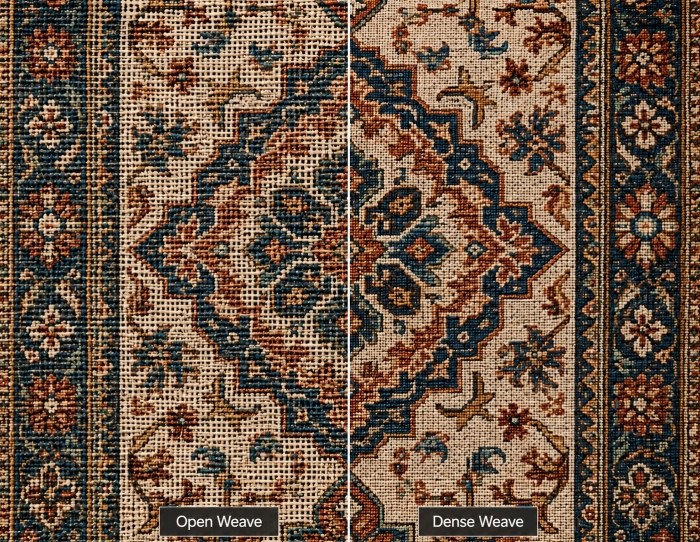
This is where visual precision starts. It’s also why hand-knotted rugs cost what they cost. Every additional knot per square inch means more time, more skill, and more material going into the piece. There’s no shortcut to it.
Zoom In: What’s Actually Inside the Knot
Get close enough to the surface, and the two rugs start telling very different stories.
On the more affordable rug, the yarn is thicker, and the knots are more loosely spaced. Each knot takes up more real estate, which limits how fine the detailing can get.
On the $5,000 rug, the yarn is finer, the knots are packed tighter, and the pile is noticeably denser as a result.
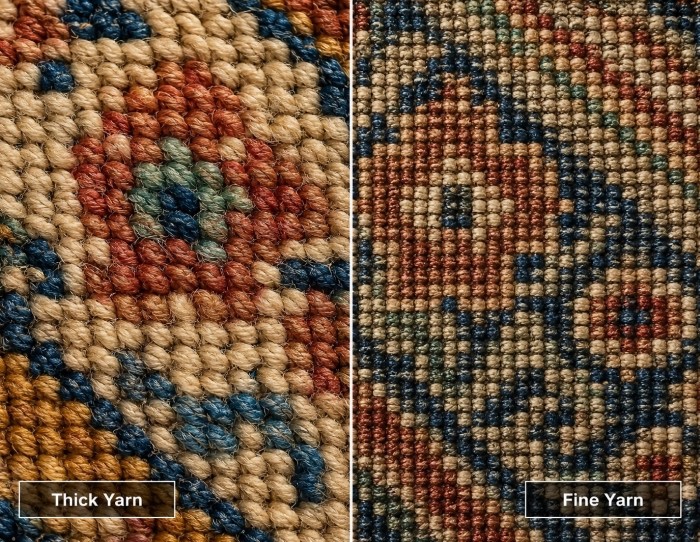
What looks like a subtle difference from across the room is actually hundreds of additional hours of work. The craftsmanship isn’t just in the design. It’s in how the design is built, one knot at a time.
This is also where wool and silk start to diverge. Silk allows for finer yarn, which enables tighter knots and higher KPSI. You simply can’t get the same density with thicker wool without compromising the structure.
The Fiber Story: Wool vs Wool-Silk Blend
Materials shape everything: how a rug looks, how it feels, and how it ages.
A 100% wool rug has a matte, grounded quality. Warm, durable, holds color well over decades. It’s also more forgiving, which makes it a better fit for homes with kids, pets, or real foot traffic.
A lot of traditional and modern rugs are made in wool for exactly this reason, and there’s nothing wrong with that.
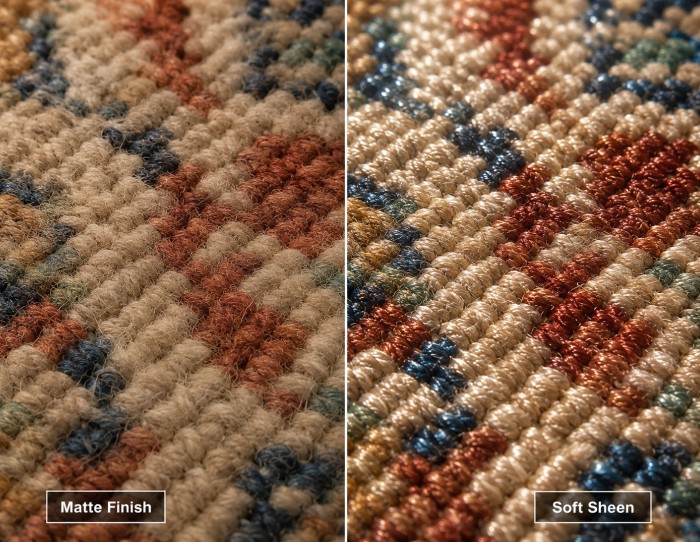
A wool-silk blend does something different. The silk threads catch light and add a subtle sheen that shifts as you move around the rug. The same pattern looks deeper, almost three-dimensional. In certain lighting, the surface seems to shift slightly depending on the angle you’re standing at.
Neither is objectively better. They serve different purposes, and that matters when buying for a specific space rather than just a general idea of a nice rug.
Flip It Over: The Back Reveals Everything
This one is underused. Flip the rug over.
The back of a well-made rug shows a surprisingly clear version of the front pattern, because every knot tied on the front creates a corresponding impression on the back. The higher the density, the more defined that impression becomes, even from the underside.
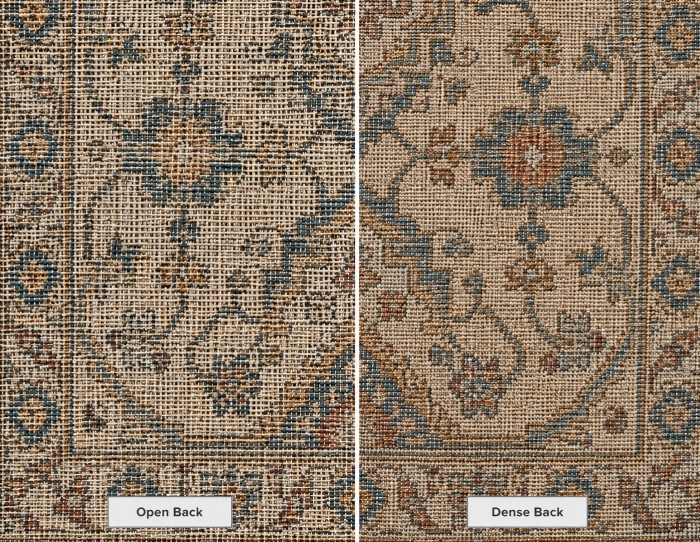
On a lower-density rug, the back looks coarser, and the pattern is harder to read. On a high-KPSI rug, you can often trace the design almost as clearly as the front. It’s a fast, reliable way to assess craftsmanship without needing any specialist knowledge. If you’re at a showroom or evaluating a custom piece, always ask to see the back.
Edges and Finishing: Where Long-Term Value Lives
Stand at the corner of both rugs. Run your hand along the edge. Look at the fringe.
On the $500 rug, the finishing is functional. It does the job. On the $5,000 rug, the edges are tighter, the fringe is hand-knotted and even, and the corners lie flat without curling. That’s not just aesthetic. It directly affects how the rug holds up over years of actual use.
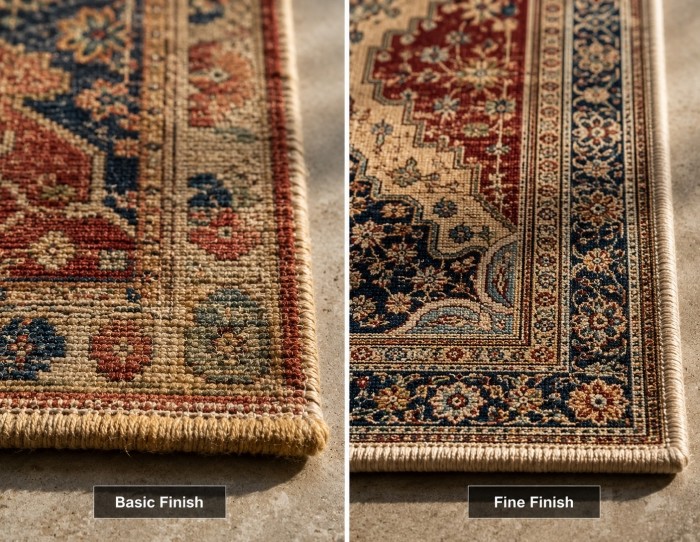
Poorly finished edges start to fray within a few years. Fringe that’s glued rather than knotted begins to separate. These details are what separate a rug that lasts 10 years from one that lasts 50. Not a small distinction.
Pile and Surface Feel: You Live on This Thing
Knot density doesn’t just affect how a rug looks. It affects how it feels underfoot and how it holds that feeling over time.
A denser pile has more body. There’s a slight resistance when you press into it, like the difference between a firm mattress and one that’s already starting to give. Walk across both rugs barefoot, and you’ll feel it immediately.
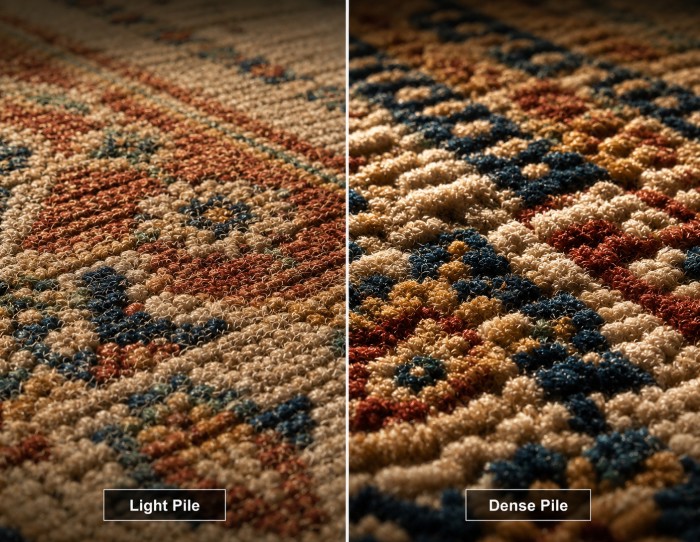
Lower-density rugs tend to flatten in high-traffic areas. The pile compresses and doesn’t fully recover. Denser rugs hold their structure longer. They look and feel the same years in, not just the week they arrived.
In a Real Room: What You Actually See
Put both rugs in the same space. From the doorway, both work. Both look like rugs. Guests won’t immediately know which one costs more.
But spend time in the room, actually live in it, and something shifts. The denser rug holds more visual weight. It draws the eye in a quieter, more settled way. The other rug looks nice. This one has a presence.
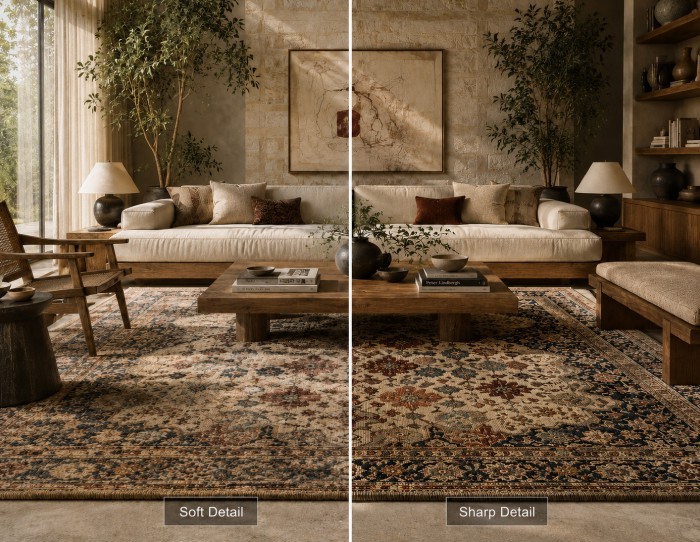
That’s a harder thing to photograph, which is probably why it rarely comes up in product descriptions.
So What Are You Actually Paying For?
Here’s the breakdown, without the marketing language:
-
Knot density. More knots per square inch means finer design resolution and significantly more labor hours per piece.
-
Time and craftsmanship. A 150 KPSI rug can take two to three times longer to weave than a 60 KPSI piece of the same size.
-
Material quality. Finer yarn, better dye, and sometimes silk content that changes how light interacts with the surface.
-
Finishing precision. Edges, corners, and fringe are executed with care rather than speed.
-
Longevity. When you factor in how long a denser, well-finished rug actually lasts, the cost per year looks very different from the sticker price.
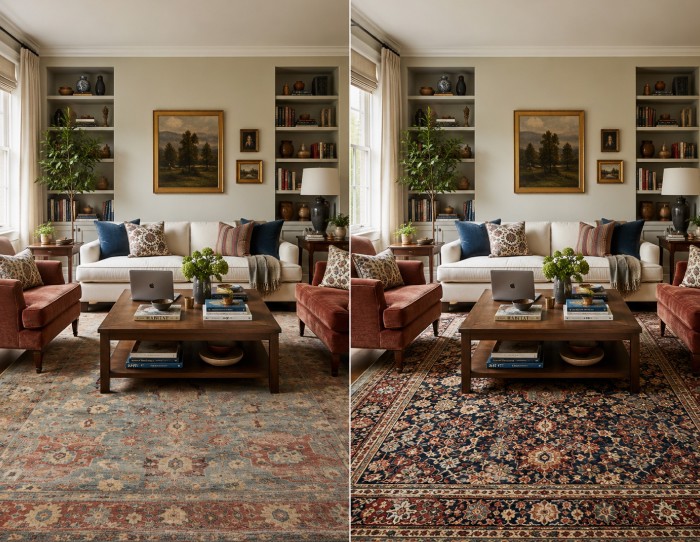
Most carpet price comparisons stop at the number. They don’t look at the depth of work sitting behind it.
The Honest Final Take
A $500 rug can be a genuinely great choice. For a rental, a kids’ room, or a space you plan to change in a few years, it works, and it looks good doing it. Cotton rugs, round rugs, something with personality in that range: practical, easy to swap out, no regrets.
A $5,000 rug is a different kind of decision. The price reflects the density of work behind it: more knots, finer materials, tighter finishing, more time from the hands that made it. A well-chosen piece at this level doesn’t just work in a room. It becomes part of how the room is remembered.
Neither choice is wrong. But they’re not the same choice dressed up differently.
Once you can see the knot structure, the pile depth, and the finishing, the difference stops being abstract. It becomes visible. And once it’s visible, you’ll know exactly which one you’re shopping for.
Exploring your options? Browse hand-tufted rugs for quality at a mid-range price, or take a look at the full range of wool rugs, traditional rugs, and modern rugs to find what fits your space and budget.
FAQs
Is an expensive rug actually worth it?
For a space you’re furnishing long-term, yes. A well-made rug holds its structure and appearance far longer than a budget one. For a temporary space or a room you expect to redecorate in a few years, a $500 rug makes more practical sense.
How do you check rug quality without specialist knowledge?
Flip it over. A well-made rug shows a clear pattern on the back. The clearer it is, the denser the weave. Also, check the edges: clean, even finishing is a reliable sign of quality construction.
What actually drives the cost of a handmade rug?
Knot density is usually the biggest factor. Higher KPSI means significantly more weaving hours. Material choice adds to it: silk costs more than wool and requires more skilled handling. Finishing and pile depth round out the price.
What KPSI should you look for?
100 KPSI and above for a solid everyday rug. 150 KPSI or higher for sharp pattern detail and long-term durability.
Can a cheaper rug look as good as an expensive one?
Initially, yes, especially from across the room. The gap shows over time. Cheaper rugs flatten, fray at the edges, and lose their look faster. The difference becomes clear over the years of living with both.
How long does a handmade rug last?
A well-made hand-knotted rug with high knot density can last 50 to 100 years with basic care. A budget rug in the $500 range typically lasts 5 to 10 years, depending on foot traffic and maintenance.


Pic Credits
Jaipur rugs / Abil Dase
Share
-
 Facebook
-
 Twitter
-
 Email
Email
Related Posts
-
14 July 2026
- ∙
-
13 Min Read
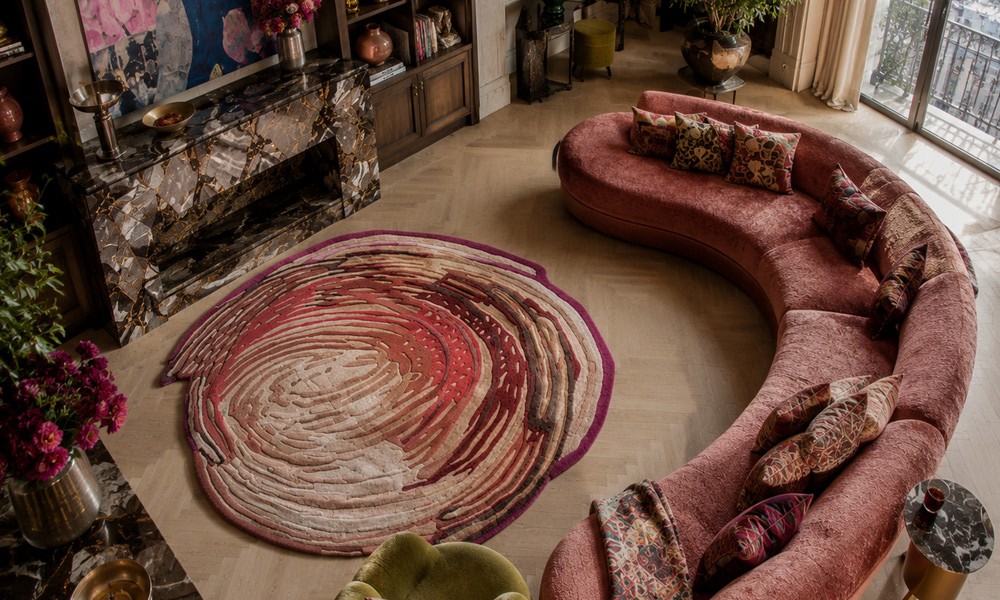
3D Rugs and Sculpted Pile: The Tactile Design Trend Redefining Floors in 2026
The rug used to finish a room. Now it starts one. 3D rugs and sculpted piles are bringing real depth and tactile texture to interiors, from hand knotted relief patterns to optical illusion designs that stop you mid-step. This is what the trend is, why it matters, and how to buy it well.
Read Article →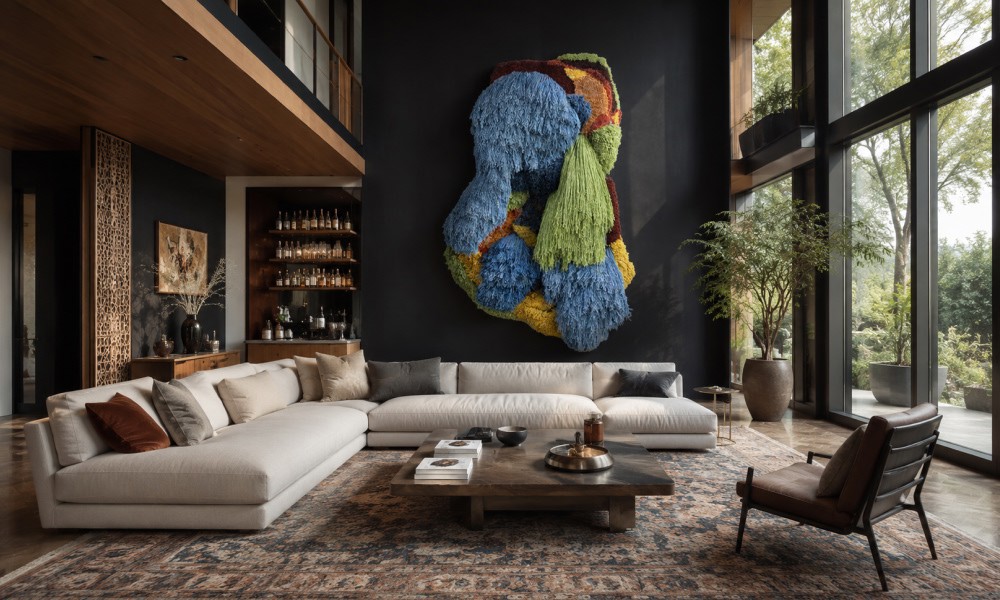
-
10 July 2026
- ∙
-
10 Min Read
How to Pair Indian Wall Art with the Right Rug Pattern: A Room-by-Room Guide
Choosing the right rug to go with your Indian wall art does not have to be guesswork. This guide breaks it down room by room, from the living room to the bathroom and outdoor spaces. Learn how to match colors, patterns, and scale so your wall art and rug always feel like they belong together.
Read Article →
-
07 July 2026
- ∙
-
9 Min Read
How to Tell If a Rug Is Handmade: 7 Signs Experts Look For (Abrash Is One of Them)
Wondering how to know if a rug is handmade? Get an overview of 7 key characteristics that will help you identify if a rug is truly handmade and learn about its differences compared to machine-made rugs, and why they do not lose their value. Here is what to keep in mind when buying a handmade rug.
Read Article →
-
04 July 2026
- ∙
-
8 Min Read
Coastal Grandmother Is Evolving: The 2026 "Coastal Heritage" Aesthetic and the Rugs That Define It
The coastal grandmother design is progressing into something new and exciting by 2026. Coastal Heritage introduces texture, craftsmanship, and handmade elements to this popular design style. Here are the various rug types, colors, and decorating ideas to know about this classic coastal design trend.
Read Article →
-
22 June 2026
- ∙
-
6 Min Read
Why Top Interior Designers are Switching to Indian Handmade Rugs
High-end interior designers have begun using handmade carpets from India in place of machine-made carpets to enhance their design portfolios and ensure product longevity. The following guide will help you understand why design professionals prefer Jaipur Rugs for creating customized, ethically produced wool-and-bamboo-silk carpet designs for luxurious homes.
Read Article →
-
20 June 2026
- ∙
-
8 Min Read
Contrast is Everything: The Best Rugs for Dark Wood Floors
A dark wood floor immediately adds elegance to any home interior, yet darker shades can absorb all natural light from outside and will “eat” any furniture that is not properly buffered. In this detailed guide, we are going to look at how to pick the right rugs for wood floors, considering color balance, light neutrals, texture, and size.
Read Article →