You are on our International website. Please select your region to see content specific for your location





 Profile
 Orders
 Wishlist
 Change Password
 Logout


Latest Blogs
ideas and inspiration
Art Deco in 2026: What Still Works, & How to Get It Right
- 23 April 2026
- |
- 7 Min Read
- |
- By Jaipur Rugs
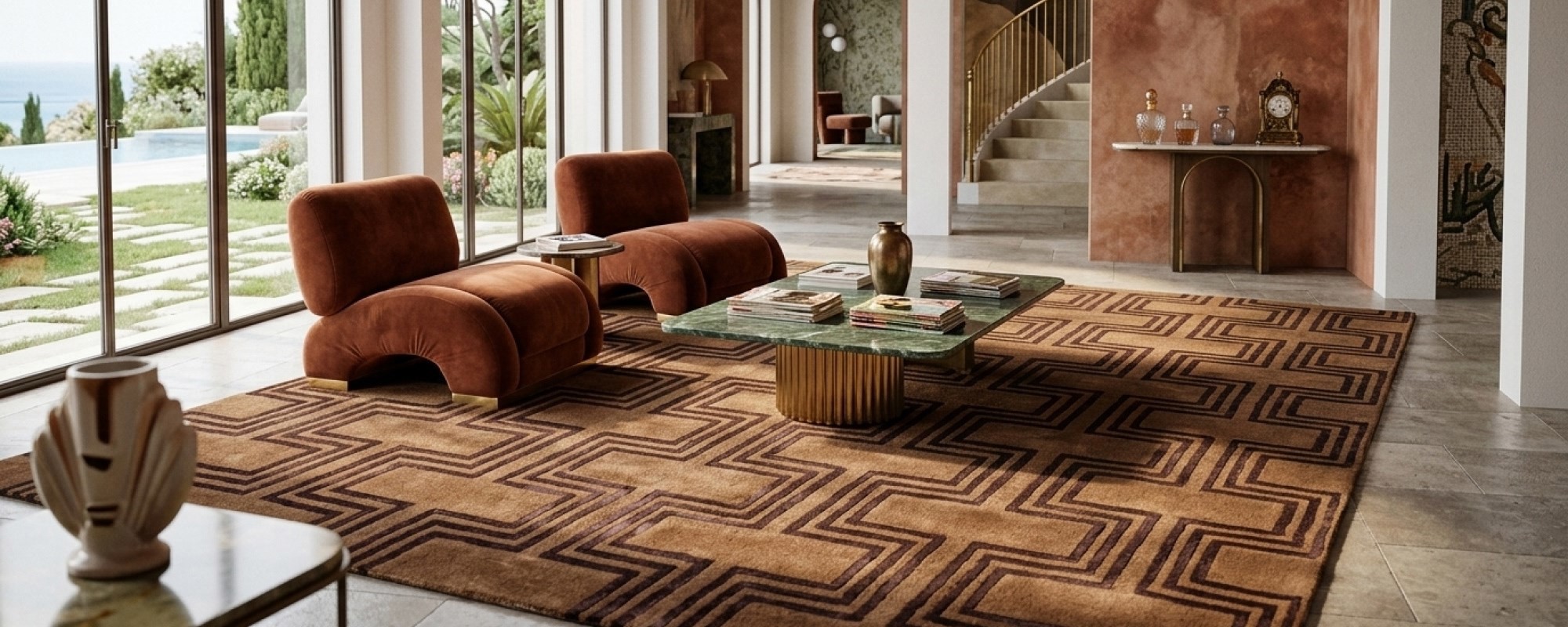
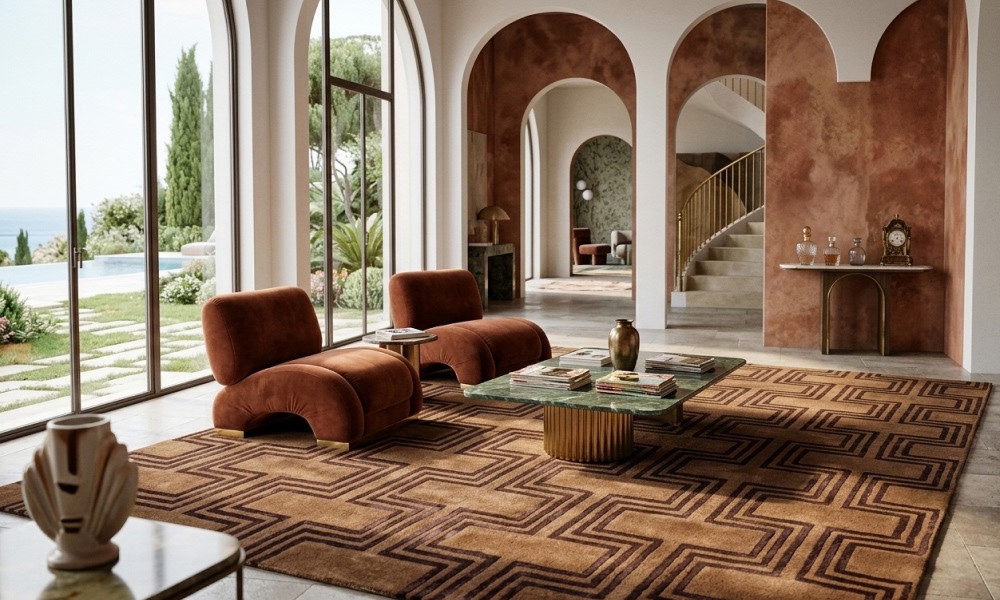
Art Deco looks easy to copy. It isn’t. Most interiors borrow its patterns and miss its logic, which is why they feel expensive but unresolved. This guide breaks down what truly defines Art Deco, where it works in modern interiors, and the subtle decisions that separate precision from imitation. If you get this wrong, the entire room shows it.
Let's start with what Art Deco is.
Art Deco is a design language born in the 1920s–30s, crystallised at the 1925 Paris Exposition, defined by geometry, symmetry, and a fascination with modernity. In 2026, it returns not as nostalgia, but as structure. In an era overwhelmed by fluid forms and algorithmic sameness, Art Deco offers something rarer: visual certainty.
Art Deco Isn’t Vintage. It’s a System.
Most explanations reduce Art Deco to “bold shapes and gold accents.” That’s surface reading. The real logic sits deeper.
Art Deco design is built on controlled repetition and visual hierarchy. Think stepped forms, sunbursts, chevrons, and precise line work. These aren’t decorative choices; they guide the eye, enforce balance, and create rhythm within a space. It borrows from industrial progress, machine aesthetics, and even ancient motifs, but refines them into something unapologetically modern.
The mistake today is treating it as a theme. Velvet sofa, handmade rugs, brass lamp, done. That approach collapses quickly because Art Deco isn’t additive. It’s architectural in mindset. Every element needs to participate in the same visual grammar.
If your room can survive removing half its objects without losing identity, it’s not Art Deco. It’s styling.
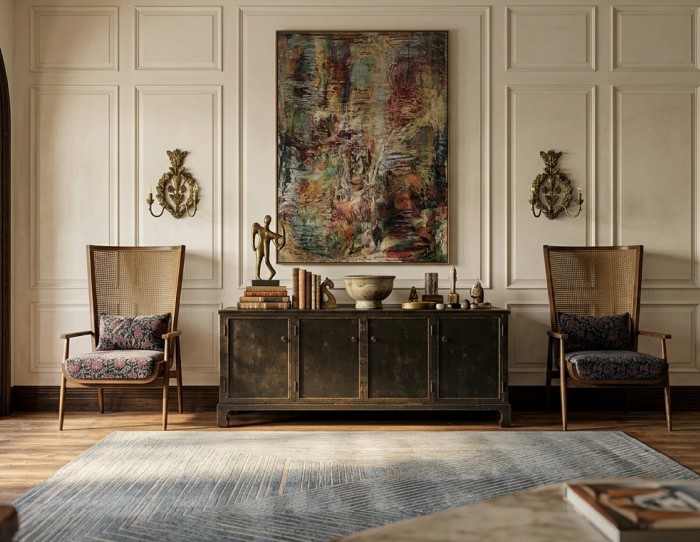
What Actually Defines Art Deco Patterns in 2026?
At a glance, they feel ornamental. Up close, they’re mathematical.
Art Deco patterns rely on symmetry, repetition, and angular precision. The common motifs are:
-
Fan shapes and sunbursts that radiate outward.
-
Zigzags and chevrons that create directional movement.
-
Stepped forms that mimic skyscraper silhouettes.
-
Streamlined curves that echo speed and motion.
But the defining trait is control. Even the curves are disciplined. There’s no randomness, no organic drift.
Visual decoding: If a pattern feels like it could extend infinitely without breaking its logic, it aligns with Art Deco. If it feels spontaneous or irregular, it doesn’t.
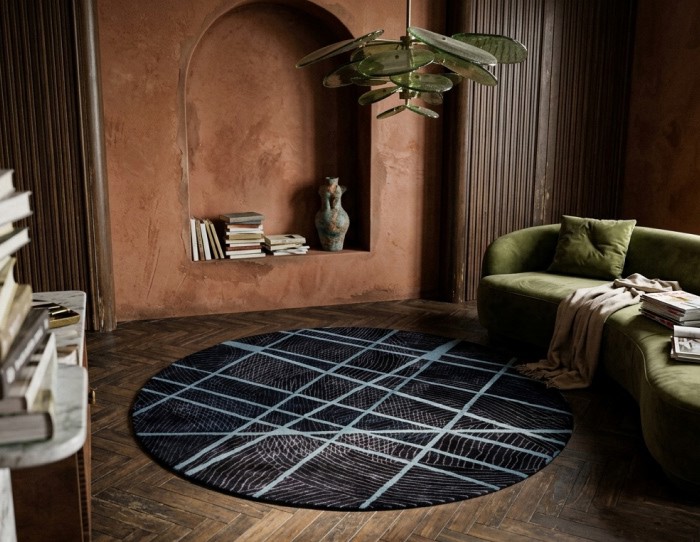
Where Art Deco Works Today and Where It Collapses?
Art Deco thrives in environments that respect proportion and restraint. It performs best when given space to breathe.
What Works
-
Clean layouts where geometry or geometric rugs can be read clearly.
-
Limited but high-contrast material palettes.
-
Strong focal points instead of scattered visual noise.
What Fails
-
Over-layering textures in the name of “luxury”.
-
Mixing too many historical styles without a hierarchy.
-
Using metallics as shortcuts instead of structure.
Here’s the uncomfortable truth: most modern “Art Deco living room” setups online fail because they confuse richness with excess. Deco was never about excess. It was about precision dressed as opulence.
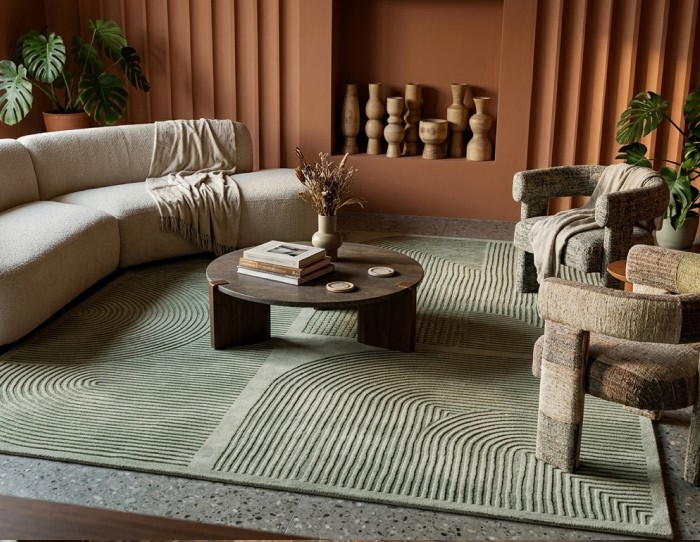
Why Art Deco Rugs Are the Anchor of a Room?
Rugs are not accessories here. They’re the anchor.
In contemporary interiors, designer rugs are often treated as soft backdrops. In Art Deco, they function differently. They set the geometry of the room.
A well-chosen art deco rug establishes:
-
Direction of movement through linear patterns.
-
Visual center through symmetry or focal motifs.
-
Scale discipline through proportion relative to furniture.
This is why randomly placing a patterned jute carpet in a Deco-inspired room often feels “off.” The rug isn’t aligned with the spatial logic.
Decision insight: If your rug pattern fights your furniture layout instead of reinforcing it, it’s the wrong area rug, no matter how visually striking it is.
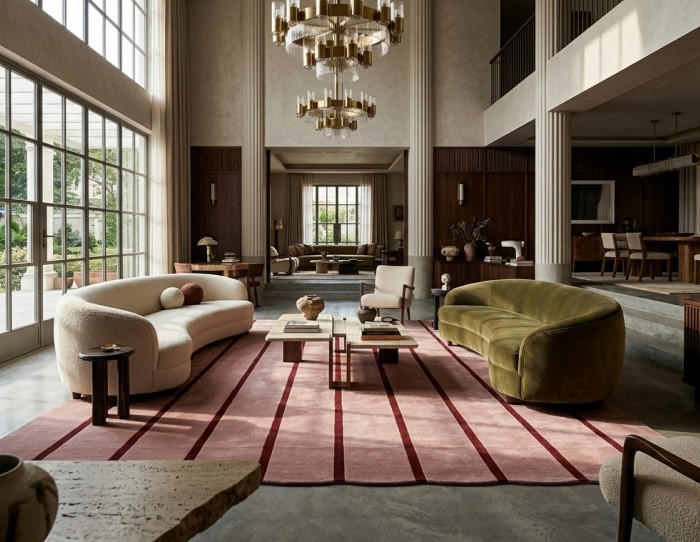
Neo Deco: a Reinterpretation, Not a Movement
“Neo Deco” sounds like a revival label, but it’s not an official design movement. It’s a contemporary reinterpretation, shaped by current materials, production techniques, and spatial needs.
Where traditional Art Deco was rigid, Neo Deco loosens slightly. It keeps the geometry but softens the execution.
You’ll see:
-
Asymmetry is introduced into otherwise structured layouts.
-
Muted palettes replacing high-gloss contrast.
-
Simplified patterns that hint at Deco rather than replicate it.
It’s less about recreating the past and more about extracting its logic.
Neo Art Deco doesn’t reject Deco principles. It edits them. That distinction separates thoughtful design from trend-chasing.
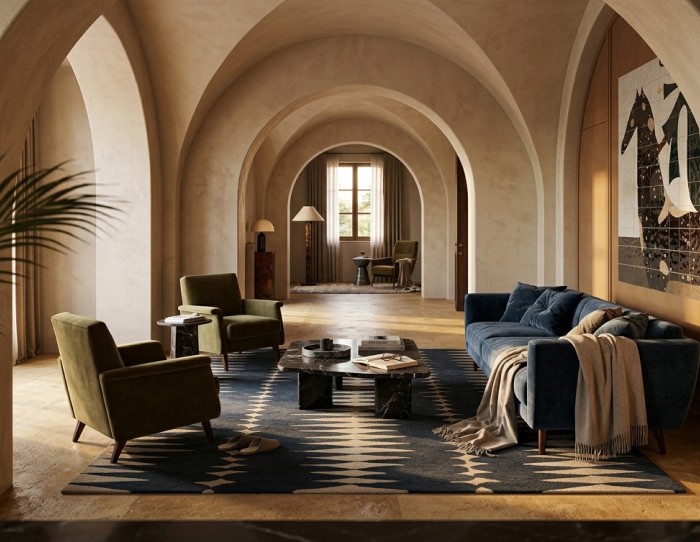
Art Deco Rugs vs Abstract vs Modern Rugs: What Actually Sets Them Apart
Art deco rugs are defined by structured geometry, symmetry, and bold contrast, while abstract rugs are irregular and expressive, and modern rugs focus on simplicity, function, and softer visual balance. The key difference lies in control versus freedom: art deco is deliberate, abstract is interpretive, and modern is restrained.
Quick Comparison Table
| Feature | Art Deco Rugs | Abstract Rugs | Modern Rugs |
| Design Approach | Structured and intentional | Free-form and expressive | Functional and minimal |
| Pattern Style | Geometric, symmetrical | Irregular, fluid | Soft geometry, subtle forms |
| Visual Feel | Bold, high-contrast | Artistic, unpredictable | Calm, balanced |
| Symmetry | Strong symmetry | Asymmetrical | Light or no symmetry |
| Color Usage | High contrast, defined palettes | Experimental, layered | Muted, controlled |
| Purpose in Room | Statement anchor | Visual expression | Background harmony |
What Most People Miss
Art deco rugs don’t just decorate a space; they direct it. The eye moves exactly where the pattern wants it to. Abstract rugs do the opposite; they invite interpretation, letting the eye wander without structure. Modern rugs sit in between, reducing visual noise and stabilizing the space.
Practical Takeaway (Buyer Decision Layer)
-
Choose art deco rugs when you want a space to feel structured and visually powerful.
-
Choose abstract rugs when you want movement and artistic unpredictability.
-
Choose modern cotton rugs when you want clarity without distraction.
Mixing these styles without intent often creates tension. Art Deco demands control, abstract resists it, and modern simplifies it.
If your space already has a strong structure, avoid adding abstract chaos. If your space feels flat, Art Deco can introduce direction instantly.
How to Style Art Deco in Modern Homes?
The goal isn’t to recreate a 1930s interior. It’s to integrate Deco logic into contemporary living.
Start with structure, not objects.
-
Define one geometric anchor. This could be a rug, a wall pattern, or even a furniture arrangement. Everything else should respond to it.
-
Limit the palette. Deco works best when contrast is intentional. Too many colours or extremely colourful rugs dilute its clarity.
-
Use materials strategically. Metallics, glass, and polished surfaces should highlight structure, not compensate for its absence.
-
Control repetition. Repeat motifs enough to create rhythm, but not so much that it becomes predictable.
-
Edit aggressively. Deco doesn’t tolerate clutter. If it doesn’t serve the composition, it goes.
Design the room as if you’re composing a graphic layout, not decorating a space.
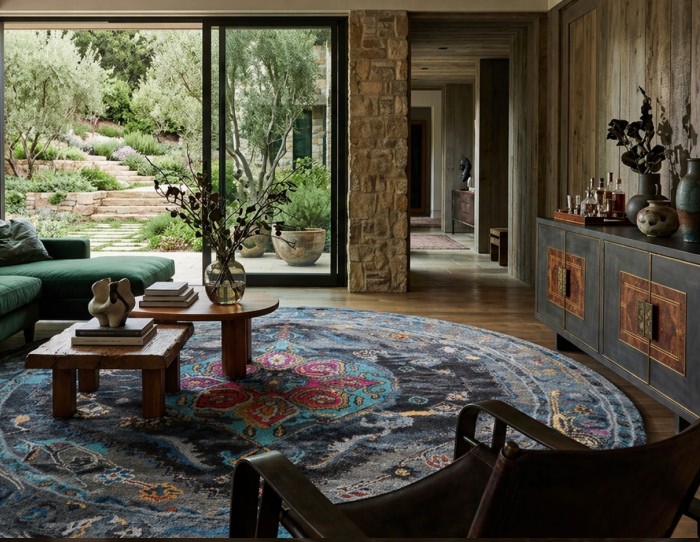
Why Art Deco Is Under The Spotlight Right Now?
Every design era reacts to the one before it. When spaces become too soft, too fluid, too undefined, there’s a pull toward structure.
Art Deco answers those needs.
It offers clarity without minimalism, richness without chaos, and identity without excess. That balance is rare, which is why it keeps resurfacing, especially in moments when design feels directionless.
Summing Up..
Art Deco isn’t a style you apply. It’s a system you commit to, even partially.
Used poorly, it becomes costume design. Used well, it reshapes how a space functions visually.
The difference lies in understanding its core: geometry, control, and intent.
Everything else is just decoration.
We will be back with another blog soon.
Till then, stay tuned and explore Jaipur Rugs!
FAQs
What is Art Deco?
Art Deco is a design style from the 1920s–30s defined by geometric shapes, symmetry, and a focus on modern materials. In simple terms, it replaces natural forms with structured, machine-inspired design that feels ordered and deliberate.
What are the main characteristics of Art Deco?
Art Deco is defined by symmetry, bold geometry, and repeated patterns. In simple terms, it uses shapes like zigzags, sunbursts, and stepped forms, combined with materials such as glass, metal, and polished surfaces to create a controlled, structured look.
What is Neo Deco?
Neo Deco is a modern reinterpretation of Art Deco, not an official design movement. In simple terms, it keeps the core ideas of geometry and structure but simplifies them for contemporary spaces. You’ll see cleaner patterns, softer contrasts, and more flexibility, making it easier to use in today’s interiors without the rigidity or intensity of original Art Deco.
When was the Art Deco period?
Art Deco developed in the early 20th century and peaked in the 1920s and 1930s. In simple terms, it became globally recognised after the 1925 Paris Exposition and remained dominant until World War II.
What influenced Art Deco design?
Art Deco was shaped by modern art movements and industrial progress. In simple terms, it draws from Cubism, Bauhaus, ancient Egyptian motifs, and machine-age design, combining them into a more structured and refined visual style.
What is the difference between Art Deco and Neo Deco?
Art Deco is a historical design style from the 1920s–30s, while Neo Deco is a modern reinterpretation of its principles. In simple terms, Art Deco follows strict symmetry, bold geometry, and rich materials, whereas Neo Deco softens these rules with simpler patterns, muted palettes, and more flexibility suited to contemporary interiors.
Why is Art Deco still popular today?
Art Deco remains relevant because it brings structure and clarity to interiors. In simple terms, it offers bold visual identity without chaos, making it useful in modern spaces that need definition and balance.


Pic Credits
Jaipur rugs / Abil Dase
Share
-
 Facebook
-
 Twitter
-
 Email
Email
Related Posts
-
15 July 2026
- ∙
-
8 Min Read
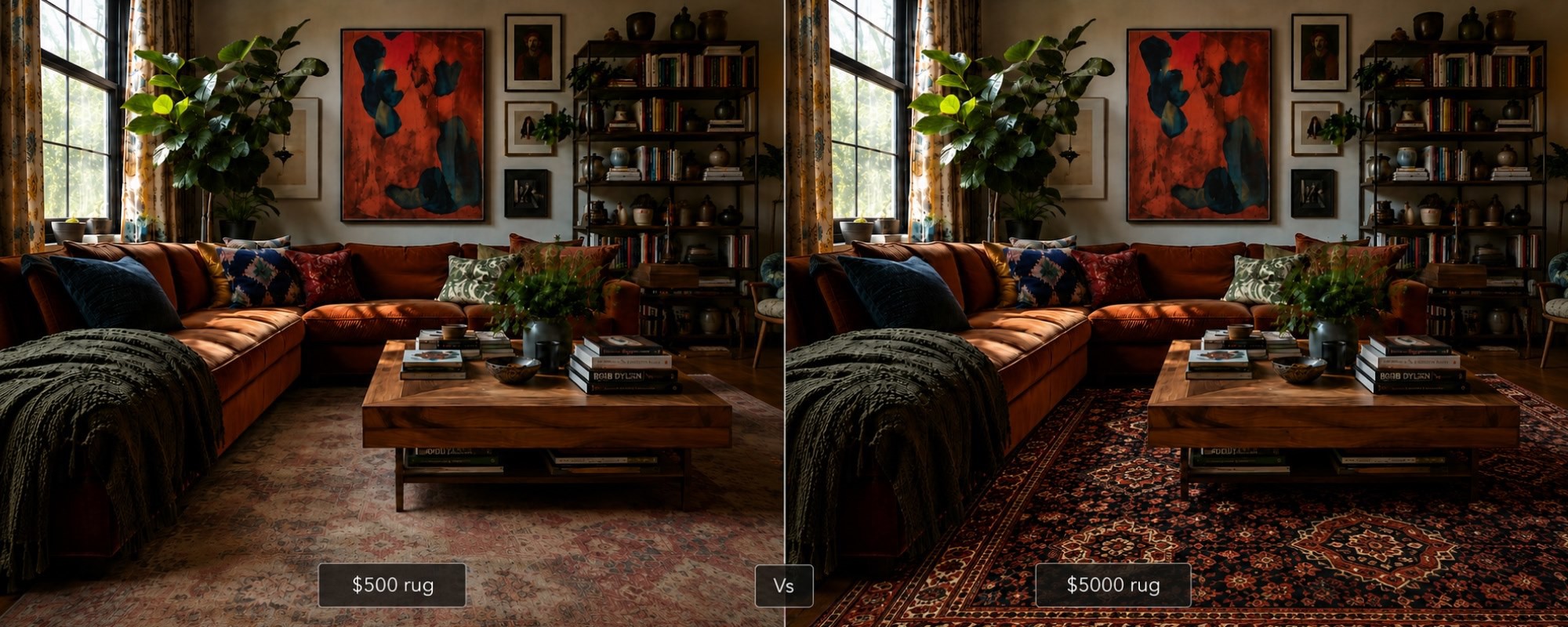
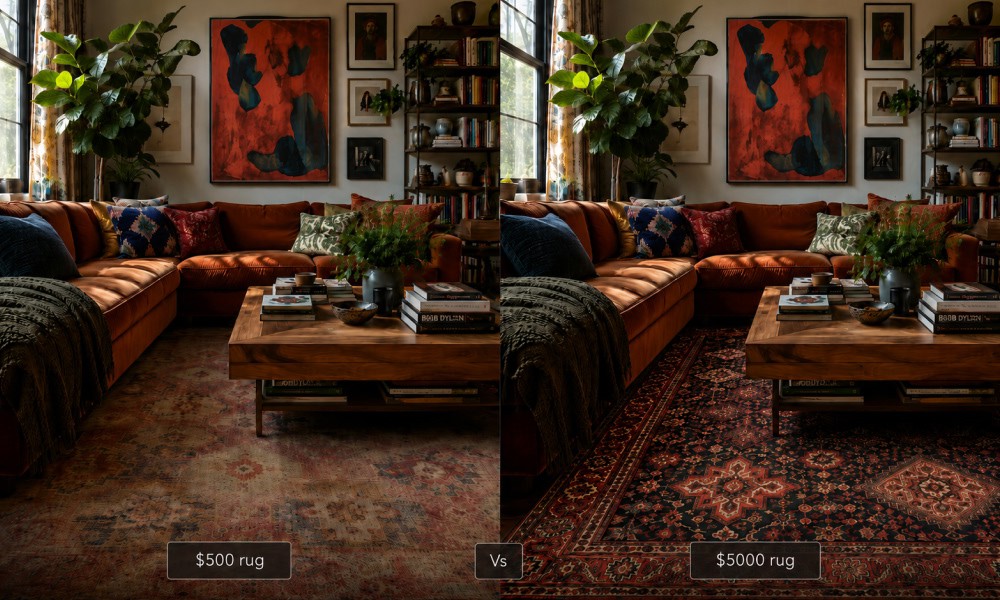
The $500 vs $5,000 Rug: An Honest Side-by-Side That No Brand Will Show You
Why do some rugs cost ten times more than others? This honest side-by-side looks at what actually separates a $500 rug from a $5,000 one: knot density, fiber quality, pile depth, and finishing. No brand bias, no marketing language. Just a clear breakdown to help you decide which one is worth it for your space and budget.
Read Article →
-
14 July 2026
- ∙
-
13 Min Read
3D Rugs and Sculpted Pile: The Tactile Design Trend Redefining Floors in 2026
The rug used to finish a room. Now it starts one. 3D rugs and sculpted piles are bringing real depth and tactile texture to interiors, from hand knotted relief patterns to optical illusion designs that stop you mid-step. This is what the trend is, why it matters, and how to buy it well.
Read Article →
-
10 July 2026
- ∙
-
10 Min Read
How to Pair Indian Wall Art with the Right Rug Pattern: A Room-by-Room Guide
Choosing the right rug to go with your Indian wall art does not have to be guesswork. This guide breaks it down room by room, from the living room to the bathroom and outdoor spaces. Learn how to match colors, patterns, and scale so your wall art and rug always feel like they belong together.
Read Article →
-
07 July 2026
- ∙
-
9 Min Read
How to Tell If a Rug Is Handmade: 7 Signs Experts Look For (Abrash Is One of Them)
Wondering how to know if a rug is handmade? Get an overview of 7 key characteristics that will help you identify if a rug is truly handmade and learn about its differences compared to machine-made rugs, and why they do not lose their value. Here is what to keep in mind when buying a handmade rug.
Read Article →
-
04 July 2026
- ∙
-
8 Min Read
Coastal Grandmother Is Evolving: The 2026 "Coastal Heritage" Aesthetic and the Rugs That Define It
The coastal grandmother design is progressing into something new and exciting by 2026. Coastal Heritage introduces texture, craftsmanship, and handmade elements to this popular design style. Here are the various rug types, colors, and decorating ideas to know about this classic coastal design trend.
Read Article →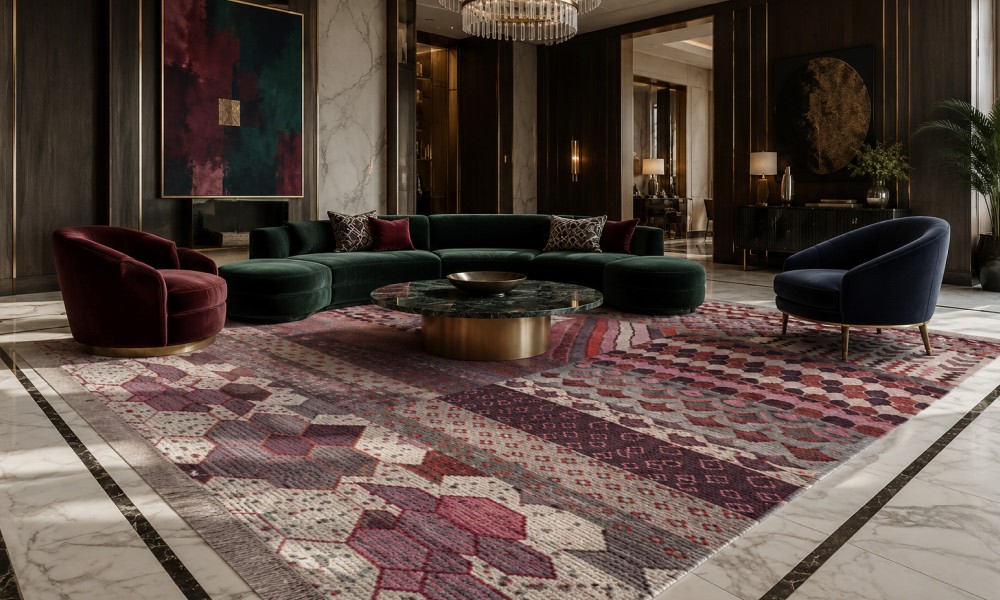
-
22 June 2026
- ∙
-
6 Min Read
Why Top Interior Designers are Switching to Indian Handmade Rugs
High-end interior designers have begun using handmade carpets from India in place of machine-made carpets to enhance their design portfolios and ensure product longevity. The following guide will help you understand why design professionals prefer Jaipur Rugs for creating customized, ethically produced wool-and-bamboo-silk carpet designs for luxurious homes.
Read Article →