
You are on our International website. Please select your region to see content specific for your location





 Profile
 Orders
 Wishlist
 Change Password
 Logout


LATEST BLOGS






Ultimate Rug Care Guide: How To Clean, Maintain & Restore Handmade Rugs?
- 19 July 2025
- 6 Min Read
- By Jaipur Rugs
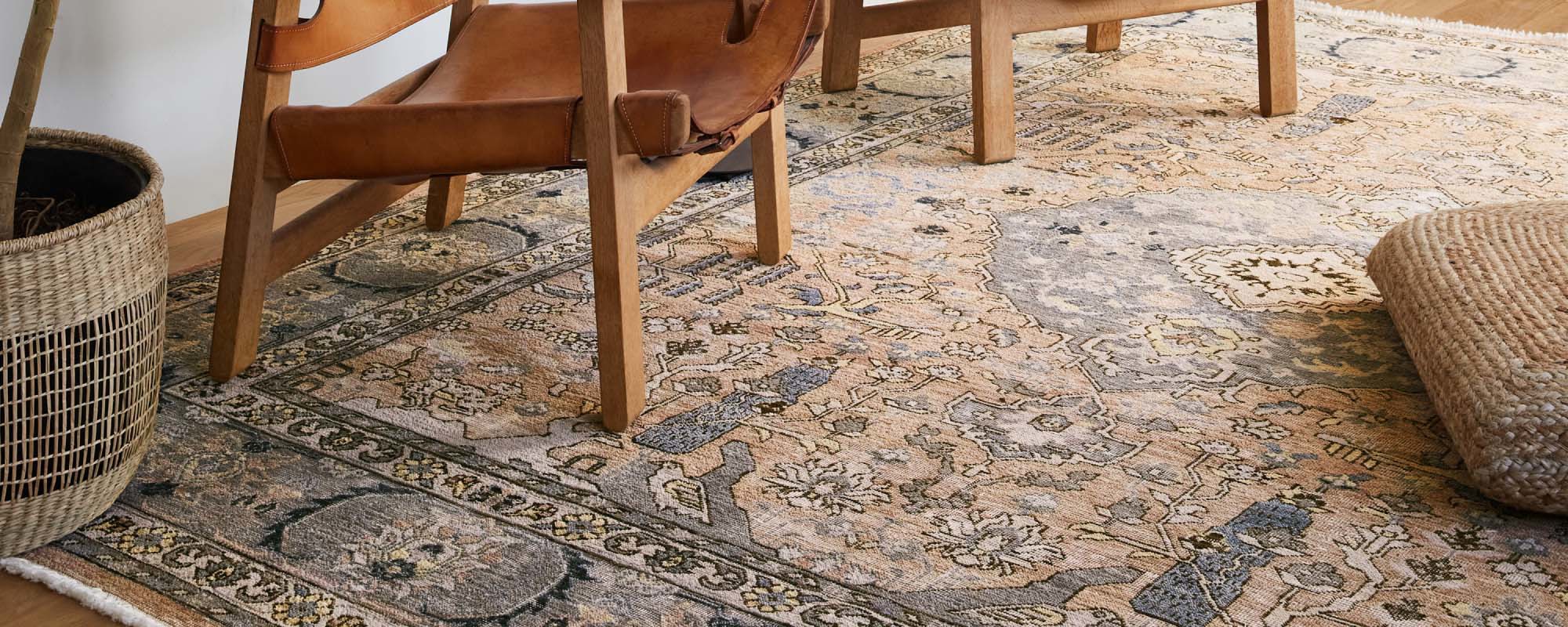

Think handmade rug care sounds intimidating? Think again. If it’s a wine spill on your living room rug, muddy paw prints on a wool rug, or the mystery stain haunting your Persian rug, this fun, fearless guide teaches you how to clean handmade rugs, maintain them daily, and even explore handmade rug restoration—without breaking a sweat or the bank. It’s the go-to resource for anyone who wants their aesthetic rugs to look runway-ready, even in high-traffic zones. Spoiler: you don’t need a trust fund. Just this blog, a vacuum, and maybe some vinegar. Shall we rug and roll then?
Owning a handmade rug is like dating someone beautiful and mysterious—they elevate your space, but they need attention, mood lighting, and zero drama. If you are trying to master handmade rug care, dealing with wine disasters, or wondering if that Persian rug is whispering for help, this guide has got you. This is how to maintain handmade rugs the right way—fun, fabulous, and beginner-proof.
How to Maintain Handmade Rugs Without Losing Your Mind?
Good news: handmade rug care isn’t about white gloves and incantations. It's about consistency. Here's how to maintain handmade rugs without having a panic attack every time someone walks in with shoes.
-
Vacuum weekly but gently. No turbo mode. Your wool rug is not a battlefield.
-
Rotate every 3 months. It’s not just for feng shui—it evens out wear.
-
Use a rug pad. It’s the emotional support under your aesthetic rugs.
-
No shoes indoors. Respect the rug.
Everyday care makes handmade rug restoration less likely down the line.

Wool, Silk, Jute, & More. Rug Care Tips by Material
Different rugs = different rules. You wouldn't treat your silk rug the same way as your cotton rug, right? Let’s not commit textile treason.
Wool Rug
The resilient one. Wool rugs love a weekly light vacuum and occasional sunbathing. But keep them dry—moisture is their nemesis.
Silk Rug
This one’s a diva. Avoid vacuums with beater bars. Dab stains, never rub. Never ever wet-clean.
Flatweave Rug
They look chill but hide crumbs like a pro. Flip them often. Great for high-traffic areas like under a runner or bedroom rug.
Blends & Others
Your living room rug could be a cocktail of materials. Always patch-test cleaners and use neutral pH solutions.
Different textures, same message: handmade rug care isn’t one-size-fits-all.

Red Wine, Ink & Coffee: How to Handle Rug Disasters Like a Legend
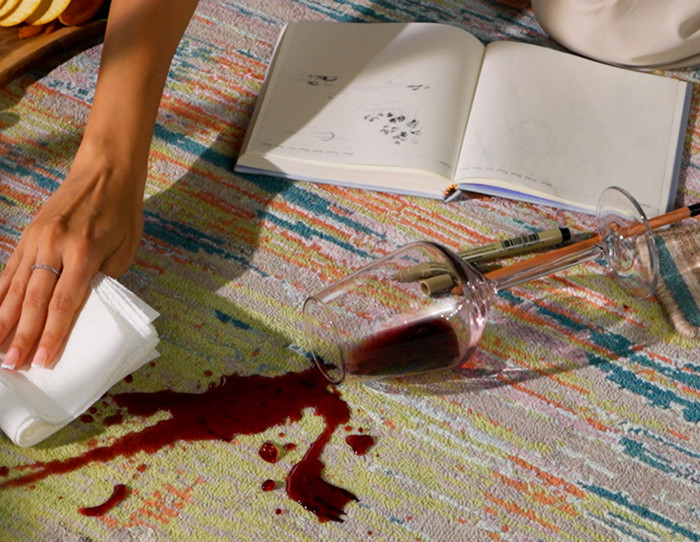
Oops. Someone dropped Cabernet on your red rug? It’s not ruined—yet. Here's how to clean handmade rugs when life spills things:
-
Red Wine: Blot, don’t rub. Use white vinegar and cold water. Then pray.
-
Coffee & Tea: Act fast with a vinegar + baking soda mix. Works like magic.
-
Pet Pee: Vinegar again. Also, maybe rehome your cat.
-
Ink & Paint: Rubbing alcohol works—but not on your silk rug.
And if it gets out of hand, cue: handmade rug restoration. It’s real. It’s magic. And it works.
Weekly, Monthly, Yearly: Rug Maintenance Routine
You know how you schedule facials, car servicing, and existential crises? Your handmade rug deserves the same kind of structure. Here's how to maintain handmade rugs like a ritual, not a rescue mission.
WEEKLY RUG CARE
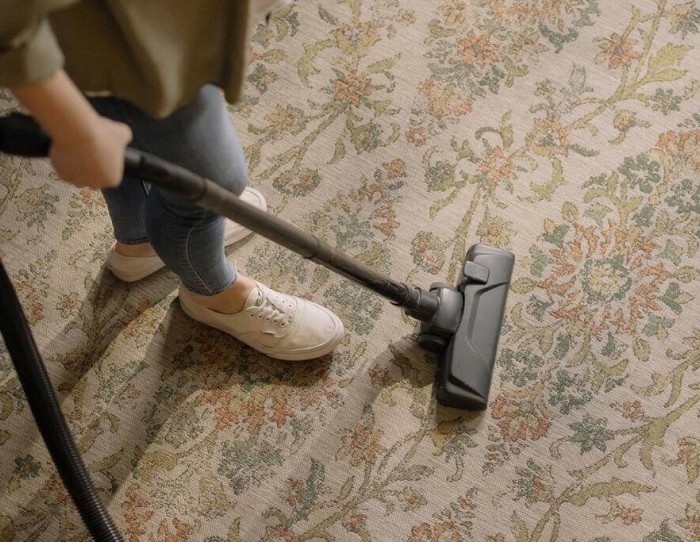
Vacuum Smartly, Not Aggressively:
Use a low-suction vacuum—especially on your wool rug, flatweave, or silk rug. Avoid beater bars (unless you are vacuuming a carpet from 2004).
Vacuum in the direction of the pile, not against it. Like petting a cat—if your cat was woven by master artisans.
Fluff & Rotate Lightly:
Give it a gentle shake (or fluff if it's small). This keeps the fibers lively, especially for aesthetic rugs in high-traffic spots.
Visual Spot Check:
Spill zone? Weird corner? Perform a mini stain inspection on your dining room rug, kids room rug, or red rug before that coffee ring turns into a permanent feature.
Pet Patrol:
If you have got fur babies, a quick pass with a lint brush or pet hair tool will keep your handmade rug from becoming a second pet.
MONTHLY RUG CARE
Rotate 180° (Or Flip If Flatweave):
Give all parts of the rug equal time in the spotlight. Especially useful for round rugs, flatweave rugs, or anything under a dining table.
Shake It Like You Mean It:
Take smaller area rugs or Tribal rugs outdoors and shake them like they have been harboring secrets. Because they have.
Natural Deodorize:
Sprinkle baking soda over the surface, let it sit for 30 minutes, then vacuum it out. Perfect for neutralizing musty scents and old-pet-energy from your floor carpet.
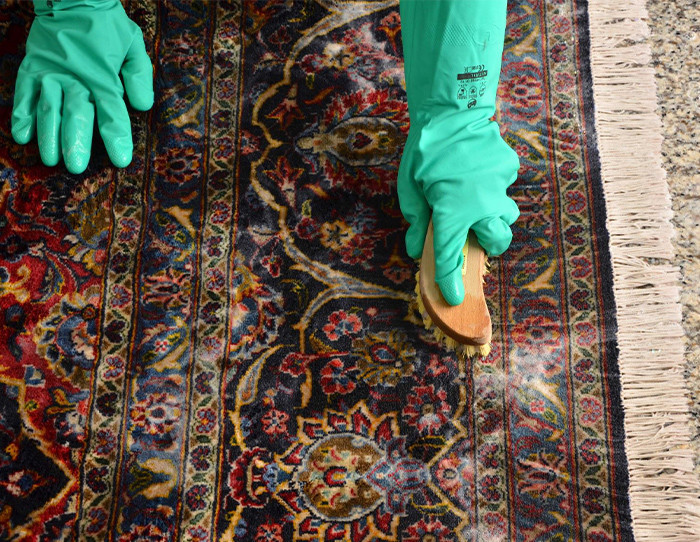
Spot-Clean Deeply:
For persistent stains, use a mix of white vinegar and cold water. Dab gently—especially on delicate Antique rugs. Never scrub. That’s a crime in the world of handmade rug care.
YEARLY RUG CARE
Professional Deep Clean:
Send your rug to a certified cleaner once a year (or twice, if it’s a living room rug that sees drama). This is essential for preserving the life of a rug that’s seen heavy footfall.
Restoration Audit:
Fringe looking like frizz? Colors looking meh? This is the time to assess whether your piece needs some good old handmade rug restoration. A little reweaving or dye revival can make even a vintage Tribal rug look brand new.
Rug Pad Refresh:
Replace or clean your rug pad. A crusty pad underneath your modern rug = a crusty vibe in your home.
Storage Shuffle (If Rotating Rugs):
Got seasonal aesthetic rugs or area rugs? Roll them (never fold), wrap in muslin or cotton, and store in a cool, dry place. Add cedar balls or lavender sachets for bonus points and bug defense.
Handmade Rug Restoration: When to Fix It & When to Just Cry
Torn fringe? Bald spot? Before you sob into your bedroom carpet, know that handmade rug restoration is a legit art form.
You Should Restore If:
-
The rug has sentimental or resale value like Antique or Vintage Rugs
-
The damage is localized
-
The rug is a legit Persian rug or Tribal rug
Expect:
-
Reweaving, dye-matching, edge securing
-
A bill, yes, but less than replacing your aesthetic rugs collection
-
Don’t DIY this unless you moonlight as a textile conservator.
What Not to Do to a Handmade Rug?
Sometimes, how to clean handmade rugs is about what not to do. Let's roast some rookie mistakes:
-
Soaking your wool rug in water = MOLD FEST.
-
Using bleach. Ever.
-
Scrubbing stains like you’re polishing silverware.
-
Dragging heavy furniture across your floor carpet without padding.
-
Letting pets snack on the fringe like it’s spaghetti.
Remember: a little restraint goes a long way in handmade rug care.
Still Confused? Here’s a Basic Rug Care Kit for Beginners
New to rugs? Build this arsenal:
-
Low-suction vacuum – Gentle on fibers, perfect for handmade rugs
-
Soft-bristle brush – For light dirt and fluffing
-
White vinegar – Natural stain remover (diluted!)
-
Microfiber cloths – For blotting spills without damage
-
Baking soda – Monthly deodorizer for freshness
-
Rug pad – Prevents slipping, adds comfort
-
Professional cleaner contact – For deep cleans & rug restoration emergencies
Summing Up..
Mastering how to clean handmade rugs, how to maintain them, and knowing when to call in the big guns for handmade rug restoration isn’t rocket science—it’s respect. Respect for craft, for color, for cozy corners styled with a perfect area rug.
And once you get the hang of it? Your aesthetic rugs won’t just survive—they will slay.
FAQs
How do you maintain a handmade rug at home?
To maintain a handmade rug at home, vacuum it weekly with low suction, rotate it every 3 months, and clean spills immediately with natural solutions like white vinegar. Avoid harsh chemicals and invest in a rug pad for daily protection.
What is the best way to clean handmade rugs?
The best way to clean handmade rugs is to blot stains (never rub), use mild pH-neutral solutions, and avoid overwetting. For deep cleaning, always consult a professional—especially for delicate materials like silk.
Can I restore a damaged handmade rug?
Yes! Handmade rug restoration includes techniques like reweaving, dye-matching, and edge reinforcement. It’s especially worth it for Persian rugs, Tribal rugs, or any piece with sentimental value.
How often should you deep clean a handmade rug?
You should deep clean a handmade rug professionally at least once a year. However, if it’s in a high-traffic area (like a hallway runner or living room rug), consider twice a year.
What ruins handmade rugs the fastest?
The biggest enemies of handmade rugs are excess moisture, bleach-based cleaners, aggressive vacuuming, direct sunlight, and neglecting regular maintenance like rotating and padding.


Pic Credits
Jaipur rugs / Abil Dase
Share
-
 Facebook
-
 Twitter
-
 Email
Email
Related posts

-
05 June 2026
-
7 Min Read
Best Rug for a Brown Leather Sofa: The Complete Colour Guide
Styling a brown leather couch requires balancing its heavy visual weight with the perfect floor covering. This guide explores how crisp neutrals brighten dark leather, cool blues and greens provide elegant contrast, and traditional patterns tie a room together. Learn to identify your sofa’s undertones and choose a rug that makes your living space feel balanced, open, and cohesive.
Read More >
-
02 June 2026
-
6 Min Read
What Color Bathroom Rug Goes With Green Walls? Best Pairings for Every Shade
Most people think a green bathroom succeeds or fails because of the shade of green they choose. Designers know better. The real difference usually appears at floor level. That's why two bathrooms with identical walls can feel completely different. One feels finished. The other feels like something is missing. More often than not, the answer comes down to the rug and the contrast it creates.
Read More >
-
31 May 2026
-
4 Min Read
The End Of Sterile Minimalism: Meet The Blythe Collection
The most interesting interiors right now aren't becoming more decorated. They are becoming more distinctive. The Blythe Rug Collection captures that shift through architectural geometry, abstract compositions, and richly textured, hand knotted wool rugs that resist the sameness that dominates modern interiors. Read more to see how the Blythe collection offers a glimpse into where contemporary design is already heading.
Read More >
-
30 May 2026
-
8 Min Read
Not All Wool Is the Same: The Rug Buyer's Guide to New Zealand, Merino, Himalayan, and Hand-Spun Wool
Choosing the right floor covering requires understanding your material's origin. While New Zealand fibers offer a pristine, vibrant canvas for modern spaces, Merino provides unmatched barefoot softness. For high-traffic areas, lanolin-rich Himalayan and resilient hand-spun Afghan wools offer the ultimate heirloom durability. Explore how these distinct textures transform your interior layout.
Read More >
-
23 May 2026
-
7 Min Read
Suzani Fabrics 2026: Hand-Embroidered Patterns & Trends for Luxury Interiors
Hand-embroidered suzani fabrics are leading the 2026 luxury heritage revival. This guide defines traditional Uzbek motifs and offers expert styling tips for bohemian maximalism and eclectic decor. Learn to balance these bold, tactile tapestries by grounding your space with high-quality, textured wool rugs that seamlessly blend global craftsmanship with modern, sophisticated interior design.
Read More >
-
26 May 2026
-
6 Min Read
How Wabi Sabi Style Embraces Imperfection Like Never Before?
Perfect interiors are starting to feel like showroom screenshots with no pulse. Wabi sabi interrupts that perfection spiral with imperfect handmade rugs, uneven textures, faded surfaces, and rooms that feel beautifully unresolved. As modern interiors become visually exhausting, this Japanese design ethos is making rawness, irregularity, and human imperfection magnetic again. Keep reading before your home starts looking painfully overfinished.
Read More >