You are on our International website. Please select your region to see content specific for your location





 Profile
 Orders
 Wishlist
 Change Password
 Logout


Latest Blogs
ideas and inspiration
How Wabi Sabi Style Embraces Imperfection Like Never Before?
- 28 May 2026
- |
- 6 Min Read
- |
- By Jaipur Rugs
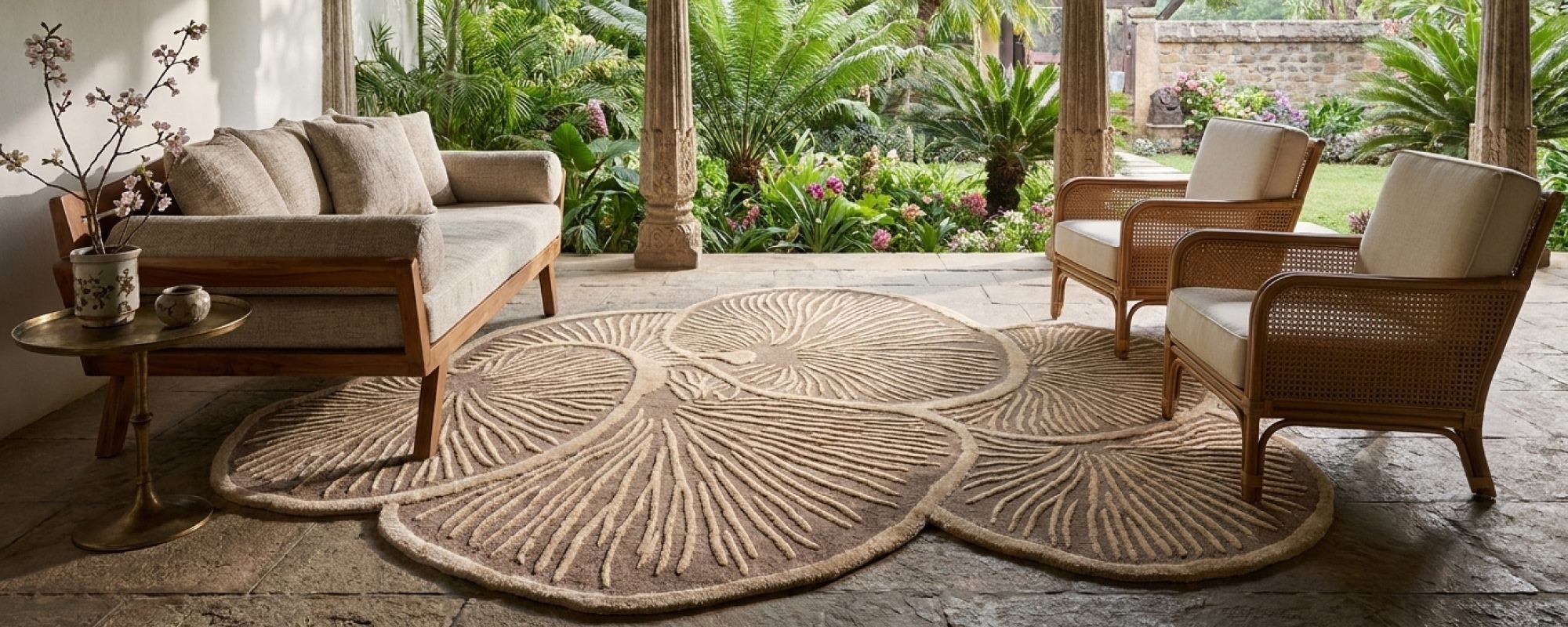
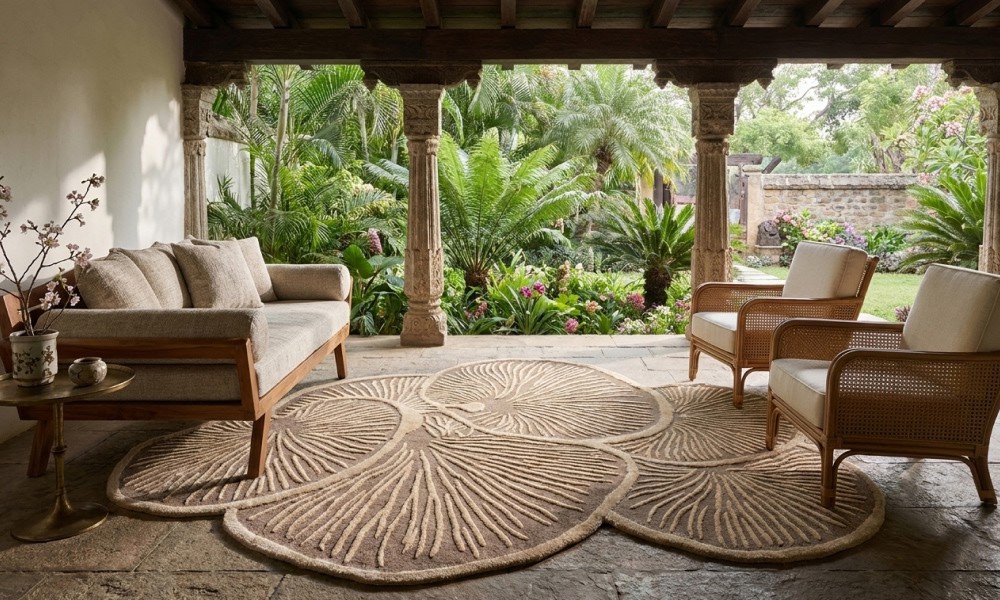
Perfect interiors are starting to feel like showroom screenshots with no pulse. Wabi sabi interrupts that perfection spiral with imperfect handmade rugs, uneven textures, faded surfaces, and rooms that feel beautifully unresolved. As modern interiors become visually exhausting, this Japanese design ethos is making rawness, irregularity, and human imperfection magnetic again. Keep reading before your home starts looking painfully overfinished.
Perfect homes are starting to feel strangely vacant. Too polished. Too mainstream approved.
Wabi sabi is the Japanese design ethos that finds beauty in irregularity, age, restraint, and things that look lived-in rather than factory-finished. And right now, that shift is reshaping interiors, especially handmade rugs, textures, and the way people want rooms to feel after years of hyper-staged spaces online.
The appeal is not nostalgia. It is a visual relief.
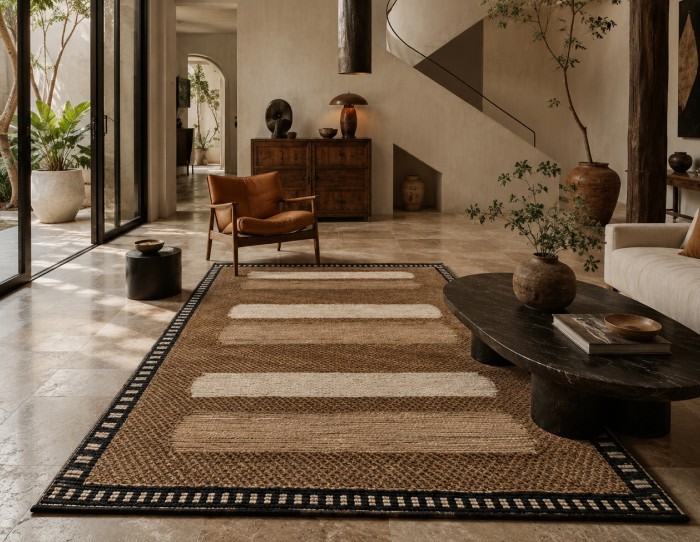
Why Are Homes Starting to Look Less “Finished” on Purpose?
For years, interiors chased the same sterile formula: pale boucle chairs, smooth beige walls, black accents, basic modern rugs, symmetrical layouts, three coffee table books stacked like a hotel lobby survival kit.
Now the backlash has arrived.
People are exhausted by homes that look optimized for scrolling rather than for existing. The anti-Airbnb aesthetic movement has pushed many homeowners toward spaces with friction, texture, shadow, and irregularity again. That is exactly where wabi sabi design comes in.
A true Japanese wabi sabi interior does not beg for attention. It slows the eye down.
You notice:
-
Wood grain that does not match perfectly
-
Linen that wrinkles instead of sitting flat
-
Handmade pottery with uneven glazing
-
Area rugs with faded motifs and softened edges
-
Space intentionally left empty, aka negative space
Interior Designer Insight: Wabi sabi rooms rarely look “complete.” That unresolved quality is part of the emotional effect.
What people get wrong about wabi sabi: It is not rustic clutter. It is not intentionally making things ugly. It is restrained with texture and memory still intact.
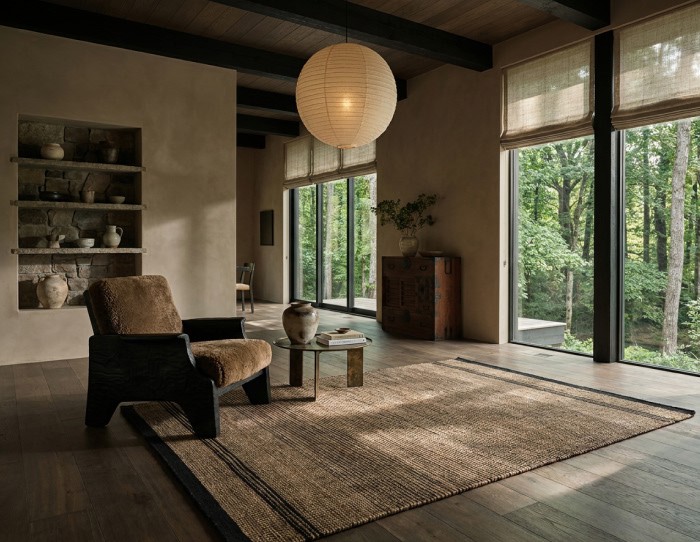
The Shift Happening Now: Smooth Minimalism Is Losing Its Grip
The biggest interior trend across 2025 and 2026 is not maximalism. It is emotional materiality.
People want homes that feel touchable again.
That explains why:
-
Limewash walls are replacing flat paint
-
Reclaimed wood is overtaking glossy walnut veneers
-
Handmade ceramics are outperforming decorative chrome objects
-
Low-contrast earthy palettes are appearing everywhere
-
Organic natural fiber rugs are replacing loud geometric flooring
Wabi sabi home decor aligns with this shift by removing the pressure for visual perfection.
A scratch becomes part of the room.
A faded, distressed rug becomes the atmosphere.
An uneven surface becomes proof of human presence.
That emotional logic matters more now because algorithmic interiors have become instantly recognizable. The second a room looks too coordinated, it starts feeling temporary. Almost rented.
The irony is brutal: homes designed to look “perfect” online often feel emotionally forgettable in real life.
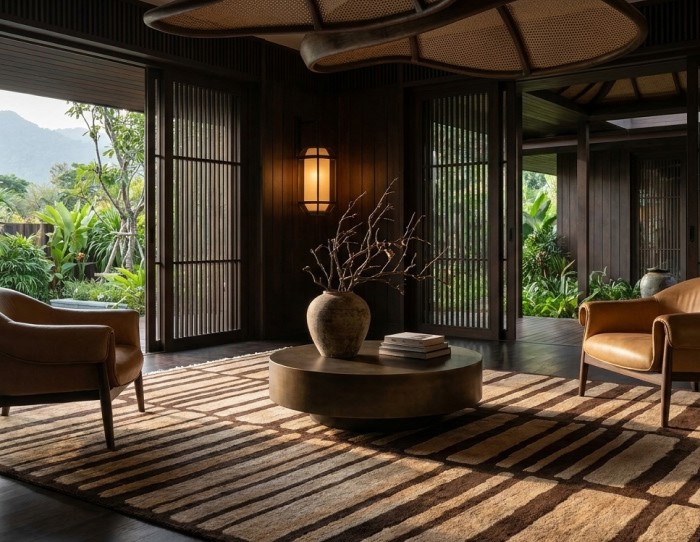
The Rug Trend That Looks Slightly Undone, and That’s Exactly Why Designers Want It
The modern wabi sabi rug does not scream for attention on the floor.
It grounds the room instead.
-
You will usually notice:
-
Washed-out earthy tones
-
Asymmetrical fading
-
Irregular woven textures
-
Low contrast patterns
-
Imperfect borders
-
Tactile surfaces that change under light
Perfect designer rugs often create visual tension because the precision feels cold. Every line behaves too correctly. Every edge feels digitally sharpened.
Wabi sabi rugs soften spatial pressure.
They allow furniture, shadows, wood tones, and natural fabrics to breathe together rather than compete for dominance.
Why does this matter?
Your floor occupies one of the largest visual surfaces in a room. If the handmade rug feels loud, hyper-patterned, or overly crisp, the nervous system keeps processing information constantly.
A muted, textural jute rug changes sensory perception:
-
Rooms feel slower
-
Lighting appears softer
-
Objects feel less staged
-
Silence becomes more noticeable
-
Imperfections stop looking accidental
Texture combinations that work:
-
Raw linen with faded wool rug
-
Oak wood with handwoven jute
-
Plaster walls with distressed natural fibers
-
Aged leather with flatweave earthy color carpets
In living rooms, especially, wabi sabi decor creates a different kind of visual rhythm. Instead of “look at this room,” the feeling becomes “stay here longer.”
That distinction drives buying behavior far more than trend-chasing ever did.
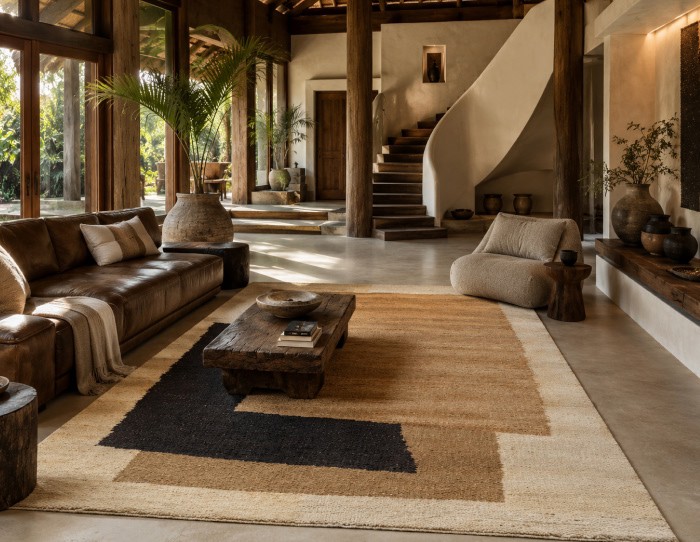
Rooms That Accidentally Kill Wabi Sabi
Some interiors borrow the vocabulary of the wabi sabi style without understanding its psychology.
The result feels staged.
Visual tension checklist:
-
Perfectly centered furniture layouts
-
Aggressively matching wood finishes
-
Spotless monochrome palettes
-
Decorative objects with no material variation
-
Rooms lit entirely from overhead
-
Rugs with sharp, high-contrast prints
-
Everything looking brand new at once
Wabi sabi interiors depend on imbalance.
Not chaos.
Not clutter.
Controlled irregularity.
A single handmade ceramic bowl feels more believable in a room than twenty identical decorative objects arranged like retail shelving.
Designer Insight: Negative space is part of the aesthetic. Empty corners allow textured pieces to carry emotional weight.
Summing Up..
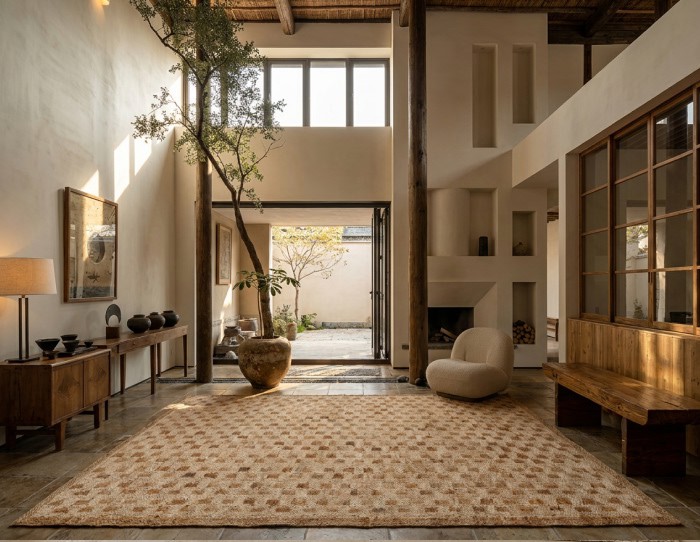
The strongest wabi sabi interiors usually contain restraint that most people barely notice at first.
A slightly uneven hand knotted rug beneath a weathered wood table.
A wall finish that catches shadow differently throughout the day.
A ceramic vase with an imperfect silhouette.
Nothing demands attention individually.
Together, the room develops emotional gravity.
That is the strange brilliance of wabi sabi meaning in modern interiors. It rejects the idea that homes should look permanently untouched. Instead, it allows spaces to gradually absorb life.
And maybe that is why imperfect handmade rugs, faded textures, and handcrafted irregularity feel more magnetic now than polished showroom interiors ever could.
Not because they look unfinished.
Because they finally look human.
We will be back with another blog soon.
Till then, stay tuned and explore Jaipur Rugs!
FAQs
What is Wabi Sabi in interior design?
Wabi sabi is a Japanese design philosophy that embraces imperfection, natural textures, aging materials, and spaces that feel lived in rather than perfectly styled. In interiors, it favors handmade rugs, earthy tones, uneven surfaces, and visual simplicity with emotional depth.
Why is Wabi Sabi so popular right now?
Wabi sabi is rising because people are growing tired of overly polished, copy-paste interiors seen across social media. It offers something more human: raw textures, imperfect decor, softer spaces, and homes that feel emotionally real instead of digitally staged.
What does Wabi Sabi mean?
Wabi sabi is a Japanese concept centered around imperfect beauty, simplicity, and the natural aging of objects. It values authenticity, irregularity, and the character that develops through time and use.
What colors work best in Wabi Sabi interiors?
Earthy, muted tones work best in wabi sabi interiors. Popular colors include clay, sand, mushroom, charcoal, olive, rust, taupe, walnut, and stone because they create softer visual contrast and a more grounded atmosphere.
What makes a home feel Wabi Sabi?
A wabi sabi home feels relaxed, textured, and slightly unfinished. Instead of sharp perfection, it uses natural materials, imperfect decor, handmade elements, soft lighting, and empty space to create emotional comfort.
Are Wabi Sabi and Japandi the same?
No. Japandi is cleaner and more structured, combining Scandinavian function with Japanese simplicity. Wabi sabi is more organic, irregular, weathered, and focused on imperfect beauty rather than visual precision.
What kind of rug suits Wabi Sabi interiors?
The best wabi sabi rugs feature faded patterns, earthy colors, low contrast designs, and handmade textures. Slight irregularities help the room feel softer, calmer, and less visually forced.
Why do imperfect rugs feel better in modern homes?
Imperfect rugs reduce visual sharpness and make rooms feel more natural. Their uneven textures and muted detailing create a slower, softer atmosphere compared to machine-perfect rugs with harsh contrast.
Can Wabi Sabi work in modern interiors?
Yes. Wabi sabi works especially well in modern homes because it softens clean architecture with texture, natural materials, muted palettes, and handcrafted elements that make spaces feel less cold and artificial.
What materials are used in Wabi Sabi decor?
Wabi sabi decor commonly uses raw wood, linen, clay, plaster, stone, wool, jute, handmade ceramics, and aged metals because these materials develop texture and character over time.
What is the biggest mistake people make with Wabi Sabi?
The biggest mistake is over-styling it. Wabi sabi interiors should feel natural and imperfect, not overly coordinated or staged like a showroom.
Is Wabi Sabi replacing minimalism?
Wabi sabi is reshaping minimalism by adding texture, irregularity, and emotional depth. It keeps simplicity but removes the cold, overly polished feeling that many minimalist homes have developed.


Pic Credits
Jaipur rugs / Abil Dase
Share
-
 Facebook
-
 Twitter
-
 Email
Email
Related Posts
-
15 July 2026
- ∙
-
8 Min Read
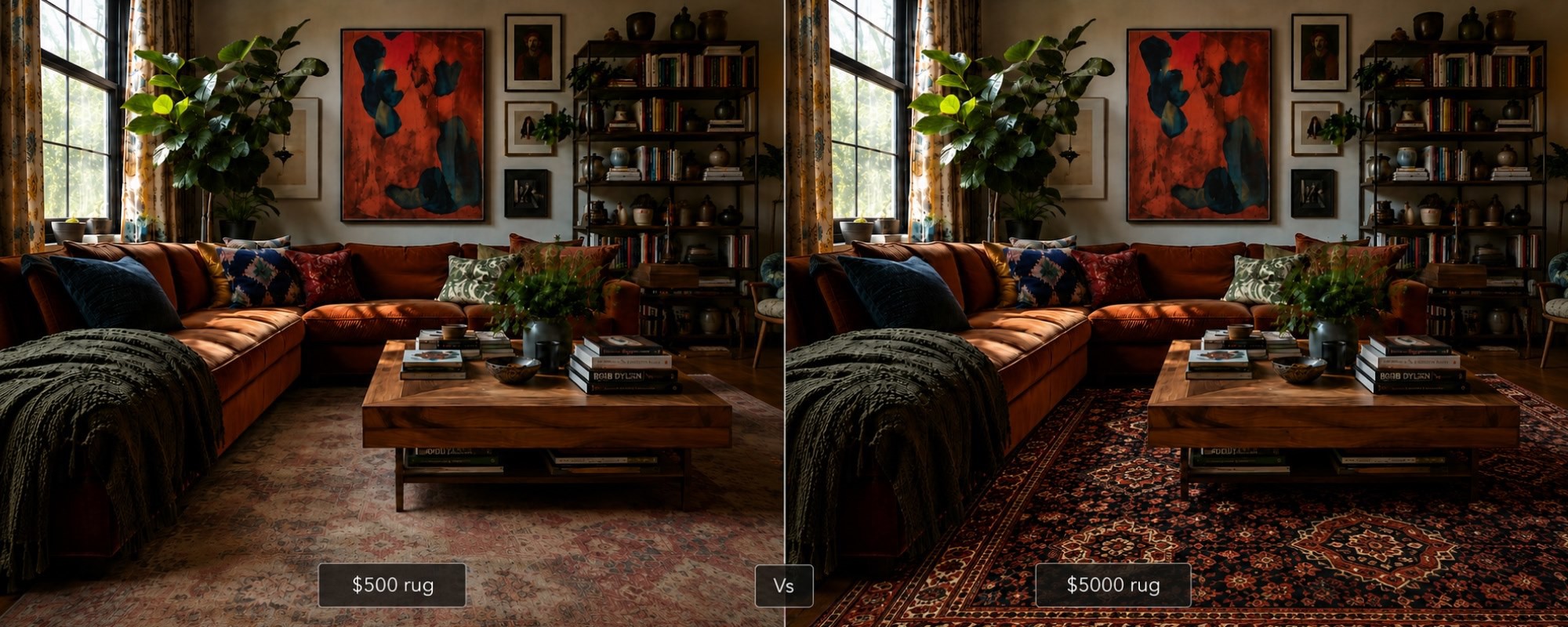
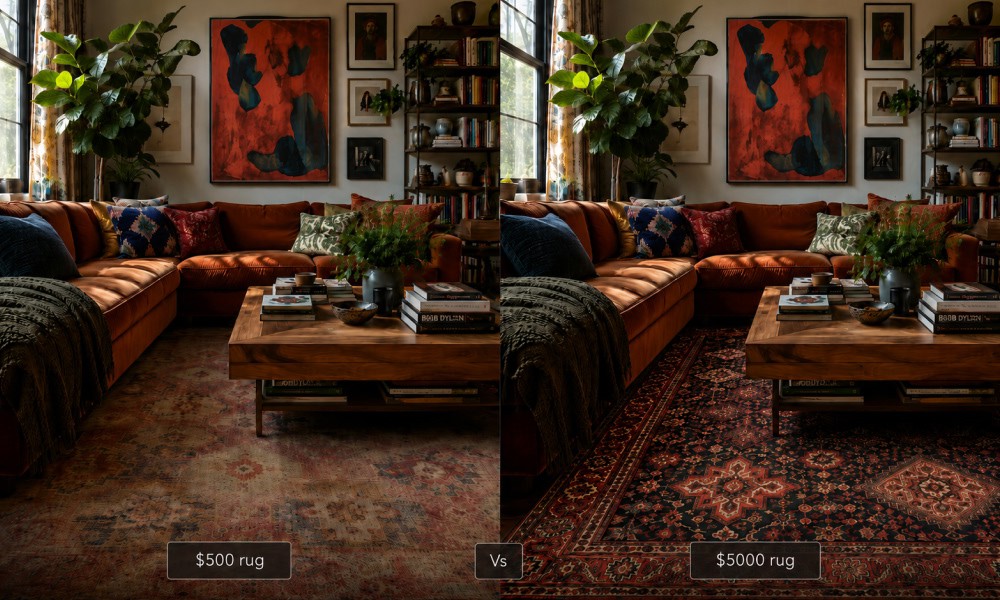
The $500 vs $5,000 Rug: An Honest Side-by-Side That No Brand Will Show You
Why do some rugs cost ten times more than others? This honest side-by-side looks at what actually separates a $500 rug from a $5,000 one: knot density, fiber quality, pile depth, and finishing. No brand bias, no marketing language. Just a clear breakdown to help you decide which one is worth it for your space and budget.
Read Article →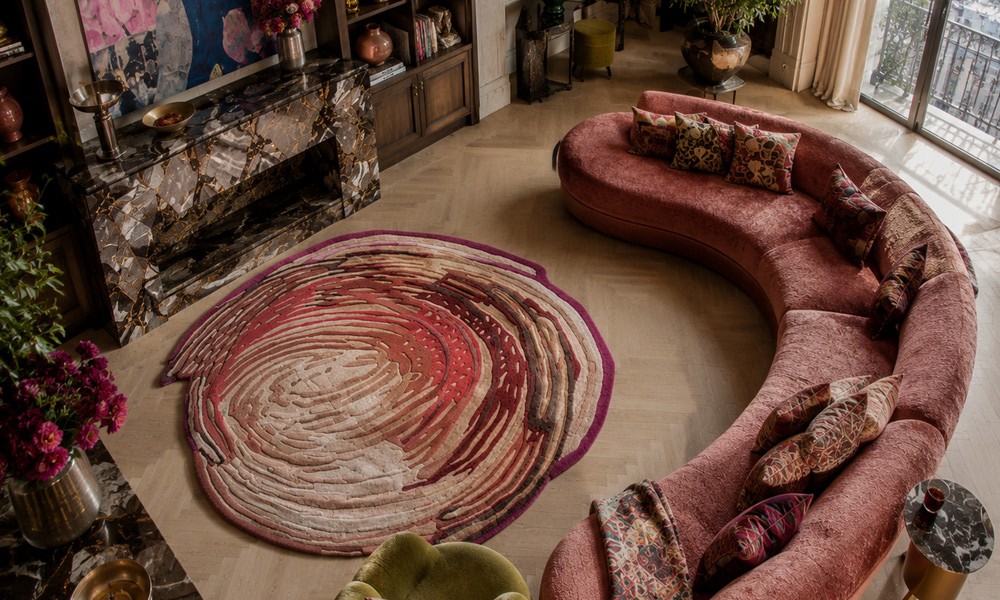
-
14 July 2026
- ∙
-
13 Min Read
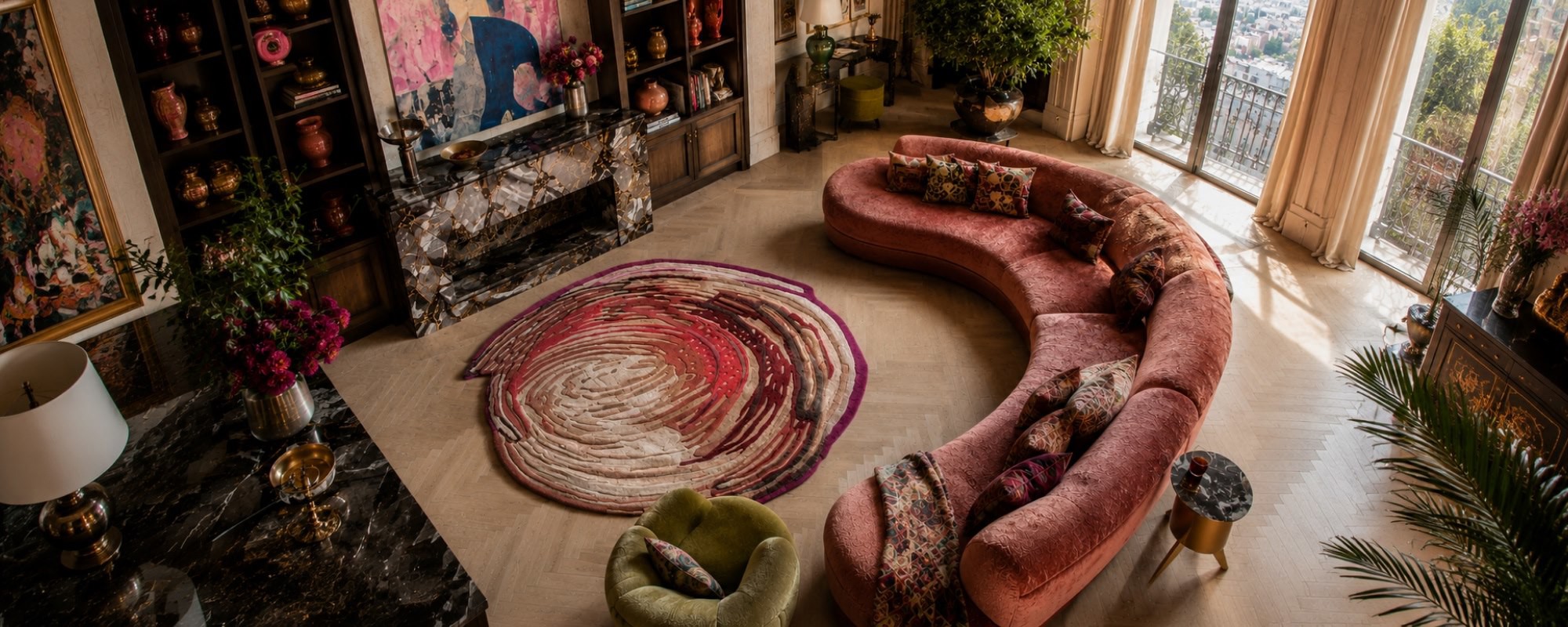
3D Rugs and Sculpted Pile: The Tactile Design Trend Redefining Floors in 2026
The rug used to finish a room. Now it starts one. 3D rugs and sculpted piles are bringing real depth and tactile texture to interiors, from hand knotted relief patterns to optical illusion designs that stop you mid-step. This is what the trend is, why it matters, and how to buy it well.
Read Article →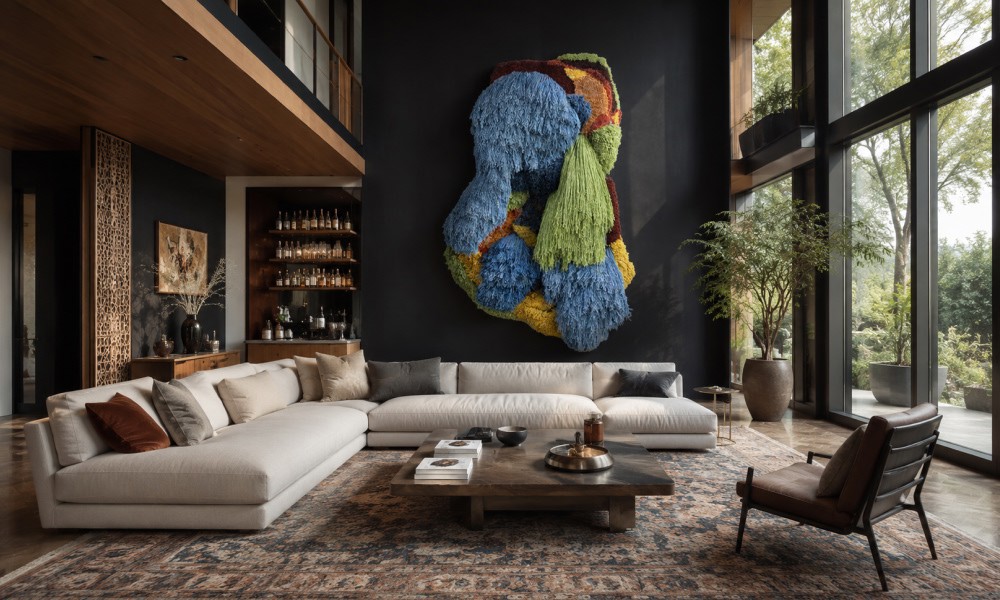
-
10 July 2026
- ∙
-
10 Min Read
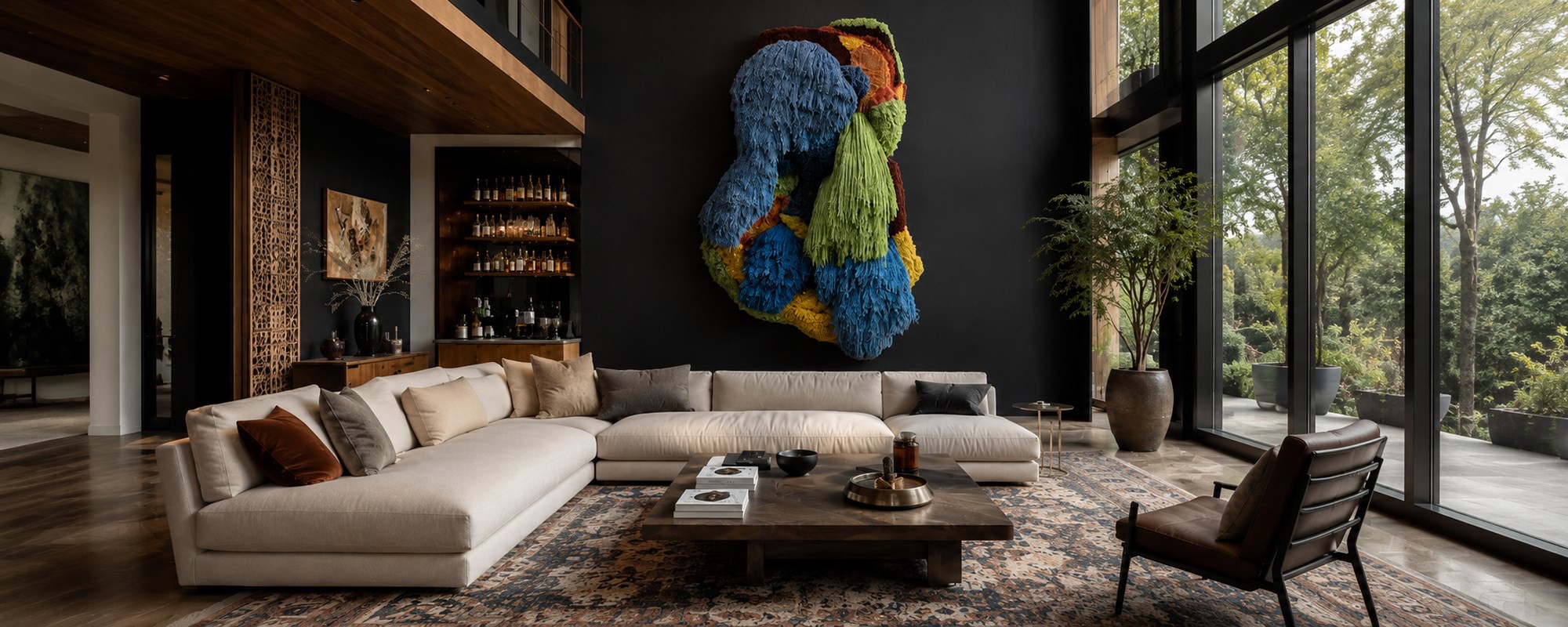
How to Pair Indian Wall Art with the Right Rug Pattern: A Room-by-Room Guide
Choosing the right rug to go with your Indian wall art does not have to be guesswork. This guide breaks it down room by room, from the living room to the bathroom and outdoor spaces. Learn how to match colors, patterns, and scale so your wall art and rug always feel like they belong together.
Read Article →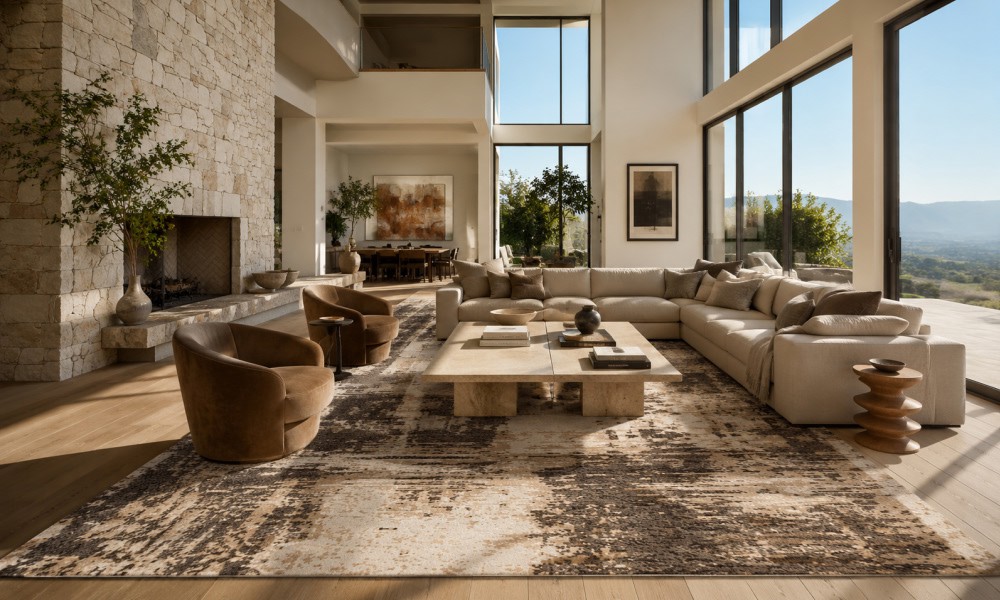
-
07 July 2026
- ∙
-
9 Min Read
How to Tell If a Rug Is Handmade: 7 Signs Experts Look For (Abrash Is One of Them)
Wondering how to know if a rug is handmade? Get an overview of 7 key characteristics that will help you identify if a rug is truly handmade and learn about its differences compared to machine-made rugs, and why they do not lose their value. Here is what to keep in mind when buying a handmade rug.
Read Article →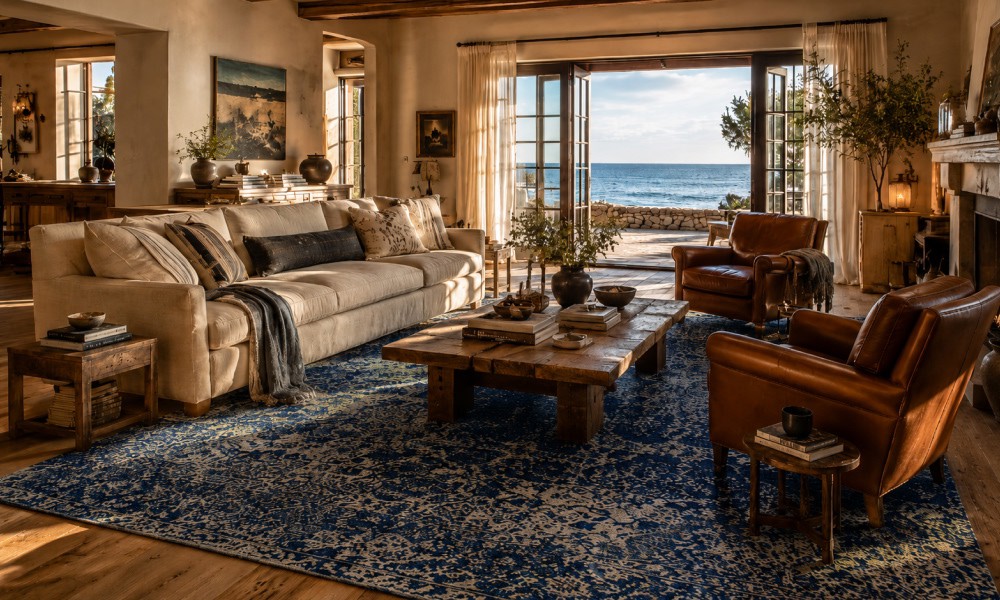
-
04 July 2026
- ∙
-
8 Min Read
Coastal Grandmother Is Evolving: The 2026 "Coastal Heritage" Aesthetic and the Rugs That Define It
The coastal grandmother design is progressing into something new and exciting by 2026. Coastal Heritage introduces texture, craftsmanship, and handmade elements to this popular design style. Here are the various rug types, colors, and decorating ideas to know about this classic coastal design trend.
Read Article →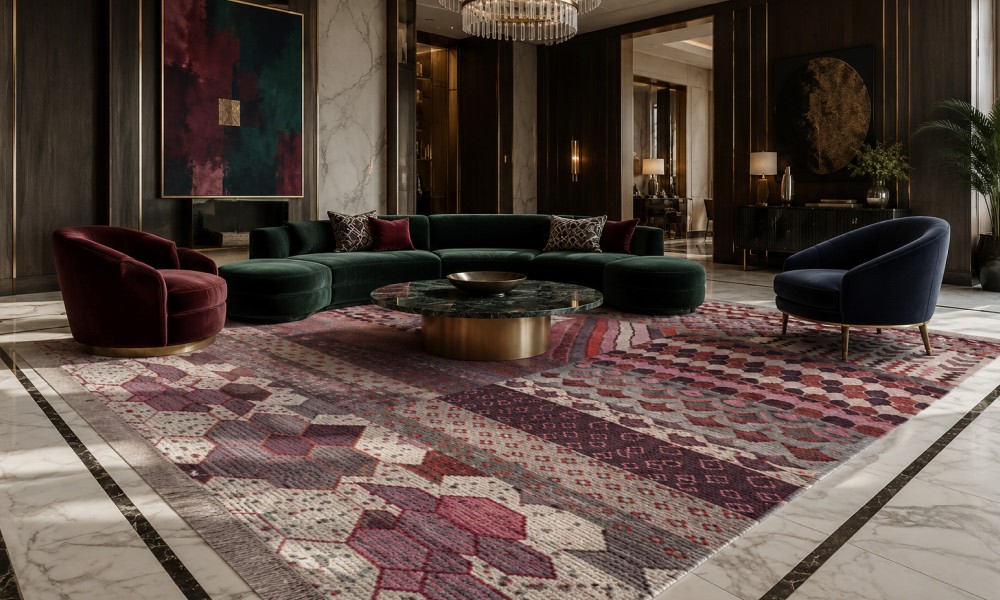
-
22 June 2026
- ∙
-
6 Min Read
Why Top Interior Designers are Switching to Indian Handmade Rugs
High-end interior designers have begun using handmade carpets from India in place of machine-made carpets to enhance their design portfolios and ensure product longevity. The following guide will help you understand why design professionals prefer Jaipur Rugs for creating customized, ethically produced wool-and-bamboo-silk carpet designs for luxurious homes.
Read Article →