You are on our International website. Please select your region to see content specific for your location





 Profile
 Orders
 Wishlist
 Change Password
 Logout


Latest Blogs
ideas and inspiration
10 Reasons You Need a Rug on Hard Floors: Comfort, Style, and Warmth
- 25 December 2025
- |
- 9 Min Read
- |
- By Jaipur Rugs
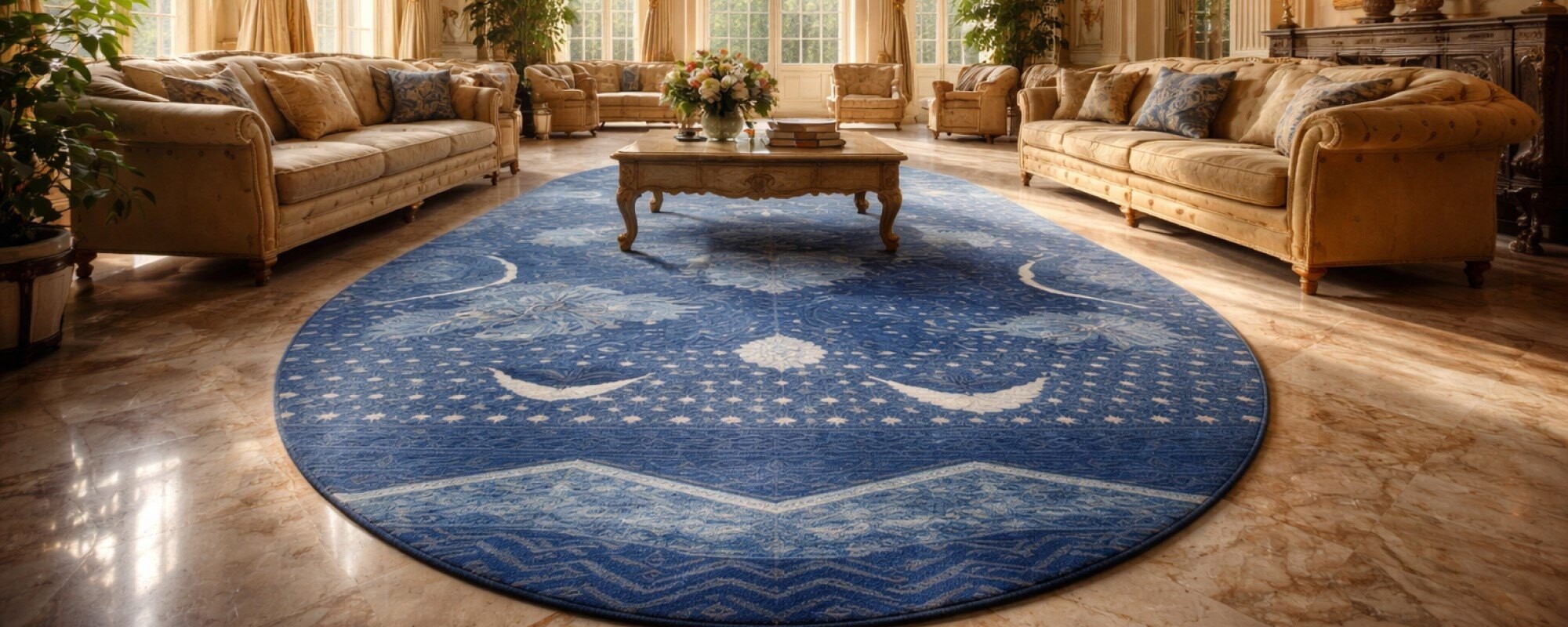
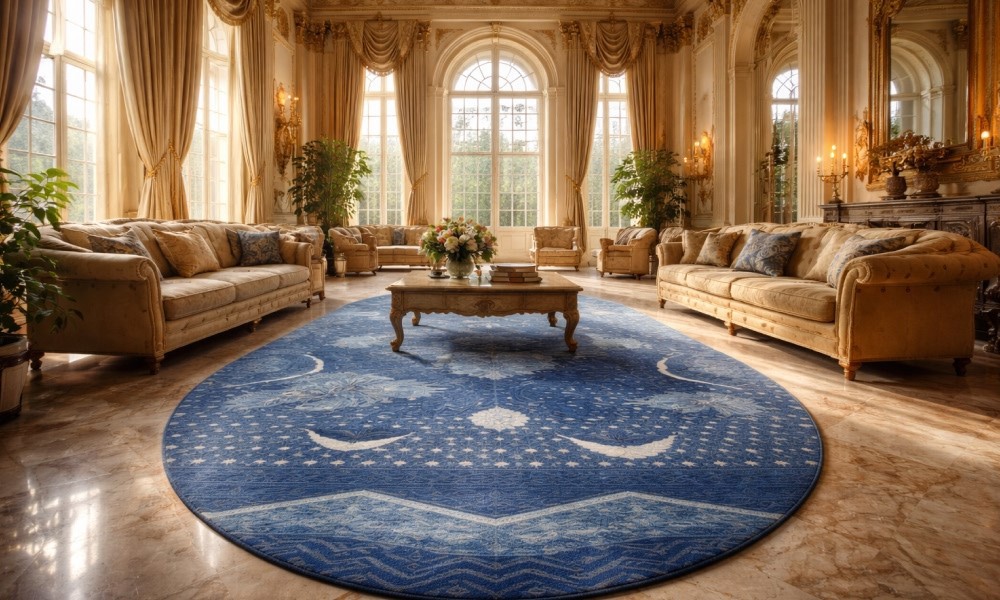
Hard floors look great but can feel cold and echoey. A rug adds comfort, warmth, sound absorption, layout definition, safety, and protection to your flooring. It helps bedrooms feel restful and open spaces feel organized while letting you change style without renovation. The right rug turns hard surfaces into lived-in, welcoming rooms. It also reduces wear in busy areas.
Hard floors are beautiful. They show off the grain of wood, the cool elegance of stone, and the clean lines people love today. But after living with them for a while, most people notice the same thing. The space can feel bare, echoey, and a little cold. That’s where rugs and carpets quietly change everything.
A rug doesn’t scream for attention. It settles into a room, making it feel lived in, softer, and calmer. If you’re wondering whether a rug is actually necessary or just a nice extra, here’s the thing. Once you add one, you can’t imagine the room without it.
Let’s break down ten solid reasons a rug belongs on hard floors.
Everyday Comfort Under Your Feet
Walking on hard floors all day is not as harmless as it looks. Your heels hit a rigid surface again and again. Over time, your legs, knees, and lower back feel it.
Now imagine a wooden floor with rug beneath your feet first thing in the morning. There is a small cushion, a little give, a sense of welcome. It’s not luxury in the loud sense. It’s everyday comfort that quietly improves your mood.
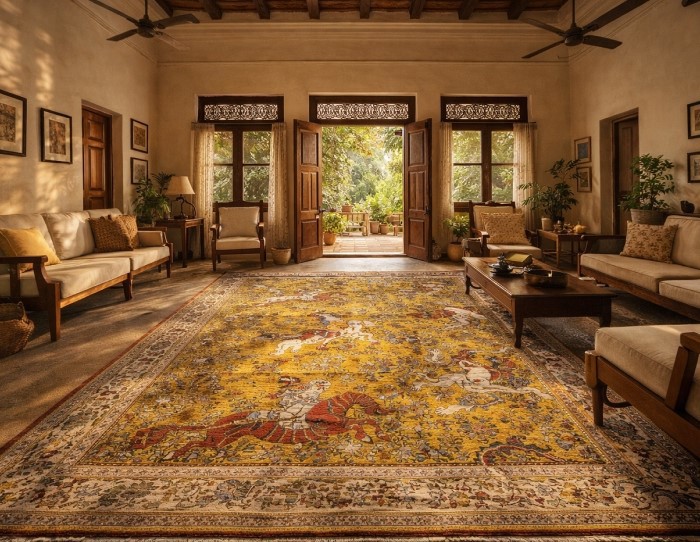
Kids also end up sitting and playing on the floor more often than adults do. A soft surface changes their whole world of play and makes the space feel like it actually belongs to the family.
Actual Warmth, Not Just A Visual Trick
Hard surfaces stay cold. They pull heat away from your body. That’s great in summer, but in winter, they can make a room feel chilly even when the temperature is technically acceptable.
A rug acts like insulation between you and the floor. It traps warmth. It reduces heat loss. You don’t think about the science of it while living with it. You feel more comfortable.
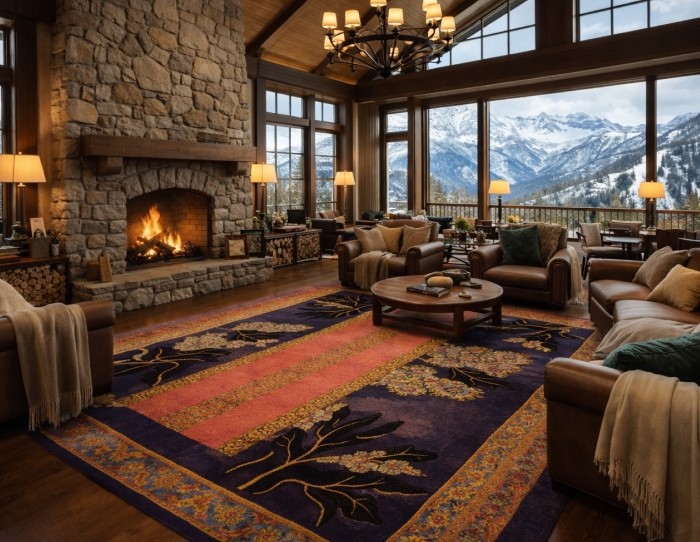
This is why hardwood floors and rugs are popular in homes that get real winters. The wood gives character, the carpet provides warmth, and together, the room feels grounded rather than icy.
Less Echo, Less Noise, More Peace
Hard floors bounce sound around. Footsteps, TV sound, kids running, chairs moving, everything becomes louder than it needs to be.
A rug soaks up that extra noise. Rooms suddenly feel calmer, even if nothing else has changed. Area rugs for wood floors can completely transform apartments where sound tends to travel from room to room and even between floors.
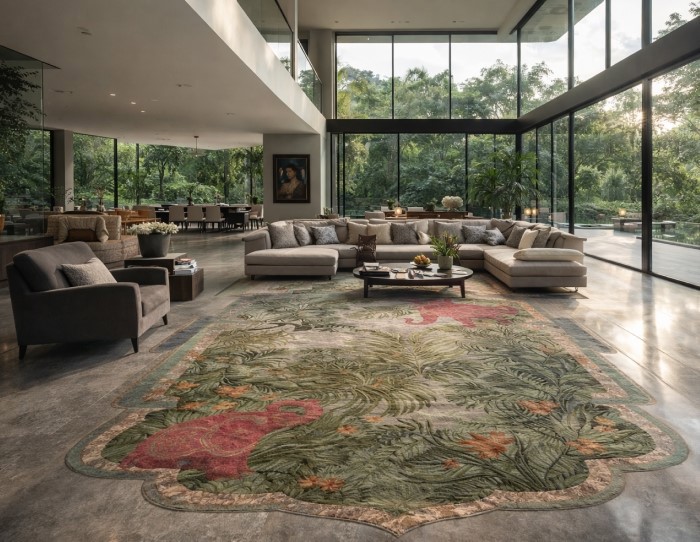
If you’ve ever felt like your home sounds empty even when it’s furnished, this is usually the missing piece.
A Visual Anchor For Your Layout
Without a rug, furniture can look like it’s just scattered in a room. There’s no visual boundary telling your eye where one zone ends and another starts.
The relationship between hardwood floors and area rugs solves this instantly. A rug creates a “home base” for your sofa, coffee table, and chairs. It outlines the conversation area. It pulls the pieces together so they look like they belong together.
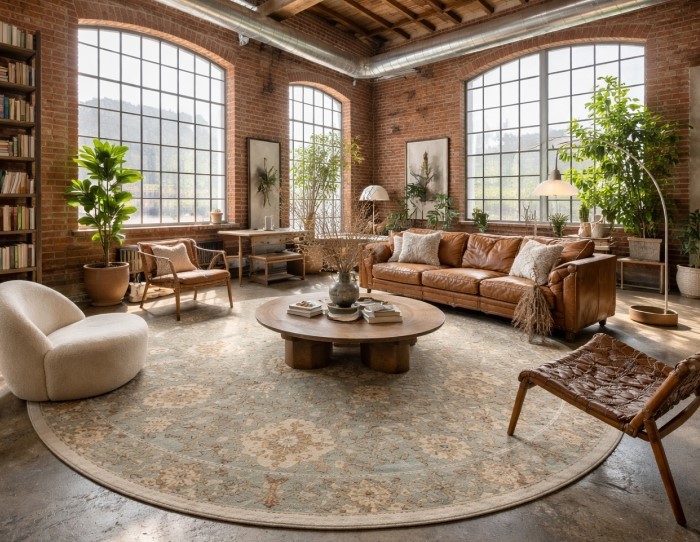
This isn’t about rules. It’s about how the human eye reads space. With a rug, a room feels arranged instead of accidental.
Style That You Can Switch Whenever Life Changes
Paint and flooring are not things you change every year. But taste changes. Families grow. Someone moves in. Someone moves out. Homes evolve.
Rugs let you change a room's personality without renovating a thing. Neutral room, but want some spark? A bold piece does that. Too much color already? A calm, textured rug balances it.
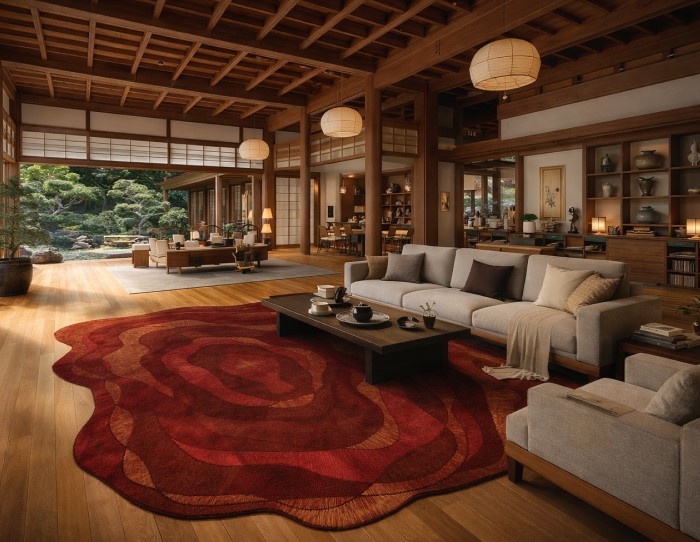
When you add rugs for hardwood floors in living room spaces, you can go dramatic or subtle just by pattern and texture, without touching the floor itself.
If you love detail and craftsmanship, hand-knotted rugs tell their own story. If you want plush comfort underfoot, hand-tufted rugs deliver that soft feel right away. You get to play without committing to permanent changes.
Real Protection For Your Floors
Hard floors scratch. They dent. Chairs scrape them. Dogs run across them with their claws. No matter how careful you are, everyday life leaves marks.
A rug protects the areas that get the most abuse. Under a dining table. In an entryway. Around the sofa when everyone gathers.
Runners are especially useful in hallways and narrow spaces where foot traffic is nonstop. Instead of the floor taking the beating, the rug does. That’s a simple way of extending the life of an expensive floor.
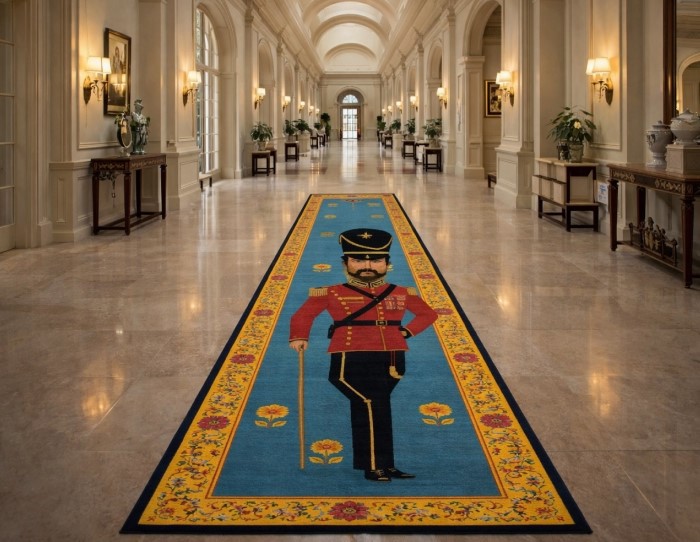
A Way To Express Personality
Floors are usually neutral. Rugs don’t have to be. They are one of the easiest ways to show personality without clutter.
If your taste leans toward clean, contemporary style, modern rugs fit effortlessly into that look. If you enjoy patterns, borders, and a sense of heritage, traditional rugs feel right at home.
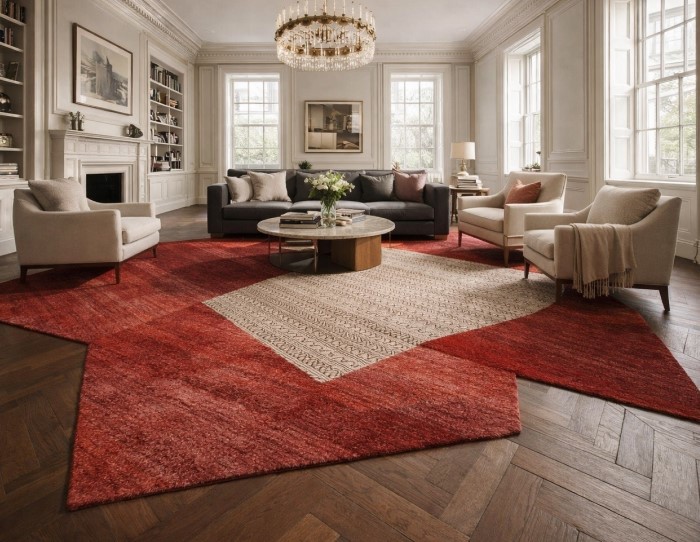
Want nature inside without literal plants everywhere? Floral rugs give the room a softer, organic feel while still grounding it. And if you like collectible, statement pieces that feel curated, Designer rugs can become the focal point of the whole space.
The point is simple. A rug can match who you are now and change as you do.
A Bedroom That Actually Feels Restful
Bedrooms should make you exhale the minute you walk in. Hard floors look good there, but stepping onto cold ground in the morning is not exactly comforting.
That’s where a hardwood floor bedroom rug changes the experience completely. Your feet land on softness. The room feels finished rather than half-done. Even visually, the bed feels better anchored instead of floating in an ample space.
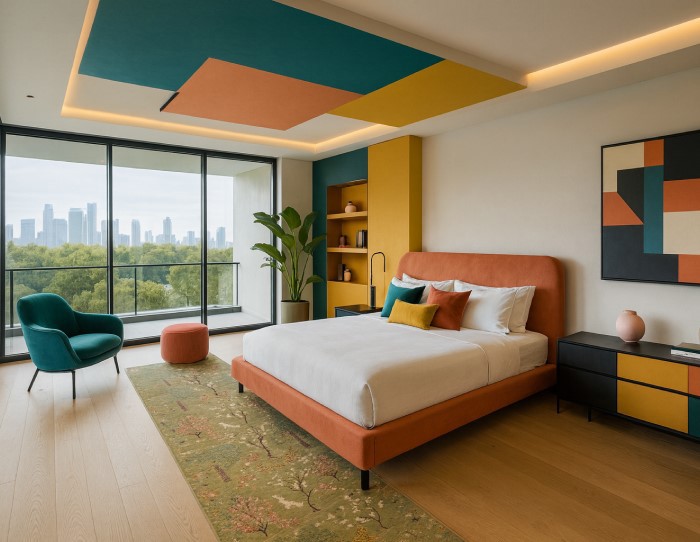
If the room is large, a rug also helps create smaller zones, like a reading corner or dressing area, without adding walls.
Safety For Kids, Pets, And Elders
Hard floors can be slippery. One small spill or one sudden turn and someone is on the ground. For older adults, that risk matters. For toddlers just learning to walk, it matters even more.
A rug adds friction. It also adds a softer surface in case someone loses balance. If you’re thinking in practical terms and not just decorative ones, this becomes a powerful reason.
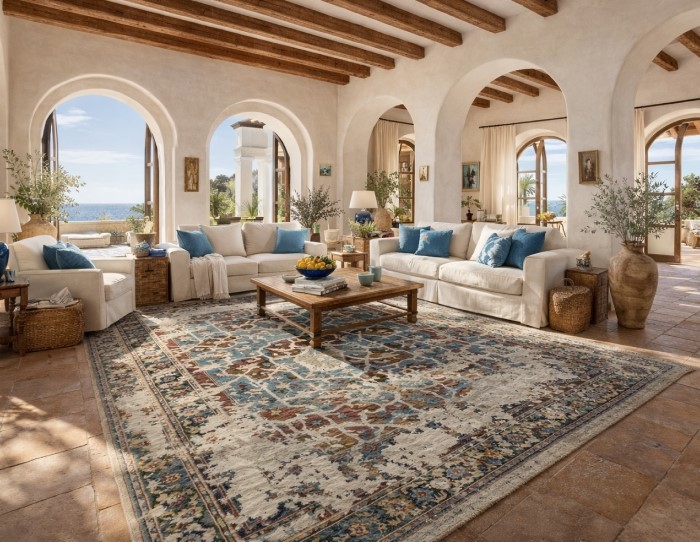
And if your space has awkward sizes or tricky corners, custom rugs make it easy to get exactly the size and shape you need instead of trying to force a standard rectangle to fit.
Easy Zoning In Open Floor Plans
Open layouts look great in photos. Living in them is different. You still need a definition for each of cooking, eating, working, and relaxing.
Rugs mark those zones without building walls or changing floor materials. One rug under the sofa says, “Sit and talk here.” Another under-the-table says, “This is where meals happen.”
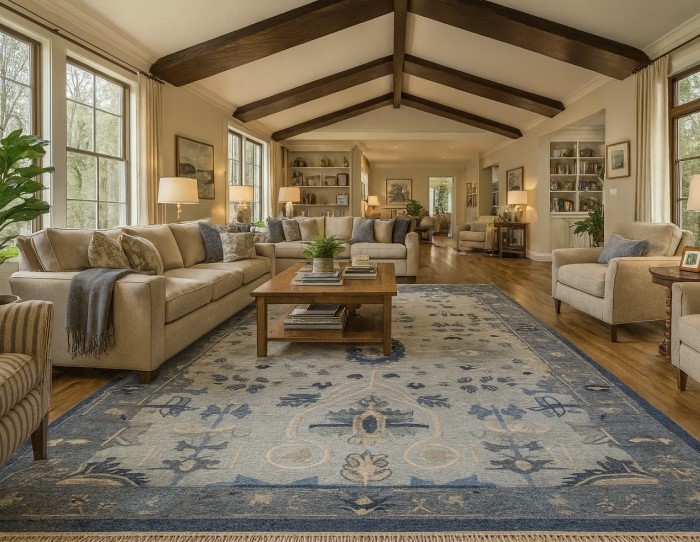
This is especially helpful with hardwood floors and area rugs in big open rooms that otherwise feel like one long stretch of floor with furniture placed around.
Do Rugs Really Suit Every Type Of Hard Floor?
Yes. Rugs are incredibly adaptable.
A wooden floor with a rug feels warm and layered instead of flat. Stone floors become softer and echo less. Tile floors stop feeling icy under bare feet.
The trick is not to treat the rug as an afterthought. Treat it as part of how the room functions and feels.
How To Choose The Right Rug Without Overthinking It?
People often freeze because there are too many options. Please keep it simple.
First, size. Bigger almost always looks better than people expect. Small rugs make rooms feel smaller, not larger.
Second, placement. In living rooms, aim for at least the front legs of sofas and chairs on the rug. In dining rooms, make sure chairs stay on the rug even when pulled out.
Third, lifestyle. Pets, shoes, climate, and kids matter. Don’t buy something that will make you nervous every day. Choose construction and materials that match your real life.
Fourth, maintenance. Vacuum regularly, rotate items occasionally, and clean up spills promptly. That’s it. Rugs are not as fragile as people assume.
Living With Hard Floors Becomes Easier With Rugs
Hard floors are great. They’re beautiful, durable, and timeless. But they are not the whole story of a comfortable home.
Rugs bring warmth, absorb sound, protect flooring, express personality, and make rooms feel grounded. Whether you lean toward hand-knotted rugs with deep character, prefer the plush comfort of hand-tufted rugs, need the flexibility of custom rugs, or want practical options like runners, the idea is simple: choose what you need.
A rug turns a house with hard floors into a place where people actually want to sit, talk, nap, read, play, and live.
If you’d like, tell me the room, size, and style you’re thinking about, and I can help you shape the content further or refine it for a specific audience.
FAQs
Do rugs damage hardwood floors?
They don’t, as long as you use the right backing and a proper rug pad. The real risk usually comes from rubber or low-quality latex backings that can stick to the finish over time. A breathable pad and occasional cleaning under the rug keep the floor completely safe. Dust and grit trapped beneath are what cause scratches, not the carpet itself.
How often should rugs on hard floors be cleaned?
Think of it like this. Anything under your feet collects dust. For most homes, vacuuming once a week is fine. High-traffic spaces with kids or pets may need to be cleaned twice a week. Deep cleaning depends on use and is usually done once every 12 to 18 months. Rotate the rug occasionally so one side doesn’t age faster than the other.
What size rug should I choose for a room with hard floors?
People usually buy rugs that are too small. A good rule of thumb is simple. In living rooms, the carpet should touch or sit under the furniture, not float by itself in the middle. In bedrooms, aim for a rug large enough so your feet land on it when you get out of bed. Larger rugs make rooms feel more cohesive and less chopped up.
Should I use a rug pad even if the rug feels heavy?
Yes, and here’s why. Rug pads prevent slipping, protect the floor finish, and add cushioning. They also allow airflow under the rug so moisture doesn’t get trapped. Even heavy rugs benefit from pads, as they reduce friction between the carpet and the floor, leading to fewer scratches over time.
Are rugs safe to use with underfloor heating?
They can be, but you need to be mindful. Low-pile rugs and breathable pads work better with heated floors. Very thick rugs trap heat, reducing the system's efficiency. Always check the flooring manufacturer’s instructions, but in general, flatweaves and lighter constructions handle underfloor heating comfortably.
What type of rug is best for homes with pets?
Go for pattern rugs, mid-tones, and durable fibers. They handle fur, claws, and the occasional spill without stressing you out. Avoid very high-pile or shag pieces if you don’t want to fight with cleaning tools. Regular vacuuming and spot cleaning are usually enough to keep things under control.


Pic Credits
Jaipur rugs / Abil Dase
Share
-
 Facebook
-
 Twitter
-
 Email
Email
Related Posts
-
15 July 2026
- ∙
-
8 Min Read
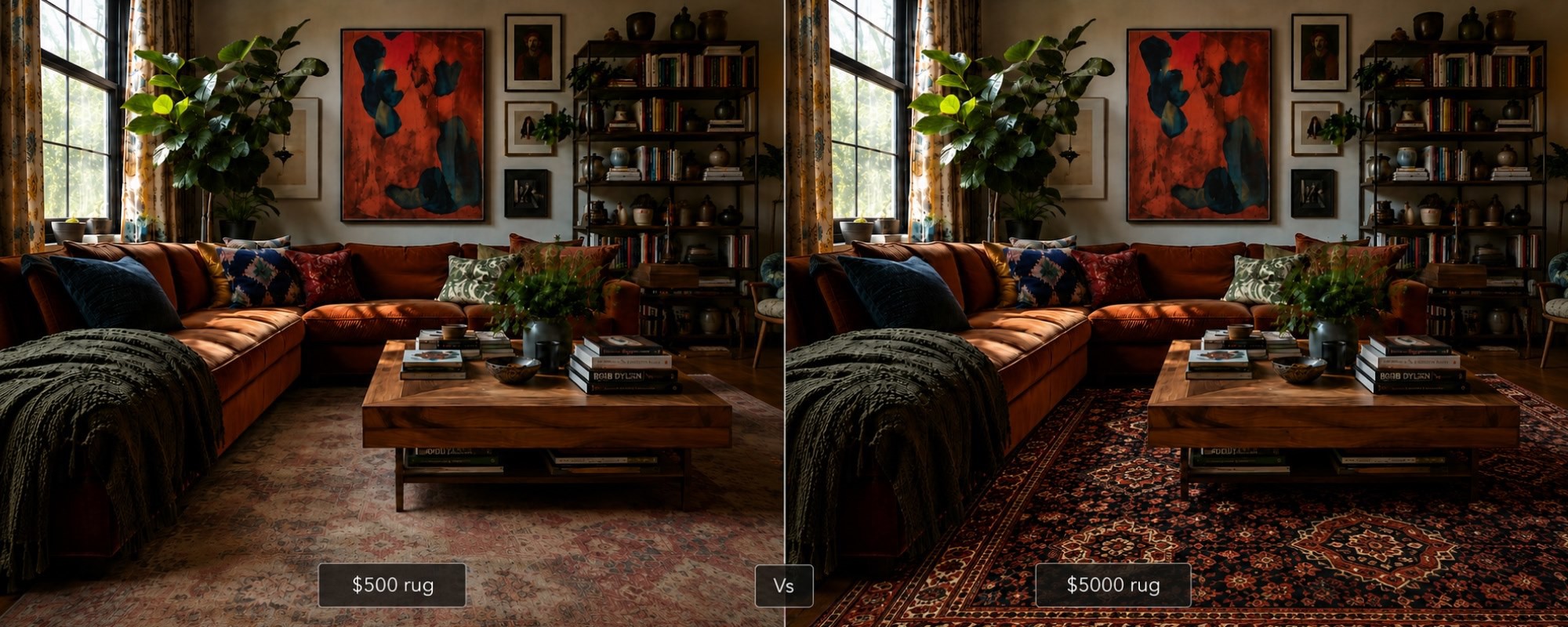
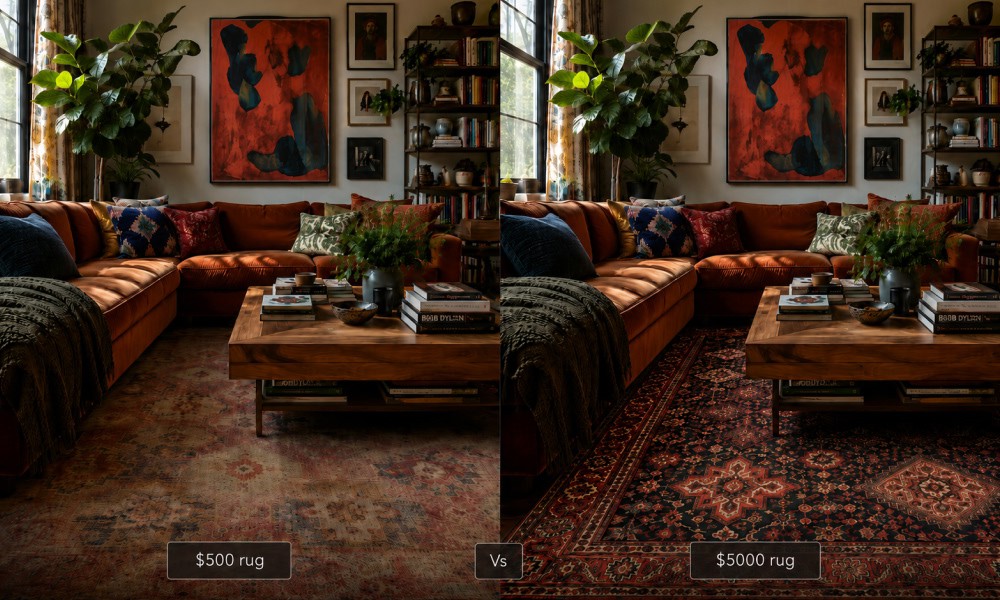
The $500 vs $5,000 Rug: An Honest Side-by-Side That No Brand Will Show You
Why do some rugs cost ten times more than others? This honest side-by-side looks at what actually separates a $500 rug from a $5,000 one: knot density, fiber quality, pile depth, and finishing. No brand bias, no marketing language. Just a clear breakdown to help you decide which one is worth it for your space and budget.
Read Article →
-
14 July 2026
- ∙
-
13 Min Read
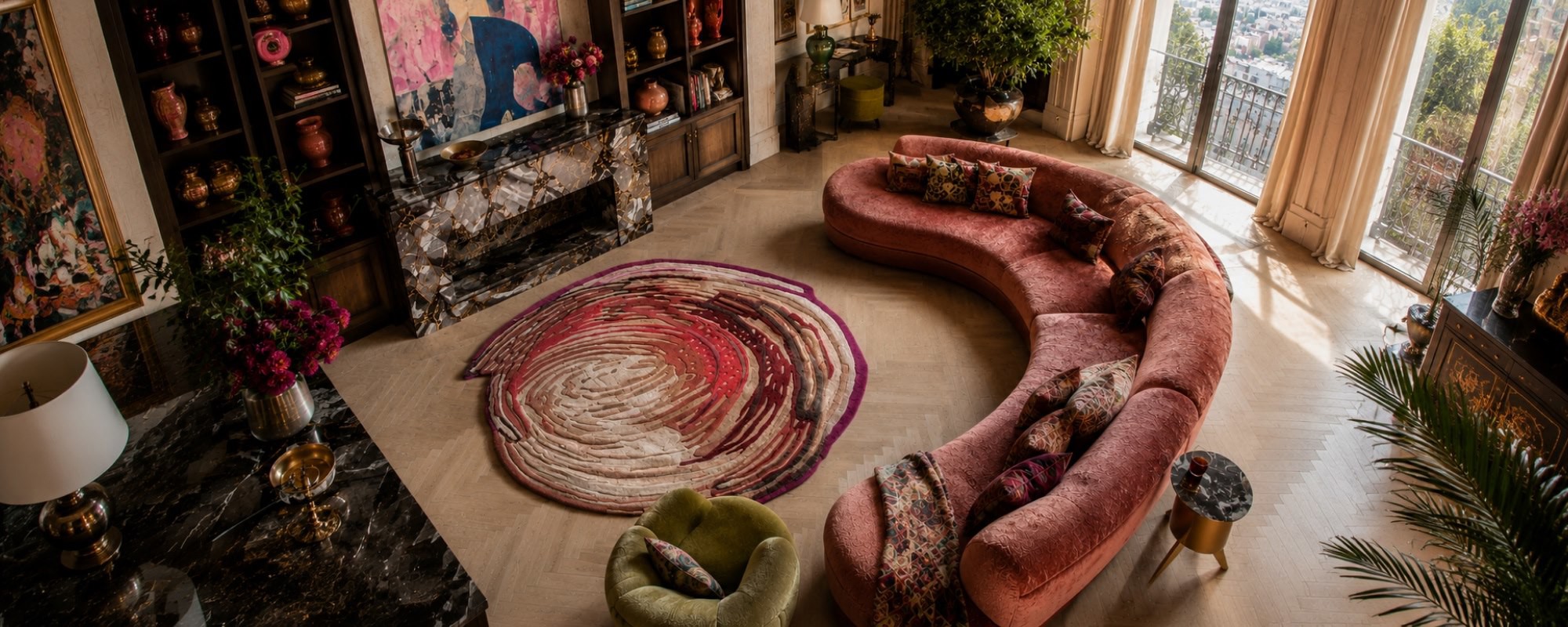
3D Rugs and Sculpted Pile: The Tactile Design Trend Redefining Floors in 2026
The rug used to finish a room. Now it starts one. 3D rugs and sculpted piles are bringing real depth and tactile texture to interiors, from hand knotted relief patterns to optical illusion designs that stop you mid-step. This is what the trend is, why it matters, and how to buy it well.
Read Article →
-
10 July 2026
- ∙
-
10 Min Read
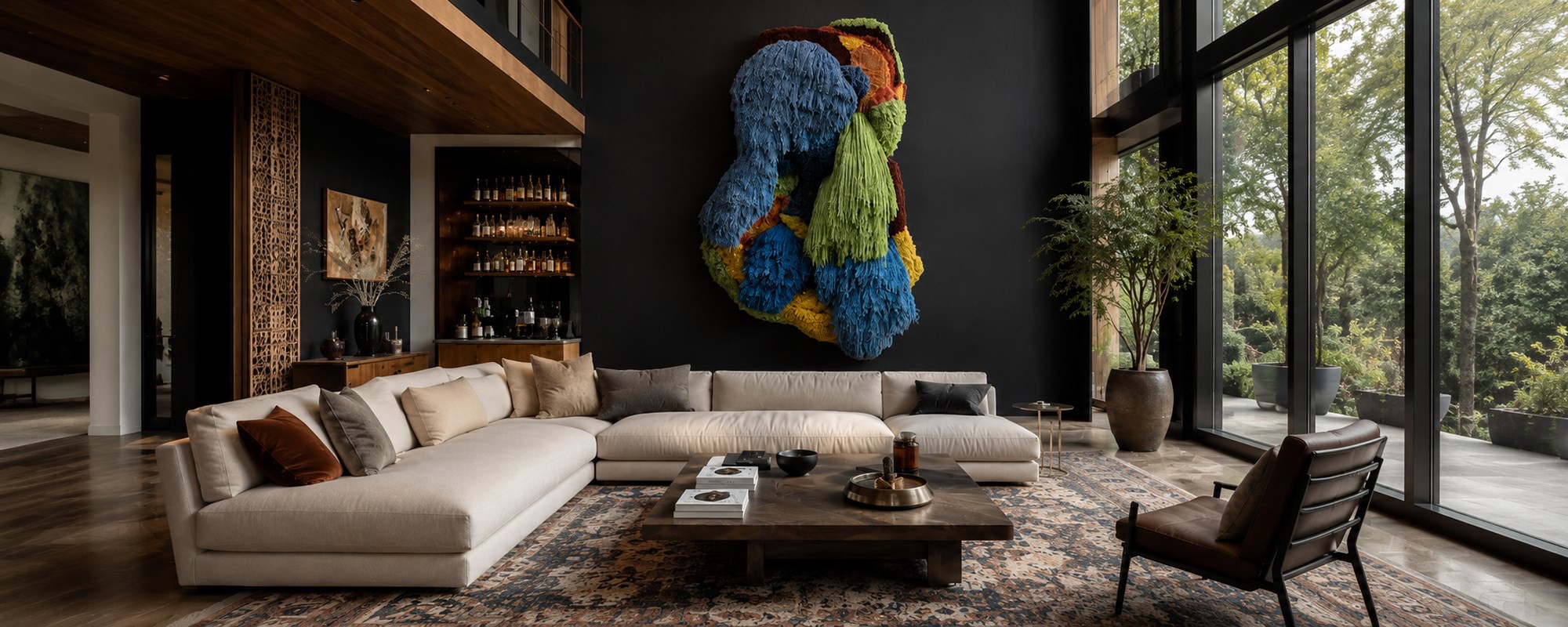
How to Pair Indian Wall Art with the Right Rug Pattern: A Room-by-Room Guide
Choosing the right rug to go with your Indian wall art does not have to be guesswork. This guide breaks it down room by room, from the living room to the bathroom and outdoor spaces. Learn how to match colors, patterns, and scale so your wall art and rug always feel like they belong together.
Read Article →
-
07 July 2026
- ∙
-
9 Min Read
How to Tell If a Rug Is Handmade: 7 Signs Experts Look For (Abrash Is One of Them)
Wondering how to know if a rug is handmade? Get an overview of 7 key characteristics that will help you identify if a rug is truly handmade and learn about its differences compared to machine-made rugs, and why they do not lose their value. Here is what to keep in mind when buying a handmade rug.
Read Article →
-
04 July 2026
- ∙
-
8 Min Read
Coastal Grandmother Is Evolving: The 2026 "Coastal Heritage" Aesthetic and the Rugs That Define It
The coastal grandmother design is progressing into something new and exciting by 2026. Coastal Heritage introduces texture, craftsmanship, and handmade elements to this popular design style. Here are the various rug types, colors, and decorating ideas to know about this classic coastal design trend.
Read Article →
-
22 June 2026
- ∙
-
6 Min Read
Why Top Interior Designers are Switching to Indian Handmade Rugs
High-end interior designers have begun using handmade carpets from India in place of machine-made carpets to enhance their design portfolios and ensure product longevity. The following guide will help you understand why design professionals prefer Jaipur Rugs for creating customized, ethically produced wool-and-bamboo-silk carpet designs for luxurious homes.
Read Article →