You are on our International website. Please select your region to see content specific for your location





 Profile
 Orders
 Wishlist
 Change Password
 Logout


Latest Blogs


rug 101
The Ultimate Rug Pad Guide: How to Choose the Best Rug Pad?
- 27 February 2026
- |
- 6 Min Read
- |
- By Jaipur Rugs

Most people spend thousands on designer handmade rugs and ignore what sits underneath. The best rug pad controls comfort, grip, noise, insulation, and even floor safety. Thickness, material, and placement all matter more than you think. If you choose wrong, you shorten your rug’s life. Read this complete guide before you buy anything.
The best rug pad depends on your flooring, rug type, and traffic level. Rug pad thickness affects comfort, stability, and wear. Rug pads for hardwood floors require non-staining materials like natural rubber or felt. A non slip rug pad improves safety by preventing movement and corner lift. Choosing correctly protects both your handmade rug and your subfloor.
Best Rug Pad: What Actually Makes One the Best?
The best rug pad is not the thickest or most expensive. It is the one engineered for your floor type, rug construction, and daily use. A high-quality anti slip rug pad balances grip, cushioning, airflow, and floor safety. The wrong material can stain hardwood or create instability.
Here’s why this matters:
-
The best modern rug pad distributes weight evenly, reducing fiber crushing and premature wear.
-
A quality non slip rug pad prevents lateral shifting, which reduces trip hazards.
-
Rug pad benefits include sound absorption, insulation, and extended rug lifespan.
-
Breathable construction prevents moisture buildup under dense wool or silk rugs.
-
Proper padding reduces seam stress in hand knotted and hand tufted rugs.
Rug Pad Thickness Explained: How Thick Should Rug Padding Be?
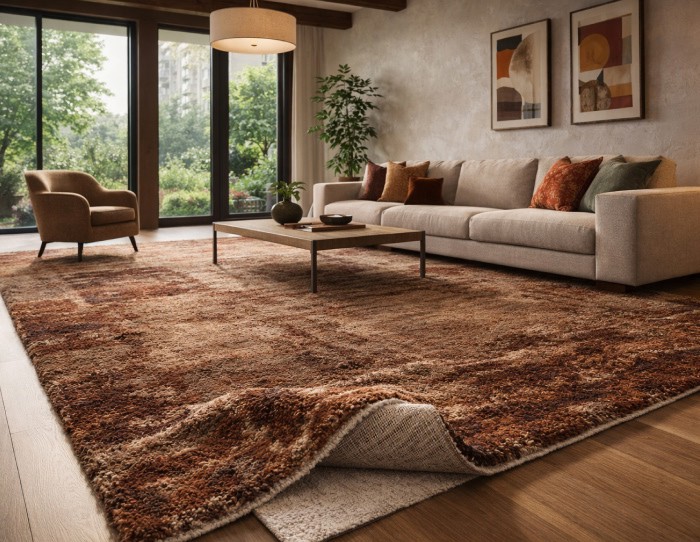
Rug pad thickness determines how your rug feels underfoot and how it performs long-term. Thicker is not always better. The correct thickness depends on the room function, rug pile height, and furniture weight.
Understanding this helps you choose correctly:
-
For living room carpets, rug pad thickness typically ranges from 1/4 inch to 3/8 inch (6 mm to 10 mm).
-
The best carpet pad thickness under an area rug on hardwood is usually 1/4 inch to prevent door clearance issues.
-
High pile Persian rugs often require thinner rug padding to avoid excessive softness and instability.
-
Dining room runners or rugs benefit from thinner pads around 1/8 inch to 1/4 inch (3 mm to 6 mm) to keep chairs stable.
-
Bedroom rugs can use 3/8 inch (10 mm) for added comfort underfoot.
Rug Pads for Hardwood Floors vs Carpet: What’s the Difference?
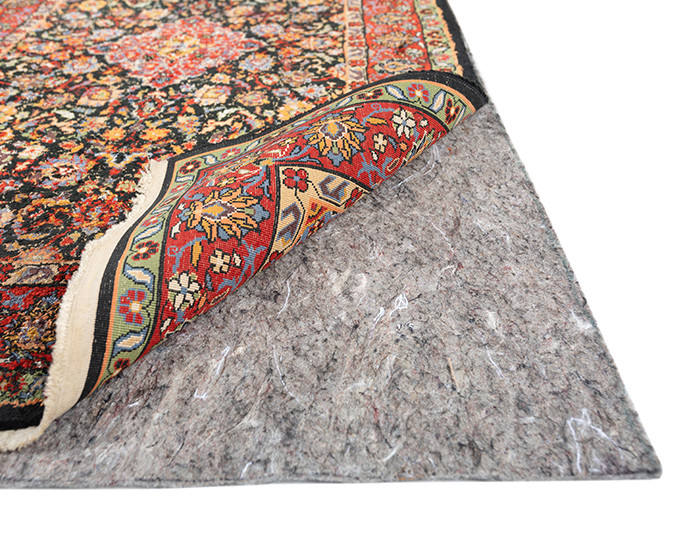
Rug pads for hardwood floors require grip without chemical transfer. On carpet, the goal shifts from grip to friction stabilization. An under rug pad must match the flooring surface to function properly.

The key differences include:
-
Natural rubber offers superior grip for hardwood floors without adhesives.
-
Felt provides cushioning and is often combined with rubber for balance.
-
PVC pads are budget options but may not be suitable for sealed hardwood.
-
Memory foam provides comfort but lacks strong anti-slip performance on smooth floors.
-
A non slip rug pad for carpet prevents bunching by gripping the carpet fibers below.
How to Select a Rug Pad: A Complete Rug Pad Buying Guide
If you are wondering how to select a rug pad, start with function, not price. A structured rug pad buying guide prevents common mistakes.
Here’s why this matters:
-
Room type determines thickness and density requirements.
-
High traffic areas require dense felt or rubber blends to prevent compression.
-
Low pile flatweave rugs need thinner padding to maintain stability.
-
Allergy-sensitive households benefit from hypoallergenic felt pads.
-
Eco-conscious buyers should look for recycled felt or natural rubber materials.
-
Large open-plan spaces benefit from pads that provide acoustic insulation.
Non Slip Rug Pad vs Rug Gripper Pad: What’s the Real Difference?
A non slip rug pad covers the full rug footprint and provides cushioning plus grip. A rug gripper pad is usually thinner and focuses primarily on corner or edge stabilization.
Understanding this helps you choose correctly:
-
Non slip rug pads combine rubber and felt for full-surface grip and support.
-
Rug gripper pads are often thin mesh materials designed for lightweight rugs.
-
Anti slip rug pad options improve safety in entryways and kitchens.
-
Gripper pads do not provide meaningful cushioning or insulation.
-
For heavy wool rugs, full-coverage non slip rug pads perform better long term.
Summing Up..
A designer rug without the right pad is like a luxury car running on worn tires. It may look impressive, but performance quietly suffers underneath. The best rug pad is not extra. It is structural support. The right thickness improves comfort. The right material protects hardwood. The right grip prevents accidents.
You can see a rug. You feel a rug pad. Choose it carelessly, and you will notice over time. Choose it correctly and you never will.
We will be back with another blog soon.
Till then, stay tuned and explore Jaipur Rugs!
FAQs
What are rug pads used for?
Rug pads provide cushioning, prevent slipping, protect floors from damage, and extend the life of your rug by reducing wear and tear.
How long do rug pads last?
Rug pads can last anywhere from 5 to 10 years, depending on the material and usage. Regular maintenance can extend their lifespan.
Do rug pads smell?
High quality rug pads generally do not have an odor. However, low-quality or poorly ventilated pads may emit a slight smell, especially when new.
Does the quality of the rug pad matter?
Yes, the quality of a rug pad matters for durability, safety, and floor protection. A better-quality pad will last longer, provide better cushioning, and prevent slipping.
What is a good rug pad thickness?
A thickness of 1/4 inch is typically ideal for most rugs. Thicker pads provide more cushioning, while thinner ones offer more stability.
How to measure for a rug pad?
Measure your rug’s dimensions and cut the pad slightly smaller—about 1-2 inches smaller on all sides—to prevent it from showing.
Will a rug pad damage my hardwood floors?
Quality rug pads are designed not to damage hardwood floors. Avoid rubber or vinyl pads, which can cause discoloration or leave residue.
What are the best materials for eco-friendly rug pads?
Natural materials like felt, jute, and recycled rubber are excellent eco-friendly choices for rug pads, offering durability and sustainability.
Can I use the same rug pad if I move the rug to a different room?
Yes, as long as the size and surface of the new room are suitable for the rug pad. Just ensure it fits properly in the new space.
How often should I replace my rug pad?
Replace your rug pad every 5-10 years or sooner if it becomes worn, flattened, or loses its gripping power
What is the best rug pad for hardwood floors?
The best rug pad for hardwood floors is a felt and natural rubber combination pad that provides cushioning while using a non-staining rubber base for grip. Avoid PVC-based pads on hardwood, as they can trap moisture or discolor finishes over time.
What is the ideal rug pad thickness for living rooms?
The ideal rug pad thickness for living rooms is 1/4 to 3/8 inch (6 to 10 mm). This provides cushioning, sound absorption, and rug stability without affecting furniture balance or door clearance.
Can you use the same rug pad for hardwood floors and carpet?
No. Rug pads for hardwood floors require non-staining grip materials, while pads on carpet rely on friction and density. Using the wrong type may reduce stability or damage flooring.
How do you choose the right rug pad?
To choose the right rug pad, evaluate floor type, rug construction, room traffic, and desired cushioning. Hardwood floors require non-staining rubber blends, while carpeted floors need friction-based stabilization pads.
Are rug gripper pads better than non slip rug pads?
Rug gripper pads are not better; they serve a different purpose. Non-slip rug pads provide full coverage, cushioning, and stability, while gripper pads primarily prevent corner lift on lightweight rugs.
Should a rug pad be smaller than the rug?
Yes. A rug pad should be approximately 1 inch shorter on all sides than the rug. This prevents visibility, reduces curling, and maintains clean edges.


Pic Credits
Jaipur rugs / Abil Dase
Share
-
 Facebook
-
 Twitter
-
 Email
Email
Related Posts
-
30 June 2026
- ∙
-
7 Min Read
Carpet Replacement: Everything You Need to Know Before You Buy
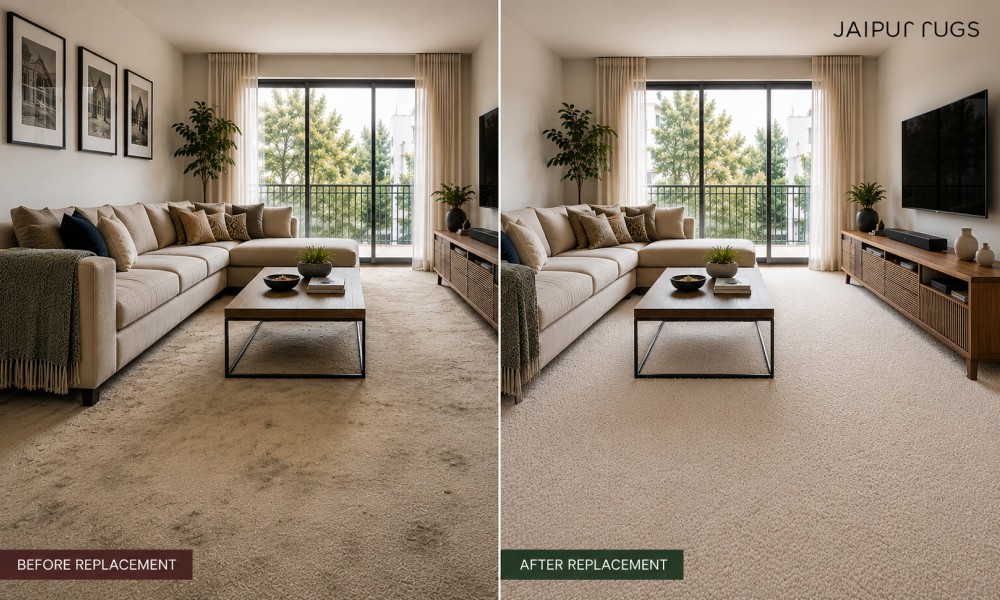
Wondering if it's time to replace your carpet? This guide breaks down how long carpet really lasts, what affects replacement cost, and the warning signs like mold, smell, and wear you shouldn't ignore. It also compares carpet, hardwood, and area rugs, helping you pick the right flooring for your home, your budget, and your family's health.
Read Article →
-
23 December 2024
- ∙
-
7 Min Read
Why Are Jaipur Rugs' Best-Selling Carpets A Must-Have For Every Home?
Jaipur Rugs' best-selling carpets offer a perfect blend of timeless beauty and luxurious craftsmanship. Hand-knotted with precision, each rug showcases unique designs that elevate any space. From traditional to modern styles, these rugs are crafted to enhance your home’s decor with lasting elegance. Discover the perfect rug to add warmth and style to your living room, bedroom, or hallway.
Read Article →
-
28 February 2026
- ∙
-
6 Min Read
Carpet Pile Height Guide: Measurements, Charts & Best Choices
Choosing carpet without understanding pile height is like buying shoes without checking size. One wrong inch can ruin comfort, cleaning, and durability for years. Low, medium, high, they are not just labels. They change how your room feels and functions. Before you spend a single dollar, read this entire guide. It will change how you choose a designer rug or handmade carpet.
Read Article →
-
08 December 2025
- ∙
-
8 Min Read
Understanding and Fixing Carpet Buckling: A Complete Guide That Actually Helps
Carpet buckling appears as waves, ripples, or bumps and is usually caused by moisture, humidity, dragging furniture, or poor installation. The guide explains why carpets wrinkle, how to flatten carpets, and when restretching is needed. It also covers common mistakes, prevention tips, and how different rugs and rug pads affect carpet stability. Perfect for homeowners looking for clear solutions.
Read Article →
-
06 December 2025
- ∙
-
6 Min Read
6 Easy Tips To Clean Carpet at Home Without Professional Help
Tired of seeing your carpet look tired? We have got 6 cleaning tips that actually work, no professionals required. Whether it’s day-to-day messes or deep stains, these simple hacks will have your rug looking fresh again. Want to know the easiest way to keep it spotless? Let’s get into it.
Read Article →
-
31 August 2024
- ∙
-
4 Min Read
Learn How Celebrities Create A Luxurious View With Affordable Winter Rugs
Don't you wish to have a home that is all about luxury while being on a budget? If yes, then you have found the hack to do so! This blog is all about helping you transform your space head to toe simply with premium-quality rugs and carpets. Many celebrities rely on designer rugs to make an area look polished and well-maintained by strategically selecting them. So, without further ado, let's get to know how celebrities make their home feel inviting and luxurious with premium winter rugs.
Read Article →