You are on our International website. Please select your region to see content specific for your location




 Living Room
 Dining Room
 Bedroom
 Kids Room
 Outdoor
 Irregular
 Runner
 Hand Knotted
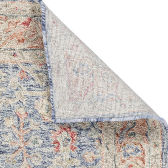 Hand Tufted
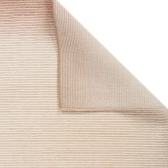 Hand Loom
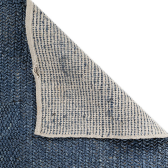 Flat Weaves
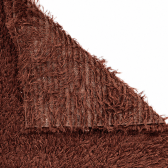 Shag
 Modern
 Transitional
 Traditional
 Minimalist
 Bohemian
 Eclectic
 Maximalist
 Monochromatic
 Neutrals
 Pastels
 Vibrant
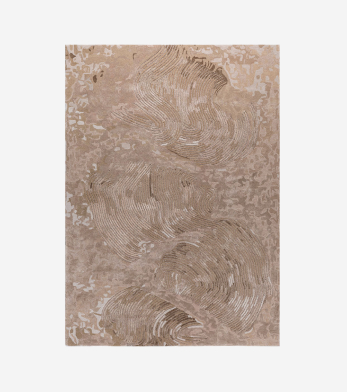 Abstract
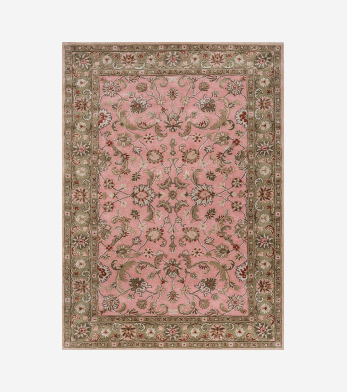 Oriental
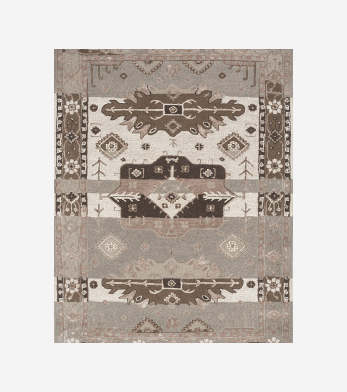 Moroccan
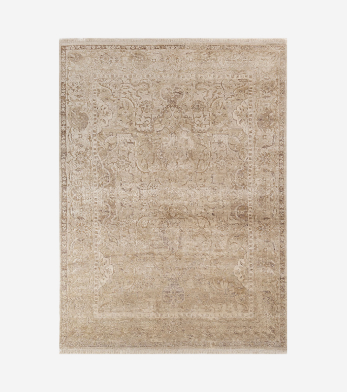 Distressed
 Floral
 Geometric
 Graphic
 Solid
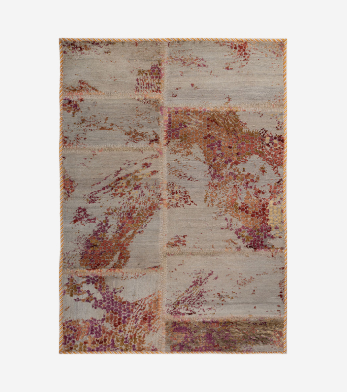 Patchwork
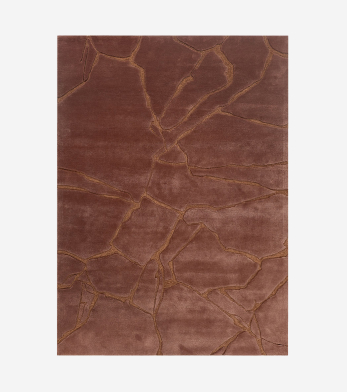 Genesis
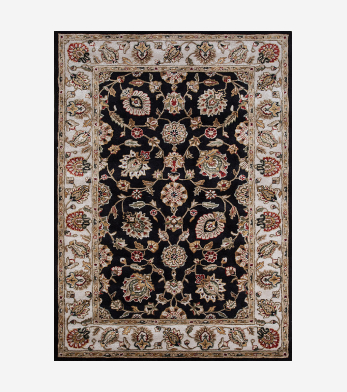 Kasbah
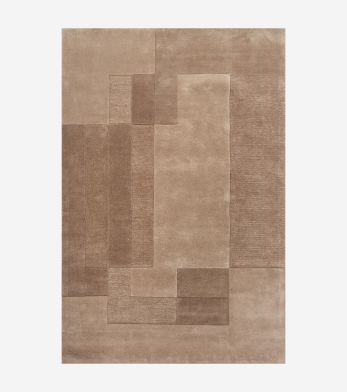 Cera
 Daaira
 Savana
 Someplace In Time
 Chaos Theory By Kavi
 Pathways
 Manifest
 Kengo Kuma
 VIMAR 1991
 Bodour Al Qasimi
 Richard Hutten
 Peter D'ascoli
 Vinita Chaitanya
 Tatiana De Nicolay
 Keith Pillow
 Kunaal Kyhaan Seolekar
 Pavitra Rajaram
 Ashiesh Shah
 Matteo Cibic
 Tania & Sandeep Khosla
 Gauri Khan
 Abin Chaudhuri
 Kavi
 Gabriel Hafner NEW
 Neeraj Patel
 Princess Pea
 Gurjeet Singh
 Lorenzo Vitturi
 Rug Warranty
 Stain Resistance
 Track Order
 The Founder
 The Company
 The Craft
 Sustainability
 Hospitality
 Retail
 Aviation
 Yacht
 Residential
 View all
 Stores
 My Account

 Trade
 Email Us
 Contact Us
 WhatsApp Chat
 Book Appointment
 Track Order


 Profile
 Orders
 Wishlist
 Change Password
 Logout


Latest Blogs
ideas and inspiration
Walk-In Wardrobes and Dressing Rooms: Rugs for the Most Personal Room
- 16 October 2026
- |
- 8 Min Read
- |
- By Jaipur Rugs
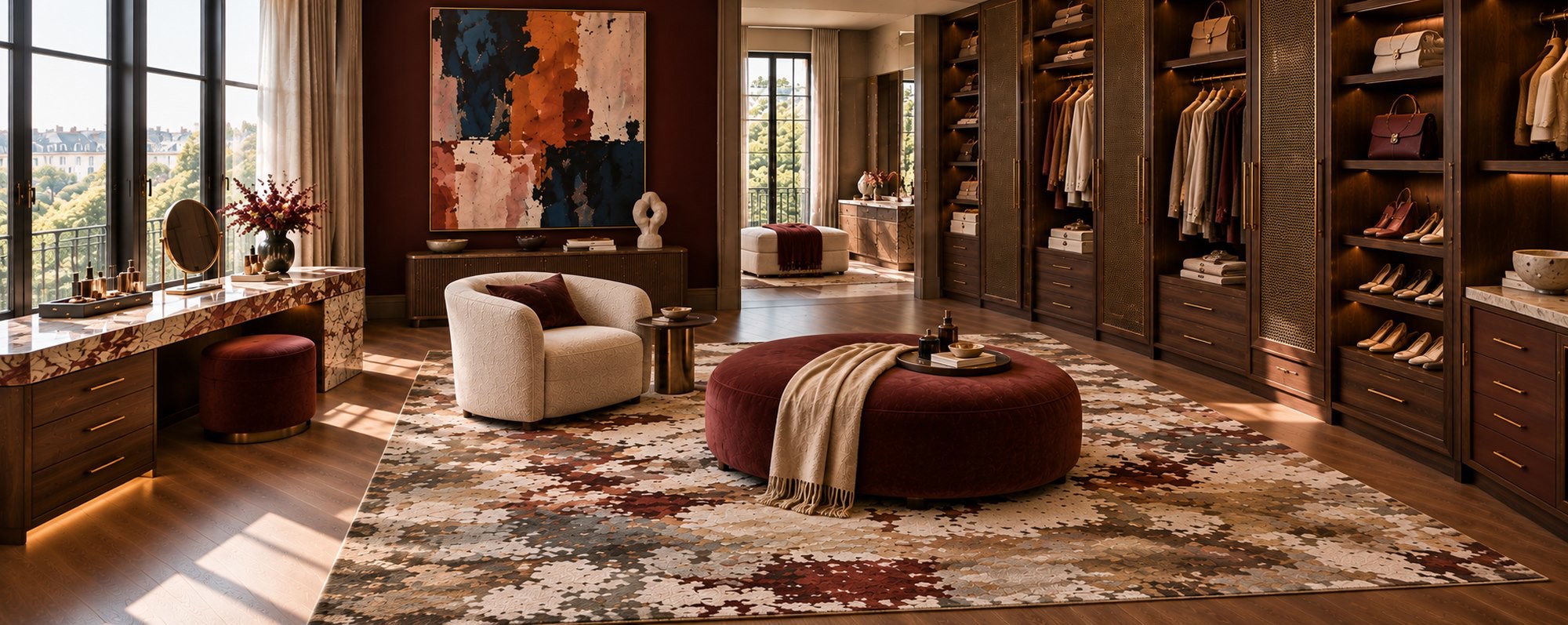
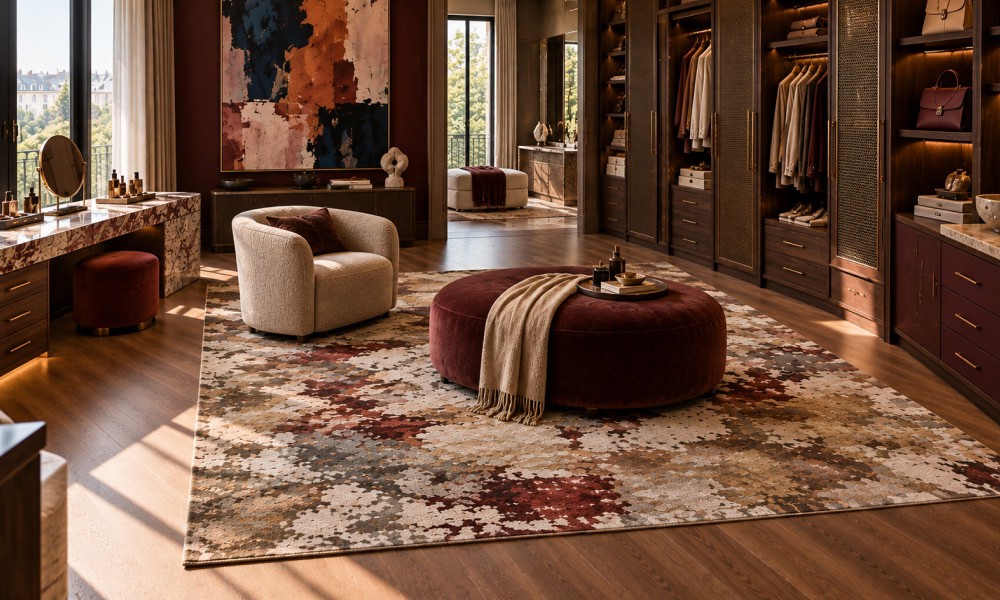
A dressing room is the most personal room in the house, yet its floor is often forgotten. This dressing room design guide explains how to choose a soft rug for a walk-in wardrobe: wool or wool-silk materials, hand-tufted versus hand-knotted construction, the right size around fitted storage, colours that suit your joinery, and simple care tips that keep it looking luxurious.
Walk-In Wardrobes and Dressing Rooms: Rugs for the Most Personal Room
You start and end every day in this room. Yet the floor is usually the last thing anyone plans.
Good dressing room design gets the joinery right, the lighting right, the full-length mirror right. Then it leaves you standing barefoot on cold tile while you decide what to wear. That’s the gap a rug fills.
A dressing room is the most private space in the house. Nobody else really sees it, which is exactly why it should feel made for you. And underfoot is where you feel it first.
Here’s how to pick a rug that suits the room, the fitted storage and the way you actually use the space.
Can you put a rug in a closet or walk-in wardrobe?
Yes, and in most cases you should. A walk-in wardrobe is all hard surfaces: wooden shutters, glass fronts, lacquered drawers, a stone or tile floor. Sound bounces. Feet get cold. The room looks expensive but feels a little clinical.
A rug fixes all three at once. It softens the acoustics, gives you something warm to stand on while you change, and pulls the cabinetry and floor into one composed look.
There’s a practical reason too. You spend most of your time here standing still, often barefoot, sometimes in socks you’re about to swap. A soft surface underfoot makes those ten minutes every morning feel less like a chore. And it protects the floor from dragged ottomans and dropped hangers.
What rug works in a walk-in wardrobe?
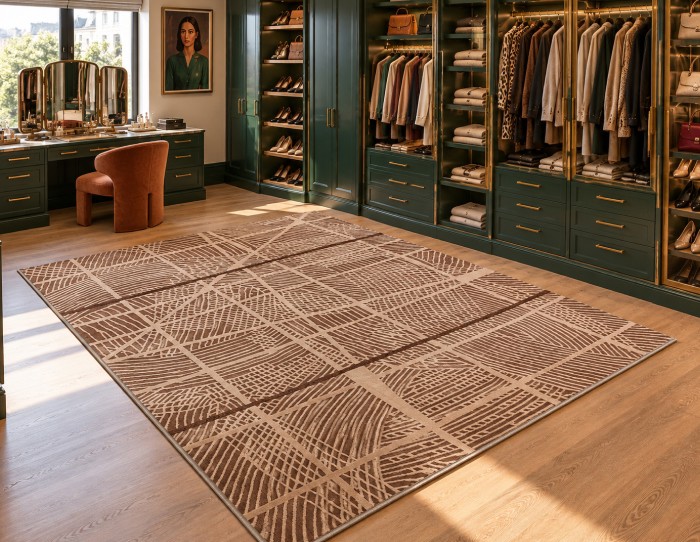
A soft, dense wool rug. Or wool blended with silk, if you want the room to feel properly luxurious. Those two options cover almost every dressing room.
Here’s why. A dressing room sees light, barefoot traffic. Nobody drags muddy shoes across it or eats on it, so you can choose for comfort and finish rather than pure toughness.
Hand-tufted or hand-knotted?
Hand-tufted rugs are made by punching yarn through a canvas backing with a handheld tool. The pile comes out even and plush, and the price sits lower. For a compact walk-in, or a room you’ll refresh in five years, that’s a smart call.
A hand-knotted rug is tied knot by knot on a loom, sometimes over several months. It’s denser, lasts decades and looks better with age. If the dressing room is a long-term renovation (custom joinery, stone floor, the works), the rug belongs in that same tier of investment.
Why wool-silk feels made for this room
Wool gives you spring underfoot. Silk adds sheen and a cool, smooth touch. Woven together, the silk usually traces the pattern, so the design catches the light as you move past the mirror.
That’s the real appeal. In a room built around getting dressed, wool and silk rugs echo what’s hanging on the rails: natural fibre, fine finish, made to be touched.
Skip very long shag. It flattens under an ottoman and can catch a stiletto heel. A medium plush pile gives you softness without the upkeep. For a closer comparison, read our guide to the softest rug materials.
What size rug for a dressing room?
Size it to the open floor, not the whole room. Fitted storage eats the edges, so measure the walkable space between the wardrobe plinths and work inward from there.
Leave 15 to 20 cm (6 to 8 inches) of bare floor between the rug and the joinery. That gap frames the rug and stops it looking wedged in. It also keeps the pile clear of skirting and plinth kicks you’ll want to wipe down.
| Dressing room layout | Rug that usually fits |
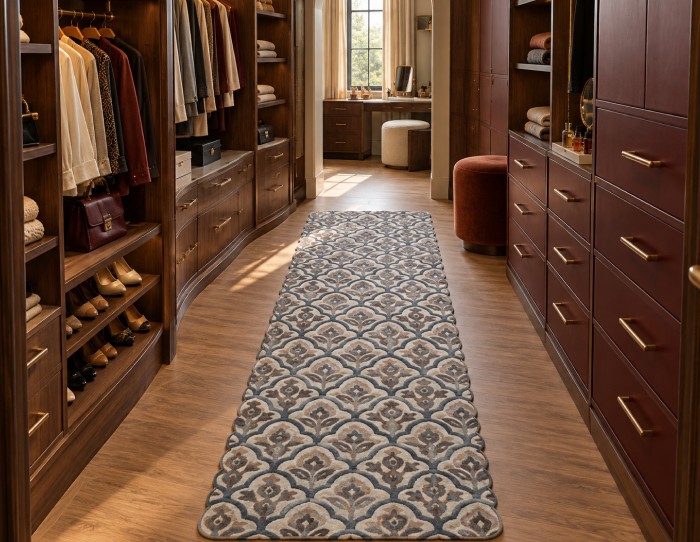
| Galley walk-in, wardrobes on both sides | Runner, 2.5x8 or 2.5x10 ft |
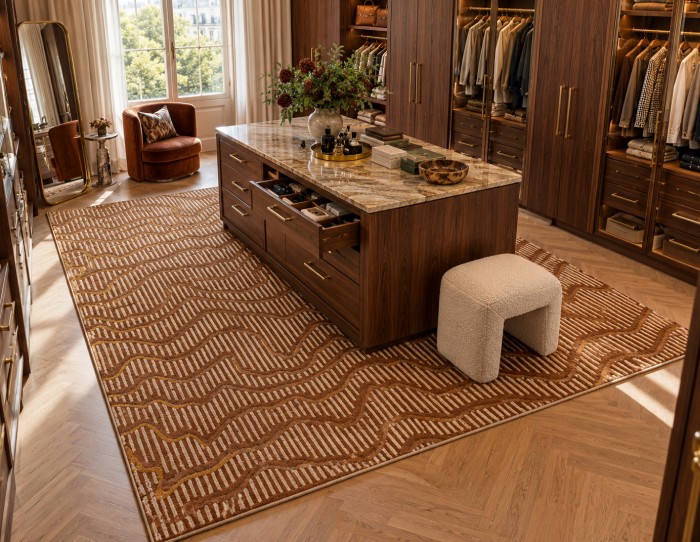
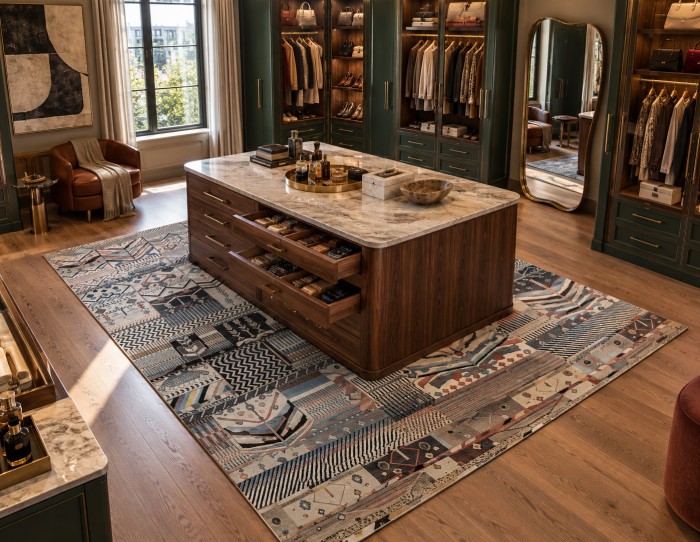
| Square walk-in with a central island | 5x8 or 6x9 ft, extending 45 to 60 cm past the island |
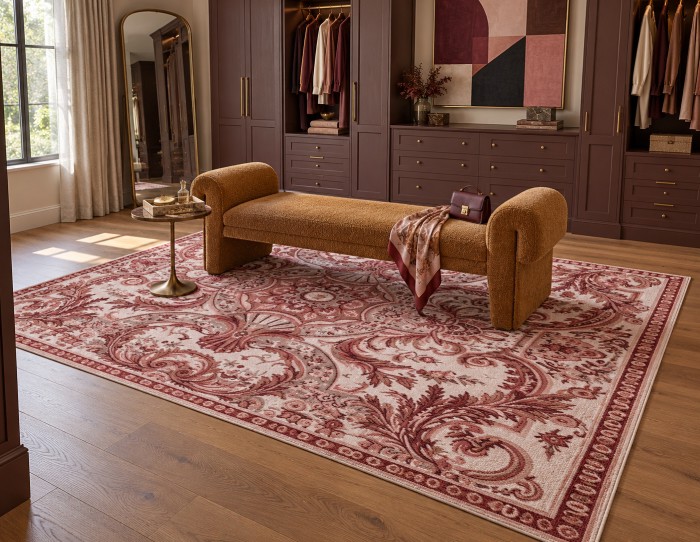
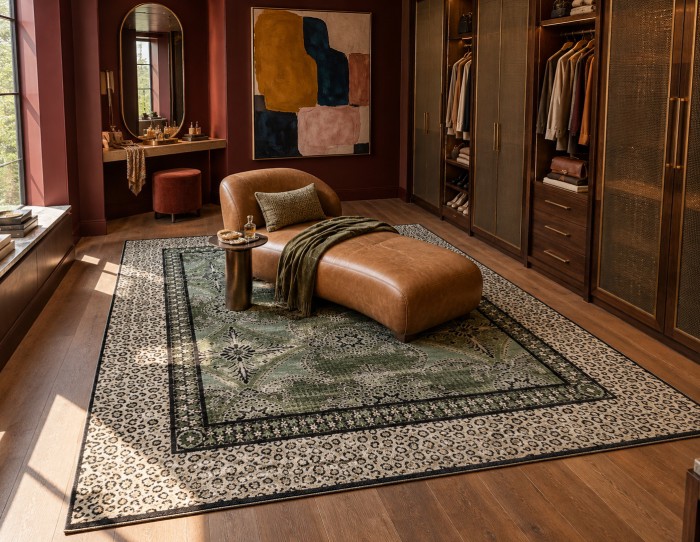
| Dressing room with an ottoman or bench | 6x9 or 8x10 ft, seating fully on the rug |
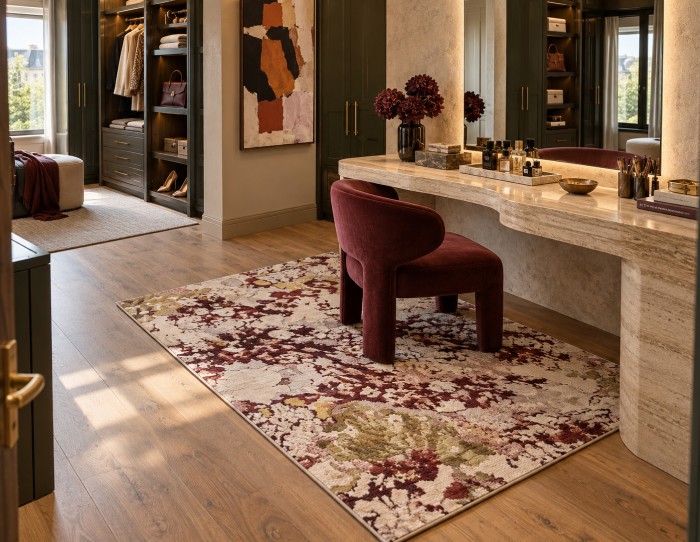
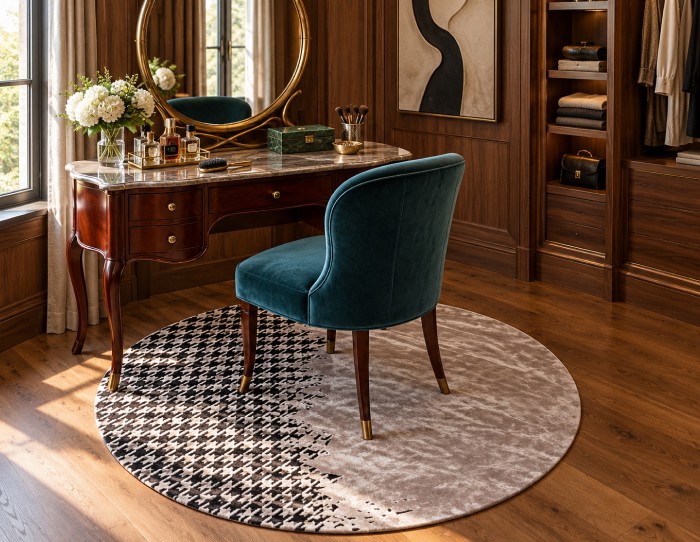
| Vanity nook or corner | 3x5 ft rectangle or a 4 ft round |
One thing people miss: hinged wardrobe doors. If the doors sit low, a thick pile can catch them every time you open up. Check the gap under each door before you buy, or choose a slightly lower pile near the doors.
And if the room is a long, narrow corridor, a runner rug is almost always the answer. It guides the eye to the far wall and makes the space read longer. Our rug size guide covers the measuring basics room by room.
Matching the rug to your walk-in wardrobe design
Start with the joinery, because it’s the biggest colour block in the room. Whatever the cabinets are, the rug either needs to sit quietly beside them or deliberately lift them.
Pale oak, white lacquer or limed wood. A neutral palette works best here. Ivory rugs, oatmeal and soft greige keep the room airy and let your clothes provide the colour. Add texture rather than pattern: a subtle tonal design or a high-low pile.
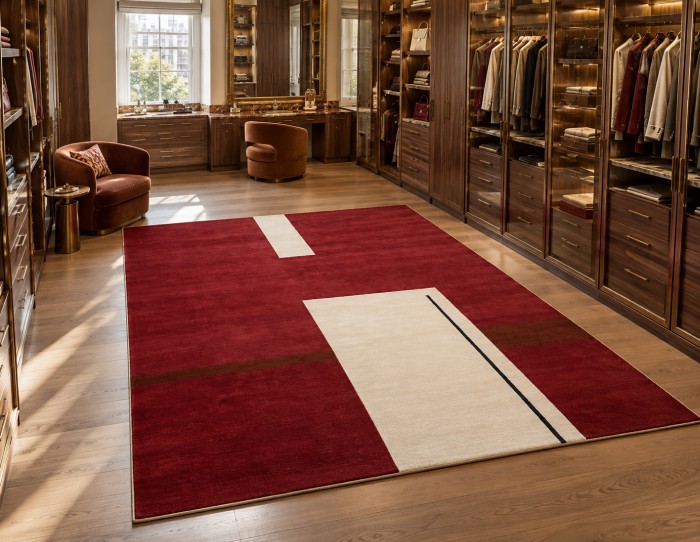
Dark walnut, smoked glass or charcoal cabinets. You can afford warmth and depth. Beige rugs with a rust or caramel thread soften the darker joinery without fighting it. A muted abstract pattern also works, since the cabinets are already calm.
Painted cabinets in sage, navy or dusty pink. Pick one undertone from the paint and pull it into the rug at a lower intensity. The match should feel intended, not identical.
A quick test before you commit. Lay a swatch or a photo of the rug against an open wardrobe door, under the room’s actual lighting. Dressing rooms often run on warm LED strips, and colours shift a lot under them.
One more thing. Busy, high-contrast patterns compete with the clothes on display. In a room where outfits are the main event, a quieter rug almost always wins.
How do you make a dressing room feel luxurious?
Luxury closet design is mostly about touch. Velvet-lined drawers, a soft-close hinge, a padded bench. The rug is the largest of those touch points, and the one you feel on bare skin.
A few moves that make the biggest difference:
-
Treat vanity as its own zone. A round rug under the stool marks it off from the wardrobe walk. It also softens all the hard angles of mirrors and drawers.
-
Put the seat on the rug. An ottoman or bench sitting fully on a plush pile feels like a destination. Half on, half off just looks unplanned.
-
Light the rug, not only the rails. A low strip under the island or a floor-level light turns a silk sheen into a quiet glow at night.
-
Use a quality rug pad. It adds cushioning and stops the rug creeping on a stone or polished floor.
If your dressing area sits inside the main bedroom rather than a separate room, keep both rugs in conversation. Same family of tones, different scale. Our guide to the perfect bedroom rug helps you plan the pair.
Caring for a rug in a closet
Dressing rooms are kind to rugs. Low traffic, little sun, no food. But they have two quirks worth planning for.
First, moths. They love dark, undisturbed corners and natural fibres, and a wardrobe full of cashmere already invites them in. Vacuum the rug weekly, edges included, and lift it twice a year to check underneath.
Second, the vanity. Perfume, foundation and nail polish all end up on the floor eventually. Blot spills straight away, never rub, and leave silk stains to a professional cleaner.
A rug with a story, for the room that’s all yours
There’s something fitting about a handmade rug in the most personal room of the house. Jaipur Rugs has worked with weaving communities since 1978. Today that’s more than 40,000 artisans across 600 villages in India, and each rug passes through around 180 pairs of hands.
In the Manchaha collection, weavers design the rug themselves, with no brief and no template. So the piece under your feet each morning is one of one. Rather like the wardrobe you’ve spent years building.
Where to start
Measure the open floor between your wardrobes tonight. Note the joinery colour and the gap under the doors. That’s all you need.
Then browse soft wool-silk and hand-tufted pieces in that size, and picture stepping onto one at 7 a.m. with the lights still low. The right rug won’t shout. It’ll just make the room feel finished, and a little more yours.
FAQs
What rug should I put in a walk-in wardrobe?
A soft wool or wool-silk rug with a medium plush pile works best in a walk-in wardrobe. The room gets light, barefoot traffic, so comfort matters more than heavy-duty durability. Avoid long shag, which flattens under furniture and can snag heels.
What size rug do I need for a dressing room?
Choose a rug that covers the open floor and leaves 15 to 20 cm of bare floor before the fitted storage. Galley walk-ins suit a 2.5x8 ft runner. Rooms with a central island or ottoman usually need a 5x8 or 6x9 ft rug.
Can you put a rug in a closet?
Yes. A rug in a closet adds warmth underfoot, absorbs echo from hard cabinetry and protects the floor. Check that hinged doors clear the pile, use a rug pad on smooth floors, and vacuum regularly to keep moths away from natural fibres.
How do I make a dressing room feel luxurious?
Focus on touch and light. Add a plush wool or wool-silk rug, a padded bench or ottoman, soft-close storage and layered lighting. A separate round rug under the vanity stool helps the room feel zoned and considered.
What is the best flooring for a dressing room?
Engineered wood or stone with an area rug is the most practical combination. The hard floor is easy to clean near the vanity, while the rug gives warmth and softness where you stand to dress. Wall-to-wall carpet works too, but it’s harder to keep moth-free.


Pic Credits
Jaipur rugs / Abil Dase
Share
-
 Facebook
-
 Twitter
-
 Email
Related Posts
-
30 October 2026
- ∙
-
8 Min Read
Formal Living Room Ideas That Start With the Rug
Learn how to choose the right rug for a formal living room, from selecting the correct size and placement to finding colours, patterns, and materials that suit your space. Explore traditional, transitional, and modern rug styles, along with tips on wool, silk, and hand-knotted rugs to create a living room that feels elegant, comfortable, and welcoming.
Read Article →
-
29 October 2026
- ∙
-
9 Min Read
Terracotta Rugs: How to Style 2026's Warmest Colour Trend
Terracotta rugs bring warmth, depth and earthy character to modern interiors. This guide explores the best colour pairings, from cream and sage green to dusty blue, along with styling ideas for living rooms and bedrooms. Learn how to choose the right rug size, compare traditional and contemporary designs, and understand why hand-knotted wool rugs offer lasting beauty and natural texture.
Read Article →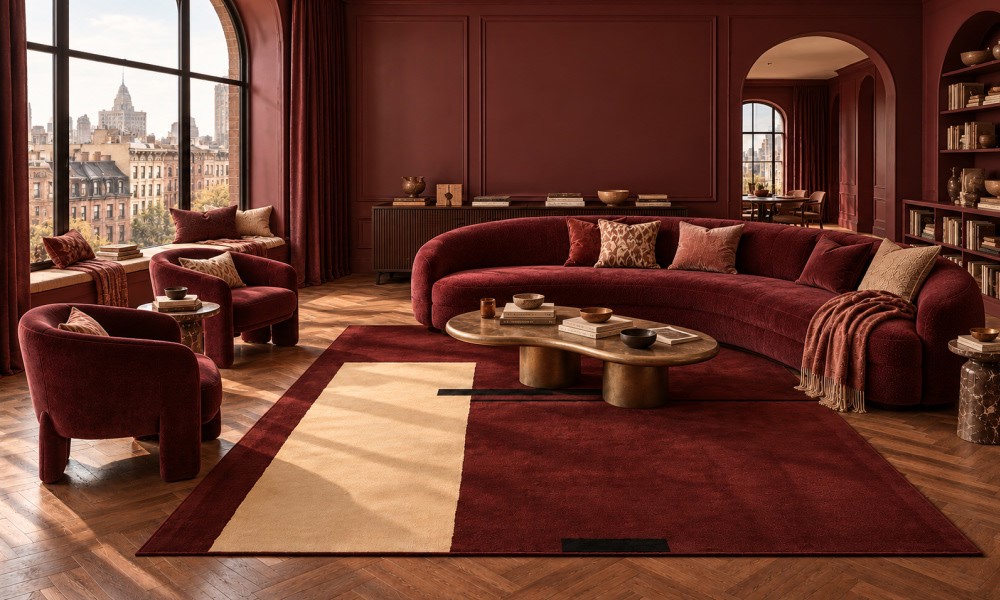
-
28 October 2026
- ∙
-
11 Min Read
Monochromatic Color Scheme: How to Design a One-Color Room That Never Feels Flat
A monochromatic color scheme uses different shades, tints and tones of one colour to create a cohesive interior. Learn how to style monochromatic living rooms, bedrooms and kitchens using colour, texture, furniture and rugs. Explore monochromatic colour scheme examples, understand the difference between monochromatic design and colour drenching, and find practical ideas for creating balanced, visually interesting spaces in modern homes.
Read Article →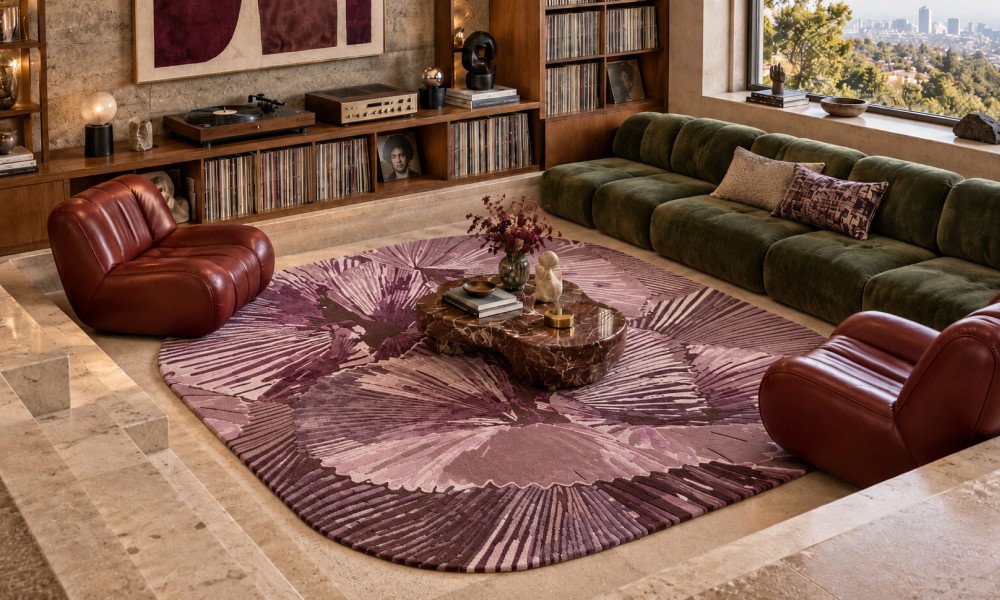
-
22 October 2026
- ∙
-
8 Min Read
Conversation Pits Are Back: How to Choose the Right Rug for a Sunken Living Room
Conversation pits are back, and the right rug makes or breaks them. This guide explains what a conversation pit is, how to get the look without a sunken floor, and which rug shapes suit pits. It covers sizing, low-pile safety near steps, hand-tufted versus hand-knotted options, custom shapes, and styling a 70s living room so it feels fresh, not dated.
Read Article →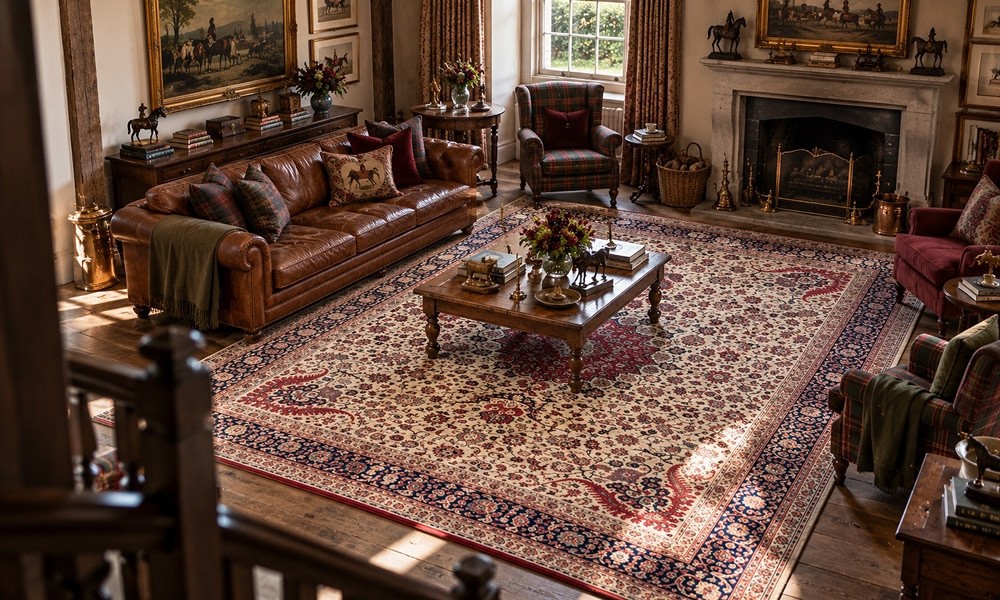
-
21 October 2026
- ∙
-
7 Min Read
Old Money Interiors: The Understated Rugs Behind the Look
Old money interiors look collected, not decorated, and the rug is often what makes them work. This guide covers the rugs that suit the style: hand-knotted wool, wool-silk, and antique-wash finishes. You’ll also find the muted colours that define it, room-by-room styling tips, how it differs from quiet luxury, and why heirloom craft matters for a home built to last.
Read Article →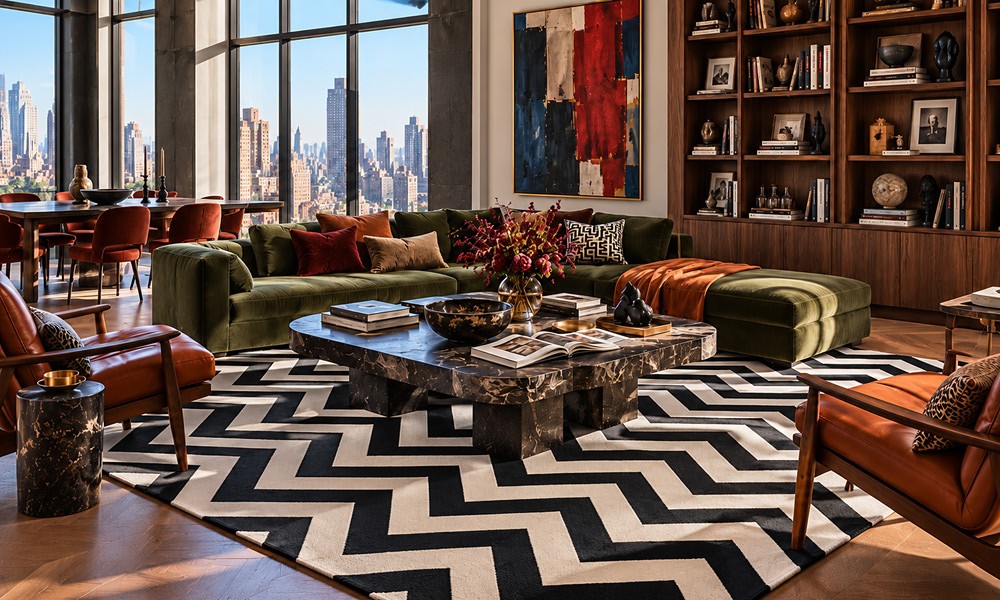
-
19 October 2026
- ∙
-
7 Min Read
Herringbone Rugs: A Designer Pattern for Timeless Rooms
Herringbone is one of the few rug patterns that never dates. This guide explains how herringbone differs from chevron, when to choose flatweave or hand-tufted, which pattern scale suits small and large rooms, and which direction the zigzag should run. It also covers room-by-room placement, pet-friendly choices, and simple weave-specific care, so your herringbone rug always looks designed.
Read Article →