You are on our International website. Please select your region to see content specific for your location





 Profile
 Orders
 Wishlist
 Change Password
 Logout


Latest Blogs
ideas and inspiration
Bought the Wrong Size Rug? Here’s What To Actually Do
- 06 August 2021
- |
- 7 Min Read
- |
- By Jaipur Rugs
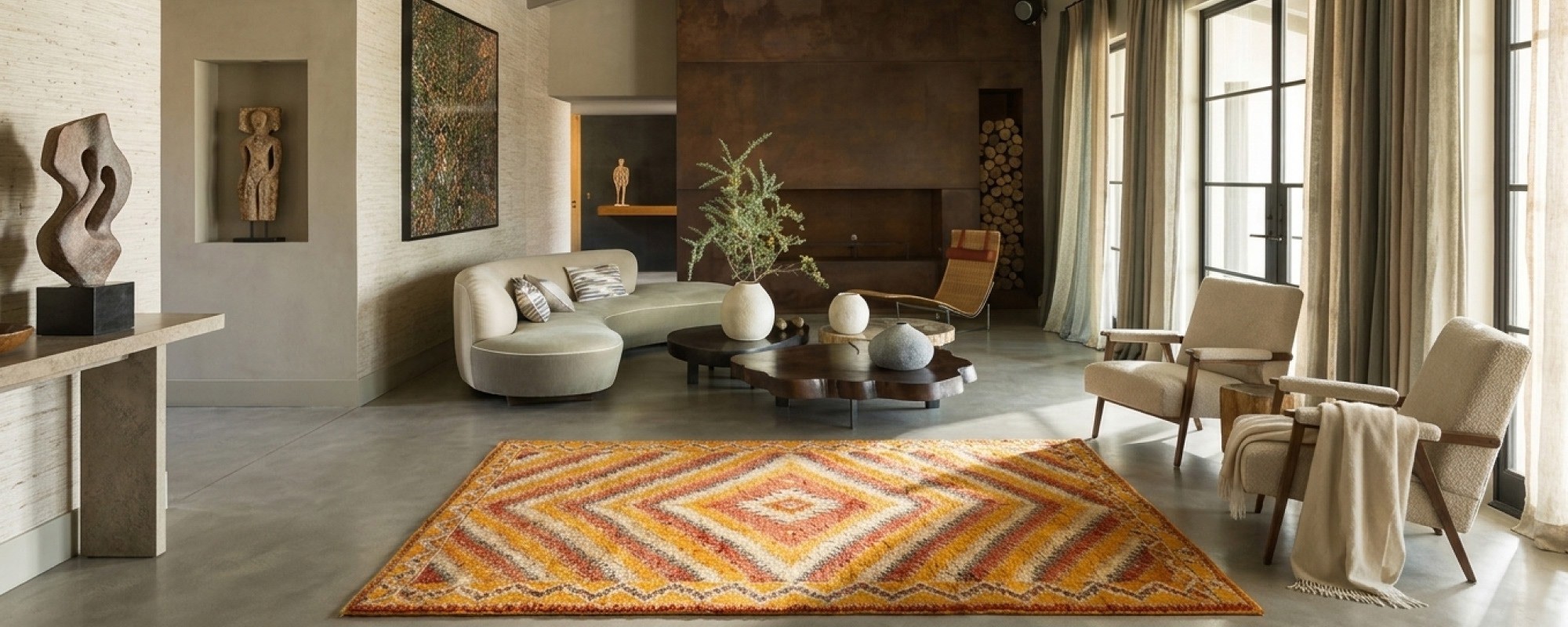
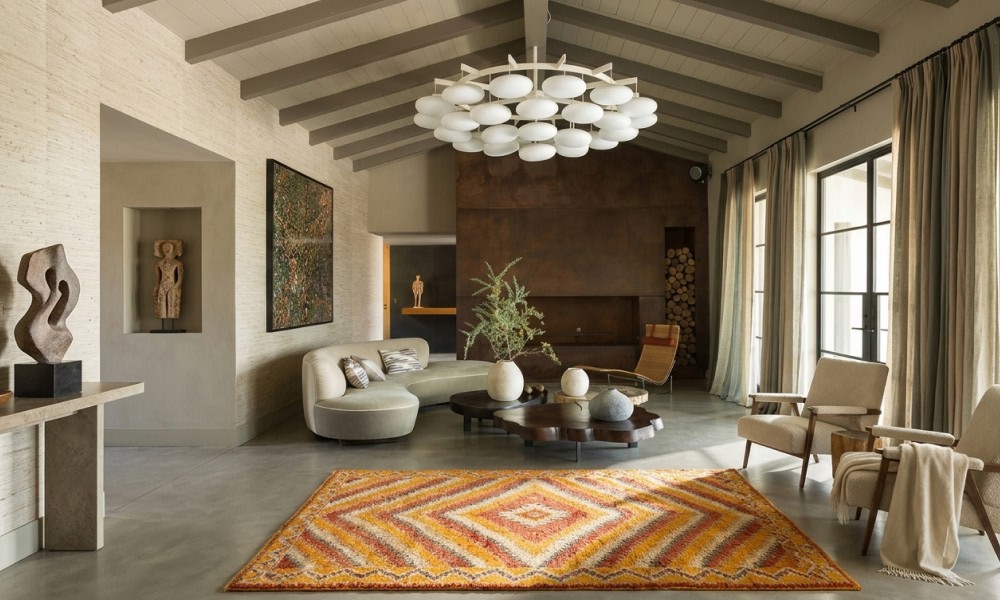
Bought a rug that looked perfect online, but feels completely wrong at home? You’re not imagining it. The wrong rug size can make furniture look disconnected, rooms feel awkward, and layouts suddenly seem off. Before returning it or panic-rearranging your entire room, here’s exactly how to fix a rug that’s too small, too big, or just visually wrong.
You unroll the designer rug. Step back. Pause.
Something is wrong.
Not dramatically wrong. Just enough to make you start nudging furniture around like a mildly stressed stage manager. The sofa suddenly looks disconnected. The coffee table feels stranded. The room somehow got weirder in under three minutes.
This is what buying the wrong size rug feels like.
And no, your eyes are not betraying you. Rug sizing mistakes trigger instant visual discomfort because rugs quietly control room proportions, furniture alignment, floor exposure, and how “settled” a space feels.
Most people blame the rug.
Often, the real issue is scale logic.
Why the Wrong Rug Size Changes the Entire Room?
An area rug is less about decoration and more about visual anchoring.
When it is too small, furniture starts looking like it has drifted apart after an argument. You get the dreaded floating rug effect: a rectangle hovering awkwardly beneath a coffee table while the surrounding furniture refuses emotional commitment.
A common misconception is that smaller rugs make rooms feel larger because more floor is visible.
Usually, the opposite happens.
Too much exposed flooring breaks the furniture footprint into disconnected islands, making the room feel fragmented and oddly tense. The eye notices all the negative space but finds no room framing.
Most rug-size mistakes happen because people measure empty floor area instead of measuring around furniture layout.
A designer rug that is too large creates different issues. It can swallow perimeter spacing, reduce breathing room near walls, and make a room feel visually compressed, especially in darker tones.
That showroom photo lied a little. Showrooms are scale magicians.
Furniture is spaced generously. Camera angles are flattering. Your actual room contains walls. And consequences.
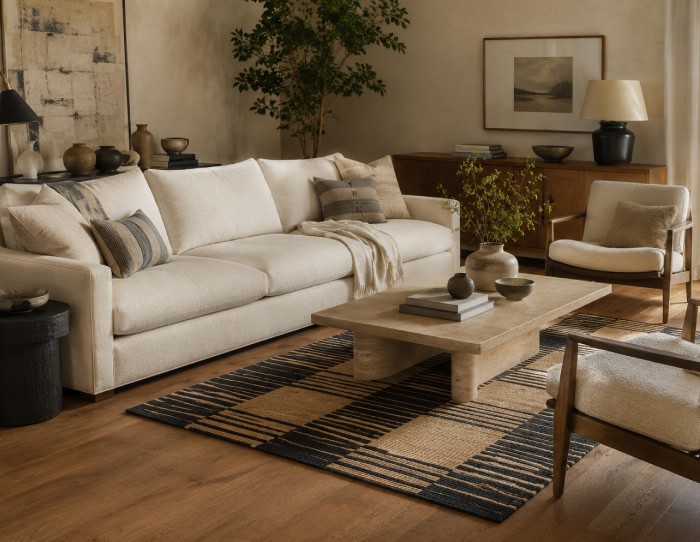
Before Returning It, Check Whether the Rug Can Actually Work
Not every rug problem is a rug problem.
Sometimes the area rug is fine. The layout is just slightly chaotic.
Before declaring defeat, check furniture-leg placement. Can the front legs of the seating sit partially on the rug? Even minor contact helps create room anchoring and restores visual stability.
Try these corrections first:
-
Pull furniture slightly inward to tighten conversational spacing
-
Rotate the rug to test alternate proportions.
-
Shift seating into a more intentional zone rather than centering everything mechanically.
-
Recalculate border spacing around the rug edges.
An area rug can appear too small simply because furniture is spaced too far apart.
This happens constantly in open rooms where people unintentionally prioritize wall distance over human use.
Another overlooked issue is that a thick rug borders visually shrink usable surface area. An abstract rug with a dramatic edge can look smaller than its listed dimensions once placed.
Sneaky little geometry trap.
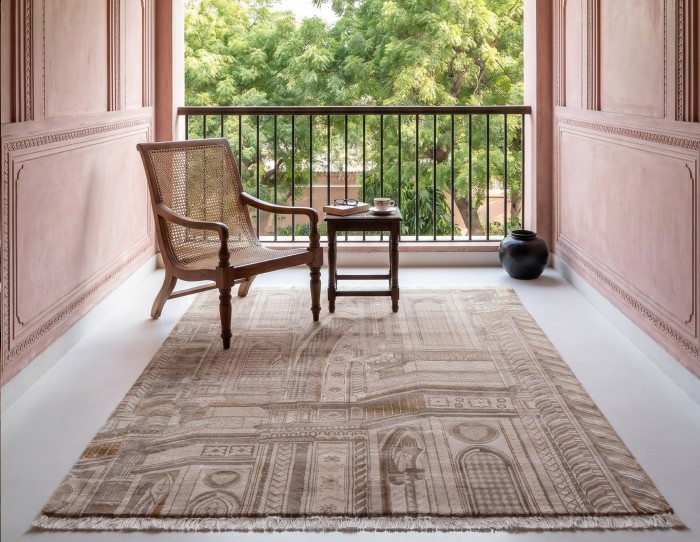
Layering Is a Visual Correction Tool, Not Just a Trend
Layering works because it extends the visual footprint without replacing the original rug.
Place a larger neutral jute rug base underneath, allowing your existing rug to sit centered above it. This instantly creates border framing, reduces the harsh floor exposure ratio, and visually enlarges the composition.
Psychologically, layering works because the eye reads the combined footprint first.
Not the individual area rug.
That means an undersized rug no longer feels isolated.
This is especially useful when using flatweaves or low-profile foundations beneath patterned surfaces.
Best layering scenarios:
-
Undersized rugs in large bedrooms
-
Awkward seating zones
-
Open floor plan layouts needing room zoning
-
Rugs that are visually strong but dimensionally modest
It is less “trend styling,” more visual diplomacy.
You are negotiating peace between scale and furniture
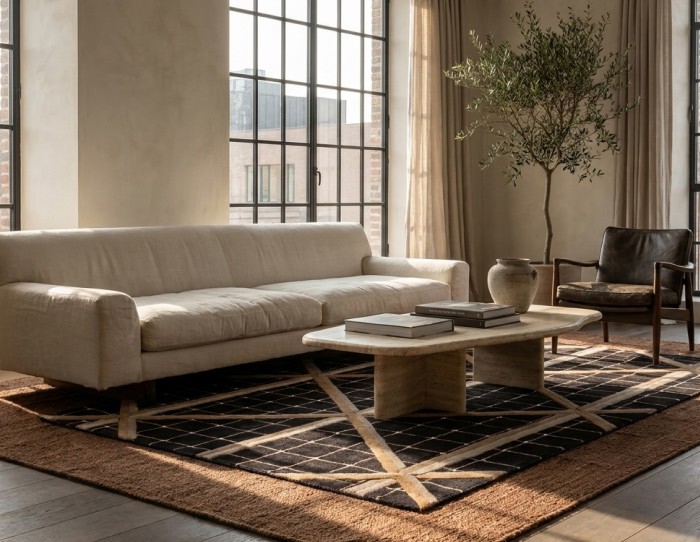
Try the Rug in a Different Room Before Giving Up
A rug can fail in one room and look completely logical elsewhere.
Why?
Because density changes perception.
A rug that feels undersized in a sparse family room may feel perfectly proportioned in a bedroom where the bed already occupies most visual territory.
Try relocating it to:
-
studies
-
reading corners
-
entryways
-
under benches
-
beside beds
-
dining nooks with tighter footprints
A rug often looks smaller after furniture placement because objects eat into visible dimensions.
This is why small geometric rugs can look oddly adequate in compact rooms but emotionally abandoned in expansive layouts.
Sometimes you did not buy the wrong rug.
You bought the wrong room for it.
Different problem. Much cheaper solution.
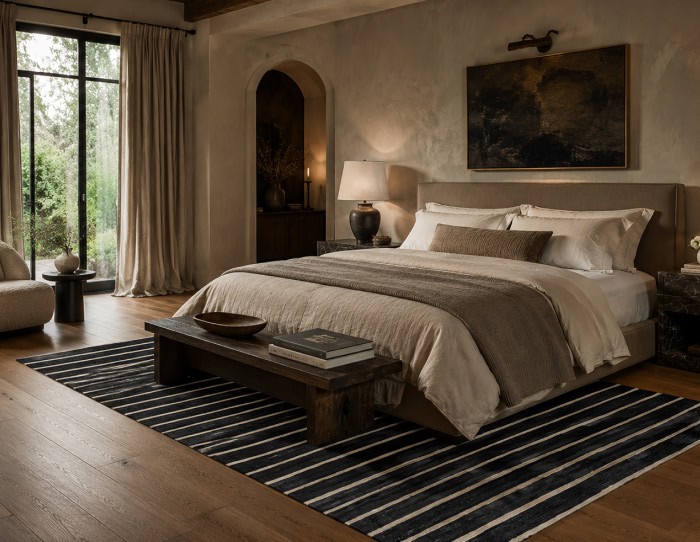
Two Smaller Rugs Can Sometimes Work Better Than One Large One
If one area rug is too small, pairing can create intentional zoning.
This works especially well in open layouts where you want separate visual groupings for seating, dining, or reading.
Think:
-
One rug under seating
-
One under a dining arrangement
-
One framing an entry transition
Done well, this creates visual rhythm and clearer movement pathways.
Done badly, it looks like the floor lost an argument with geometry.
For paired rugs to work:
-
Keep the tonal relationship cohesive
-
Maintain similar pile heights
-
Align spacing intentionally
This is where medium size rugs can outperform oversized single pieces in multifunctional rooms.
Not everything needs one giant rectangle to solve every design problem.
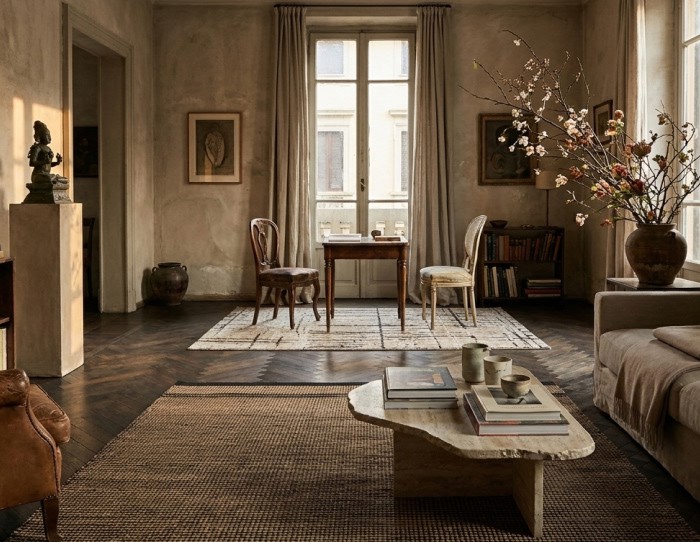
How To Avoid Buying the Wrong Rug Size Again?
Most people underestimate rug scale online because product images distort the proportion.
Rugs also look deceptively larger in empty rooms.
Then the furniture arrives like a plot twist villain.
Before buying:
Use painter’s tape to outline dimensions on the floor.
This one habit prevents most sizing regret.
Check standard sizing logic:
-
5x8 Ft Rugs for compact zones
-
6x9 Ft Rugs for medium layouts
-
8x10 Ft Rugs for larger seating arrangements
Understand common sizing references:
Standard rug sizes in inches often range from 60x84 to 108x144
Standard rug sizes in cm commonly range from 150x240 to 270x360
But dimensions alone are not enough.
What matters more:
-
Furniture-leg rules
-
Perimeter spacing of roughly 20–45 cm from walls
-
Floor exposure ratio
-
Room function
People shopping for a living room rug often measure the visible floor rather than the furniture cluster dimensions.
That is the mistake.
Not the tape measure.
Materials matter too. Wool rugs feel denser visually, while cotton rugs and flatweaves read lighter.
Dark colors visually shrink perceived scale faster than lighter surfaces.
Rarely discussed. Extremely real.
Summing Up...
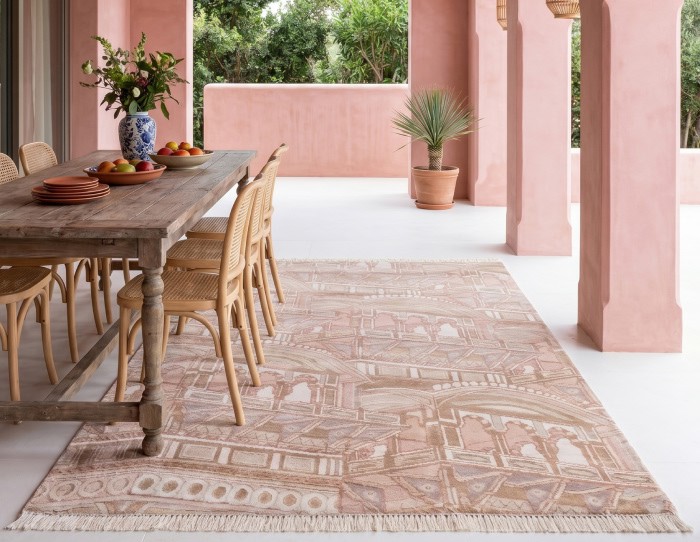
Not every rug that feels wrong is actually wrong forever. Sometimes it is simply in the wrong place, under the wrong furniture, or being judged far too quickly under the harsh lighting of buyer’s remorse.
A few layout shifts, layering tricks, or a change of setting can turn sizing regret into one of those oddly satisfying home wins.
We will be back with another blog soon.
Till then, stay tuned and explore Jaipur Rugs!
FAQs
What happens if you buy the wrong rug size?
Buying the wrong rug size usually affects room proportions before anything else. A rug that is too small creates a floating furniture effect, making sofas, chairs, or tables look visually disconnected. A rug that is too large can reduce perimeter spacing and make the room feel heavier or visually crowded. In most cases, the issue is not the rug alone, but how it interacts with furniture layout, floor exposure, and room framing.
Can a rug that is too small be fixed?
Yes, a rug that feels too small can often be fixed without replacing it. The most effective solutions are layering it over a larger neutral base, repositioning furniture so front legs partially rest on the rug, or pairing it with another rug to create intentional zoning. Many rugs only appear undersized because furniture is spaced too far apart.
Should furniture sit fully on a rug?
Not always. In most living rooms, at least the front legs of major furniture should sit on the rug to visually anchor the arrangement. Full furniture placement works best in larger layouts, while partial placement is often the most flexible and visually balanced option for standard area rug sizes.
How much floor should show around a rug?
Floor visibility should frame the rug, not isolate it. A practical guideline is leaving approximately 20 to 45 cm (8 to 18 inches) of visible flooring around the rug perimeter, depending on room size. Too little visible flooring makes a room feel compressed, while too much can make the rug appear disconnected from the furniture footprint.
Can a rug be too big for a room?
Yes. Oversized rugs can visually reduce breathing room by minimizing floor borders and crowding wall edges. This is especially noticeable in smaller rooms, darker rugs, or layouts with limited perimeter spacing. A rug should support room proportions, not mimic wall-to-wall carpeting unintentionally.
How do I test rug size before buying?
The most reliable method is tape-out planning. Use painter’s tape to mark the rug dimensions directly on the floor, then check furniture placement, walking clearance, chair movement, and wall spacing before ordering. This reveals sizing issues far more accurately than product photos or showroom comparisons.
Most rug mistakes happen because people measure empty floor space instead of measuring furniture layout.
What are standard rug sizes?
Common rug sizes include 5x8 ft, 6x9 ft, 8x10 ft, and 9x12 ft, with metric equivalents often ranging from 150x240 cm to 270x360 cm. The right size depends less on the room alone and more on furniture footprint, room function, and perimeter spacing.
Is it better to size up or size down when buying rugs?
When unsure, sizing up is usually safer. Undersized rugs tend to make rooms feel fragmented, while slightly larger rugs are often easier to style through furniture placement.


Pic Credits
Jaipur rugs / Abil Dase
Share
-
 Facebook
-
 Twitter
-
 Email
Email
Related Posts
-
15 July 2026
- ∙
-
8 Min Read
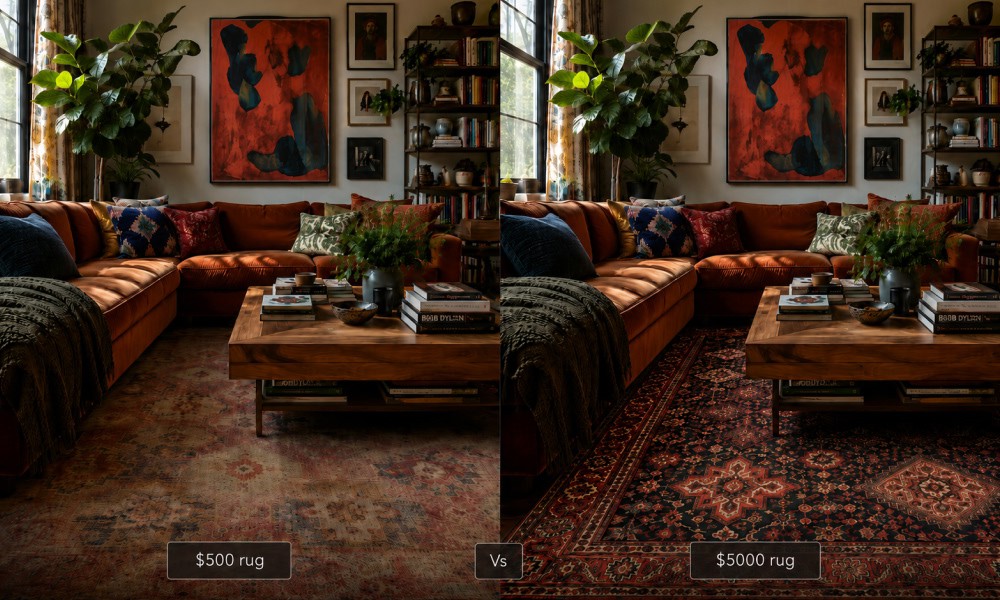
The $500 vs $5,000 Rug: An Honest Side-by-Side That No Brand Will Show You
Why do some rugs cost ten times more than others? This honest side-by-side looks at what actually separates a $500 rug from a $5,000 one: knot density, fiber quality, pile depth, and finishing. No brand bias, no marketing language. Just a clear breakdown to help you decide which one is worth it for your space and budget.
Read Article →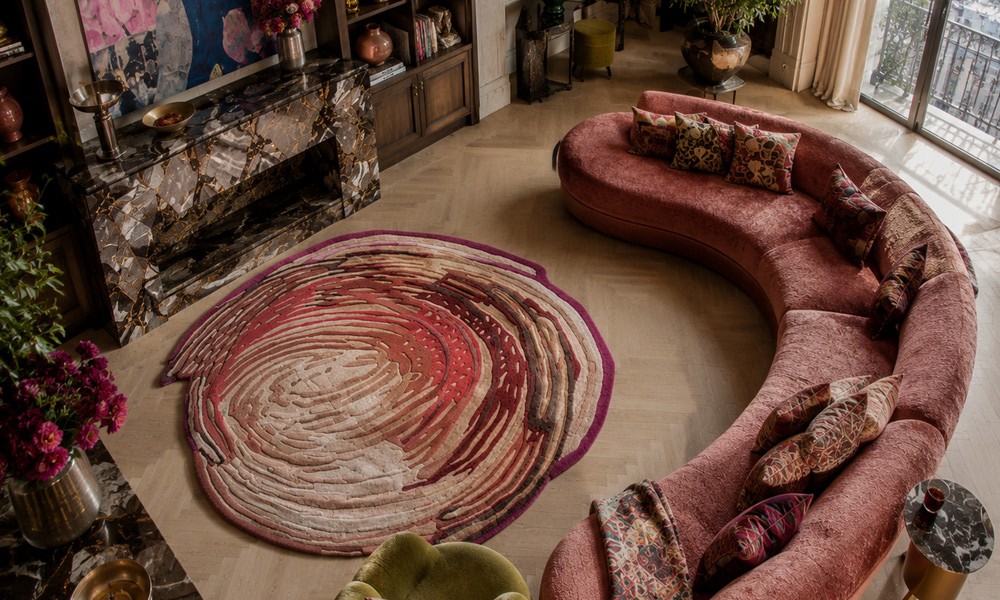
-
14 July 2026
- ∙
-
13 Min Read
3D Rugs and Sculpted Pile: The Tactile Design Trend Redefining Floors in 2026
The rug used to finish a room. Now it starts one. 3D rugs and sculpted piles are bringing real depth and tactile texture to interiors, from hand knotted relief patterns to optical illusion designs that stop you mid-step. This is what the trend is, why it matters, and how to buy it well.
Read Article →
-
10 July 2026
- ∙
-
10 Min Read
How to Pair Indian Wall Art with the Right Rug Pattern: A Room-by-Room Guide
Choosing the right rug to go with your Indian wall art does not have to be guesswork. This guide breaks it down room by room, from the living room to the bathroom and outdoor spaces. Learn how to match colors, patterns, and scale so your wall art and rug always feel like they belong together.
Read Article →
-
07 July 2026
- ∙
-
9 Min Read
How to Tell If a Rug Is Handmade: 7 Signs Experts Look For (Abrash Is One of Them)
Wondering how to know if a rug is handmade? Get an overview of 7 key characteristics that will help you identify if a rug is truly handmade and learn about its differences compared to machine-made rugs, and why they do not lose their value. Here is what to keep in mind when buying a handmade rug.
Read Article →
-
04 July 2026
- ∙
-
8 Min Read
Coastal Grandmother Is Evolving: The 2026 "Coastal Heritage" Aesthetic and the Rugs That Define It
The coastal grandmother design is progressing into something new and exciting by 2026. Coastal Heritage introduces texture, craftsmanship, and handmade elements to this popular design style. Here are the various rug types, colors, and decorating ideas to know about this classic coastal design trend.
Read Article →
-
22 June 2026
- ∙
-
6 Min Read
Why Top Interior Designers are Switching to Indian Handmade Rugs
High-end interior designers have begun using handmade carpets from India in place of machine-made carpets to enhance their design portfolios and ensure product longevity. The following guide will help you understand why design professionals prefer Jaipur Rugs for creating customized, ethically produced wool-and-bamboo-silk carpet designs for luxurious homes.
Read Article →