You are on our International website. Please select your region to see content specific for your location





 Profile
 Orders
 Wishlist
 Change Password
 Logout


Latest Blogs
ideas and inspiration
Fun Haus Style Is the Most Unapologetic Eclectic Decor Trend Right Now
- 06 May 2026
- |
- 6 Min Read
- |
- By Jaipur Rugs
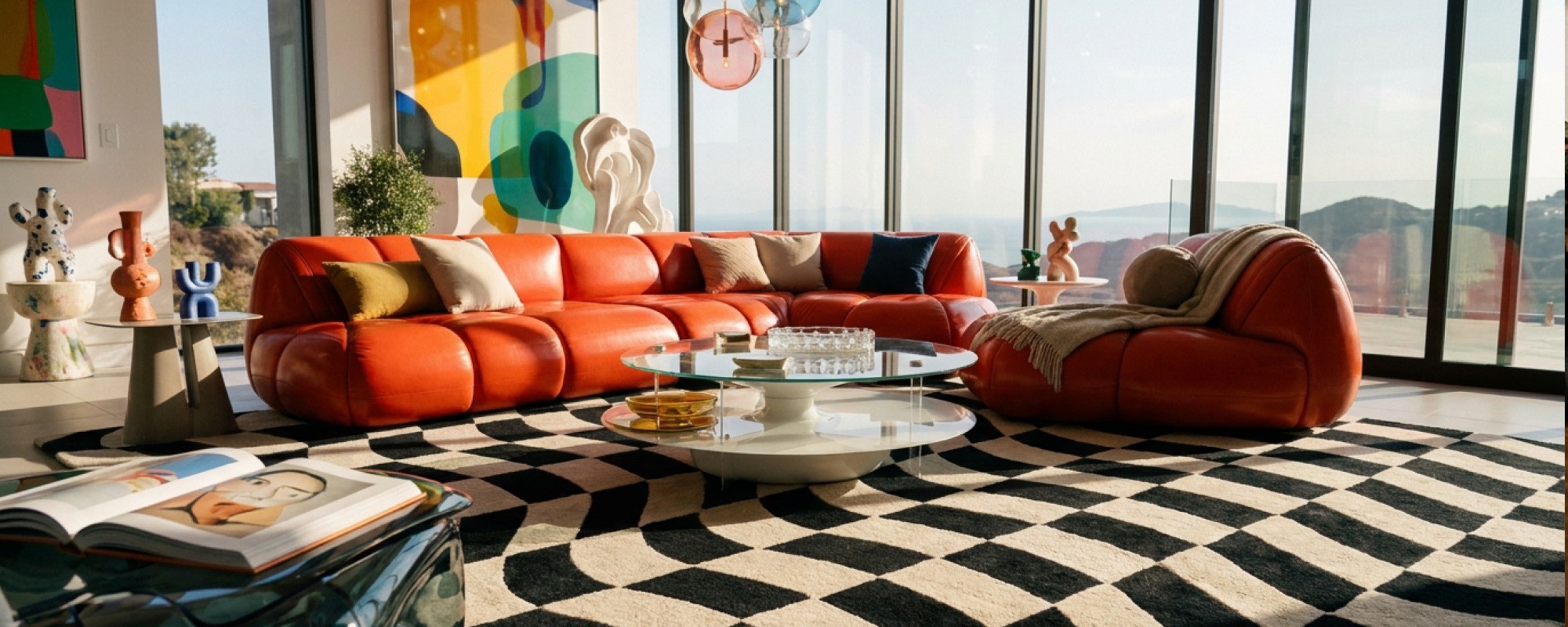
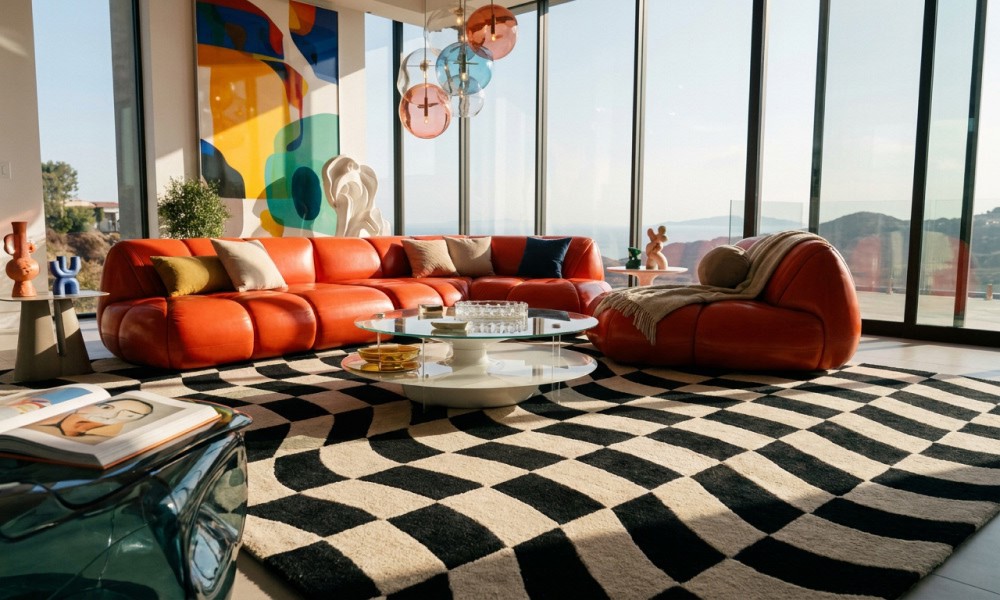
Fun Haus looks chaotic at first glance, but that’s exactly the illusion. Behind the stripes, contrast, and playful disorder is a surprisingly strategic design language reshaping eclectic decor in 2026. If you think this is just another maximalism trend, you’re missing the real shift. Read on and see it for yourself!
Most decor trends ask you to commit. Minimalism wants restraint. Maximalism wants abundance. Scandinavian style wants discipline so sharp it could slice toast.
Fun Haus does none of that.
It looks rebellious at first glance, but underneath the visual noise is extreme intentionality. That contradiction is exactly why it is everywhere right now. If your home feels too safe, this explains it.
The rise of Fun Haus is less about decoration and more about personality, finally refusing to sit quietly in a beige corner.
Most decor advice simplifies this. What’s actually happening is a shift in how people want homes to feel: less polished showroom, more visual adrenaline.
This is where it flips.
Fun Haus Style Isn’t Eclectic. It’s Something Else.
Fun Haus Style is a fashion-led interior trend built on intentional contrast, bold pattern clashes, graphic shapes, and controlled visual tension. It borrows from eclectic decor but feels more curated, directional, and identity-driven than traditional eclectic interiors.
Calling Fun Haus just another version of eclectic decor misses the point entirely.
Traditional eclectic decor is often history-driven. It mixes eras, objects, and references collected over time.
Fun Haus is faster.
It behaves like styling an outfit.
Instead of layering a room around heritage or nostalgia, it layers around visual impact. Think saturated colors, exaggerated scale shifts, sculptural furniture, playful asymmetry, and pattern collisions that look accidental but absolutely are not.
The reason it feels fresh among other interior design styles is that it rejects one dominant aesthetic language. It is deliberately multilingual.
A striped chair next to a curvy lacquer table next to a graphic rug should not work on paper. In a Fun Haus room, it suddenly does.
Here’s what most people miss: the tension is the design.
Why Is Fun Haus Style Linked to High Fashion Home Trends?
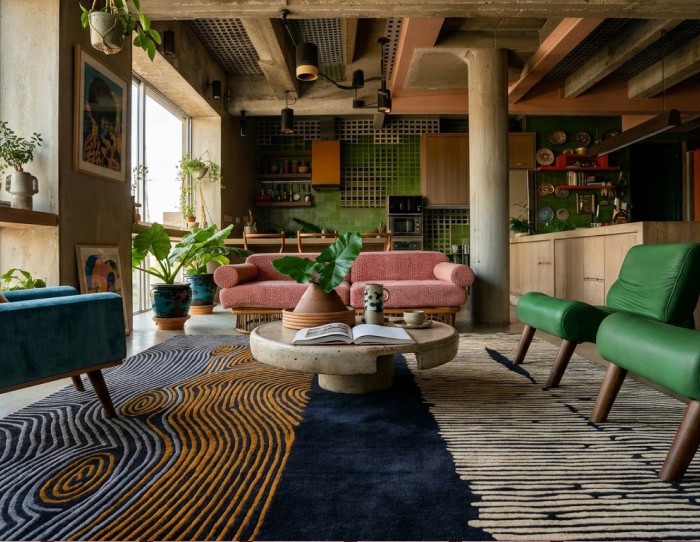
Fun Haus Style is linked to high fashion home trends because it borrows directly from fashion logic: contrast, silhouette, statement pieces, seasonal experimentation, and visual risk-taking over traditional room harmony.
This is why searches around high fashion home and Fun Haus are climbing together.
Fashion abandoned rigid matching years ago. Interiors are catching up late, carrying a coffee table like it just discovered irony.
High fashion taught consumers to mix textures, references, eras, and proportions with confidence. Interiors historically lagged, still obsessed with matching sofa sets as if it were a moral virtue.
Fun Haus imports runway behavior into domestic spaces.
That means:
-
graphic repetition
-
exaggerated contrast
-
statement-first purchasing
-
visual friction over cohesion
A room no longer has to feel “put together” in the old sense. It has to feel authored.
If you hate matching interiors, this is why Fun Haus feels strangely liberating.
Among current interior design styles, it is one of the first trends fully optimized for image culture.
Rooms are no longer just lived in. They are consumed visually.
That changes everything.
Why Are Stripes Trending in Interior Design?
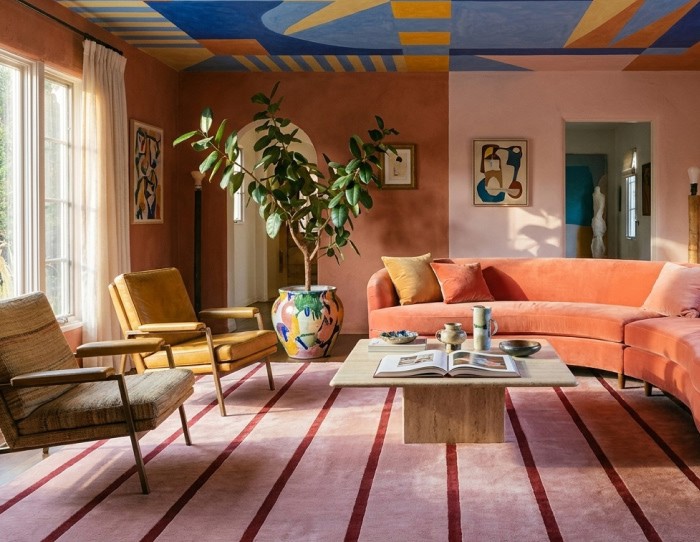
Stripes are trending because they create movement, rhythm, and optical energy in otherwise static rooms. They add directionality, making interiors feel active rather than frozen.
Stripes are doing heavy lifting in Fun Haus.
Not subtle pinstripes. Not polite hotel stripes.
Big ones. Awkward ones. Graphic ones.
A striped rug has become one of the clearest visual shortcuts into this aesthetic because it instantly injects motion into a floor plane that is normally passive.
This matters more than it sounds.
In digital-era homes, people are visually overstimulated online and under-stimulated physically. Static interiors can feel emotionally flat.
Stripes solve that.
They create perceived movement in rooms that physically do not move.
That is not just pattern preference. That is spatial psychology wearing a loud outfit.
This is why statement rug styling is becoming central to pattern-driven interiors.
A striped rug is not filler in Fun Haus. It is architecture with attitude.
This Isn’t Maximalism. It’s Controlled Collision.
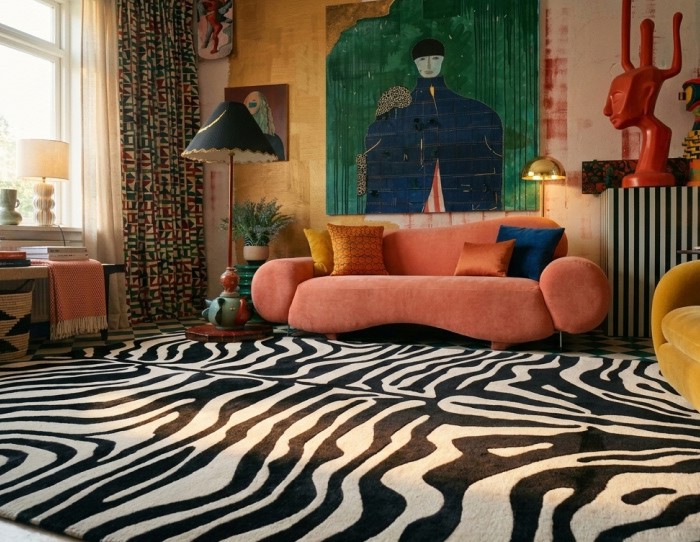
Fun Haus Style differs from maximalism because it prioritizes graphic tension, spatial editing, and visual contrast rather than abundance, ornamentation, or collection-heavy layering.
Let’s kill the confusion cleanly.
Fun Haus ≠ maximalism.
Maximalism often rewards accumulation.
More objects. More prints. More references.
Fun Haus is less about more and more about sharper.
It uses fewer objects with higher contrast value.
Think:
-
oversized checkerboard
-
sculptural chrome
-
acid-bright accent chair
-
one bold handmade rug
Instead of filling a room, it creates controlled collision points.
This is contrast-based decor at work.
Safe decor advice still says a room needs consistency. That advice is aging like milk in direct sunlight.
Fun Haus understands something older interior design styles often ignore: visual surprise creates memorability.
Not clutter. Contrast.
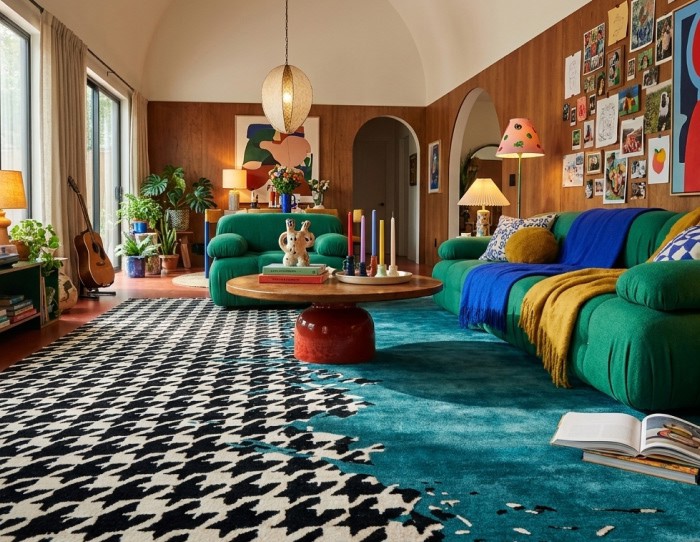
Why Does Eclectic Decor Look Messy but Work?
Eclectic decor works when contrast is anchored by repetition, scale logic, and intentional restraint. Without those anchors, it looks visually fragmented instead of expressive.
Fun Haus looks chaotic because it increases contrast thresholds.
But underneath, it is surprisingly disciplined.
Usually one or two systems repeat:
-
a recurring stripe
-
repeated curves
-
black grounding elements
-
one dominant color family
That hidden repetition creates order.
This is what weak eclectic decor gets wrong. It copies the appearance of randomness without building an internal visual system.
If your home feels too safe, this explains it.
Fun Haus gives permission to break rules, but only after learning which rules are structural.
That is the loophole.
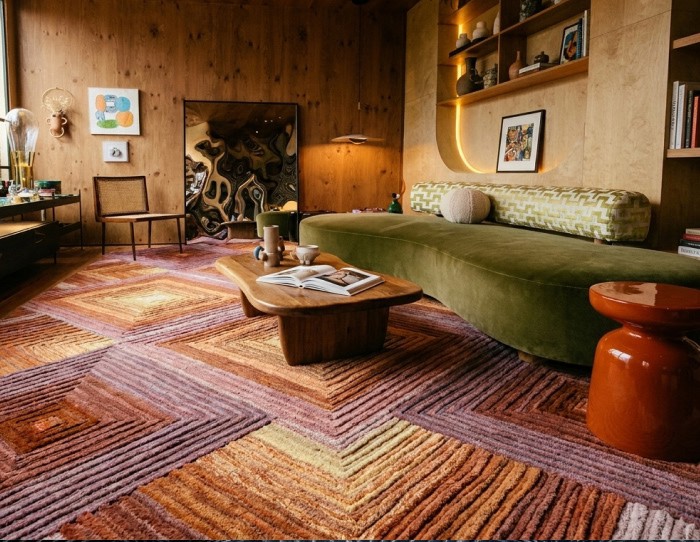
How Do You Style Fun Haus Interiors?
To style Fun Haus interiors, start with one graphic anchor, introduce high-contrast shapes, repeat one pattern language, and limit your palette to prevent visual collapse.
Do not start by buying twelve weird objects.
That is how rooms become expensive confusion.
Instead:
Pick one anchor piece
A striped or graphic abstract rug, sculptural sofa, or bold lighting piece.
Use contrast intentionally
Round with angular. Matte with glossy. Vintage with synthetic.
Repeat one motif
Stripe, checker, wave, or curve.
Ground with visual punctuation
Black lines, chrome, dark wood, or lacquer.
Leave negative space
Fun Haus without breathing room becomes noise.
Here’s what you need to understand: restraint is what makes boldness legible.
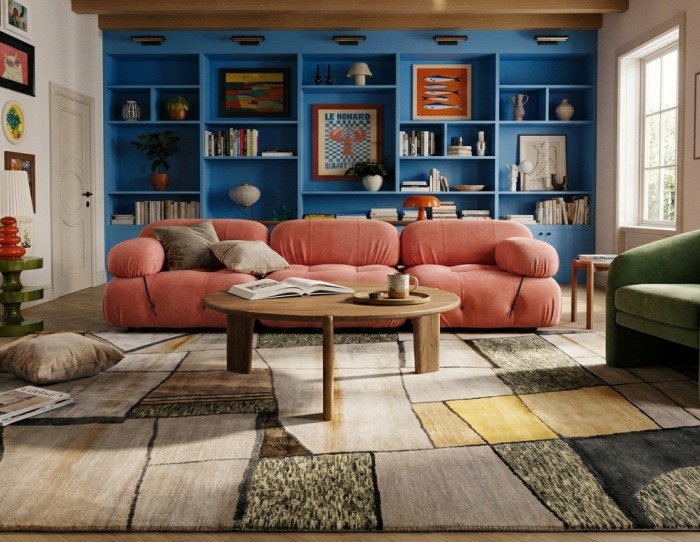
Where This Style Works And Where It Fails Hard?
Fun Haus or eclectic decor works best in spaces with architectural simplicity, natural light, and room for contrast. It struggles in already busy spaces with low visual breathing room.
Works well:
lofts
-
open-plan apartments
-
white-box interiors
-
modern homes lacking personality
Fails hard:
-
heavily ornate traditional homes
-
low-light rooms with too many dark contra
-
cramped cluttered spacessts
Fun Haus needs visual runway.
Without it, the style collapses into compression.
Not every trend belongs everywhere. This one especially punishes overcommitment.
That honesty is missing from most decor blogs.
Summing Up...
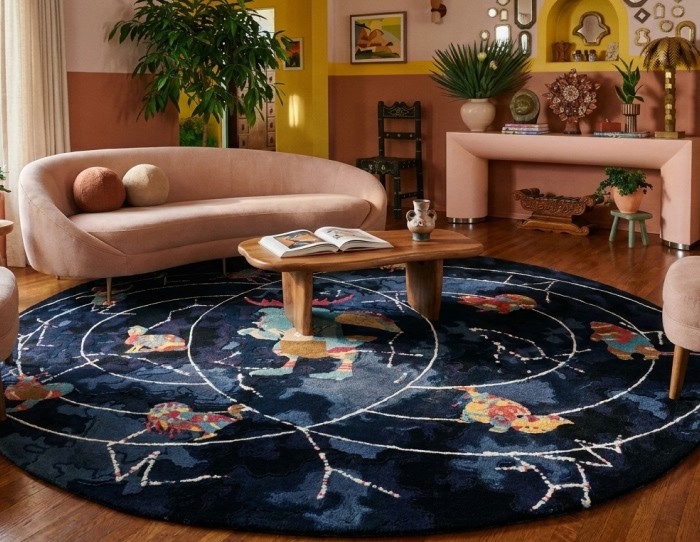
Fun Haus is not really about decorating boldly; it is about rejecting the pressure to make your home universally likable. It challenges the idea that good interiors must feel polished, coordinated, or easy to digest. If Fun Haus proves anything, it is this: a room does not become memorable by being agreeable. It becomes memorable by taking visual risks with intention. The easiest place to begin? Start with a rug bold enough to set the tone before the rest of the room catches up.
We will be back with another blog soon.
Till then, stay tuned and explore Jaipur Rugs!
FAQs
What is Fun Haus in interior design?
Fun Haus Style is a graphic, playful, fashion-inspired interior approach defined by bold contrast, statement patterns, exaggerated forms, and curated visual tension. It borrows from eclectic decor but feels more directional and composition-focused than traditional layered interiors.
Is Fun Haus the same as maximalism?
No. Maximalism often emphasizes abundance and collection-based layering, while Fun Haus focuses on intentional contrast, stronger editing, and fewer but visually louder design decisions. It is more controlled than it first appears.
How do you use stripes in home decor?
Use stripes as directional tools. A striped rug can elongate, widen, or energize a room depending on placement and scale. In Fun Haus interiors, stripes function as movement generators and graphic anchors.
What defines eclectic decor today?
Today’s eclectic decor is less about collecting random influences and more about designing around identity, contrast logic, and intentional tension. The new version is sharper, faster, and more visually strategic than older interpretations.


Pic Credits
Jaipur rugs / Abil Dase
Share
-
 Facebook
-
 Twitter
-
 Email
Email
Related Posts
-
15 July 2026
- ∙
-
8 Min Read
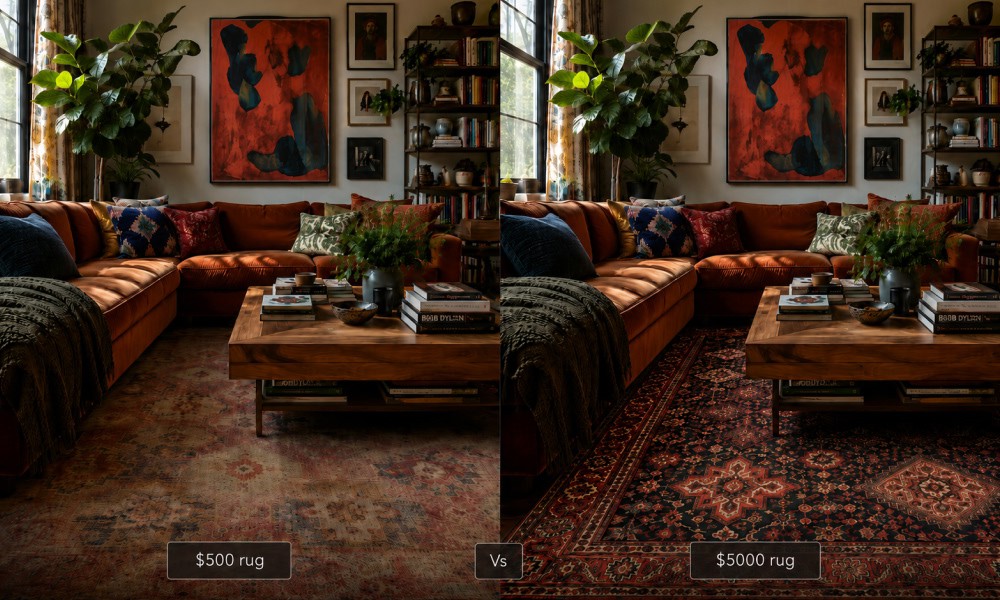
The $500 vs $5,000 Rug: An Honest Side-by-Side That No Brand Will Show You
Why do some rugs cost ten times more than others? This honest side-by-side looks at what actually separates a $500 rug from a $5,000 one: knot density, fiber quality, pile depth, and finishing. No brand bias, no marketing language. Just a clear breakdown to help you decide which one is worth it for your space and budget.
Read Article →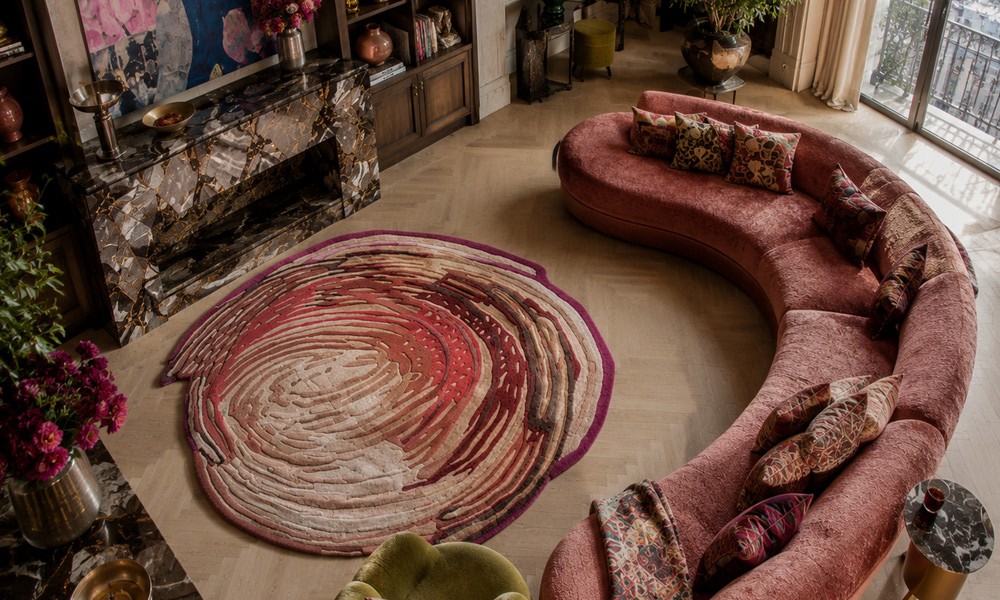
-
14 July 2026
- ∙
-
13 Min Read
3D Rugs and Sculpted Pile: The Tactile Design Trend Redefining Floors in 2026
The rug used to finish a room. Now it starts one. 3D rugs and sculpted piles are bringing real depth and tactile texture to interiors, from hand knotted relief patterns to optical illusion designs that stop you mid-step. This is what the trend is, why it matters, and how to buy it well.
Read Article →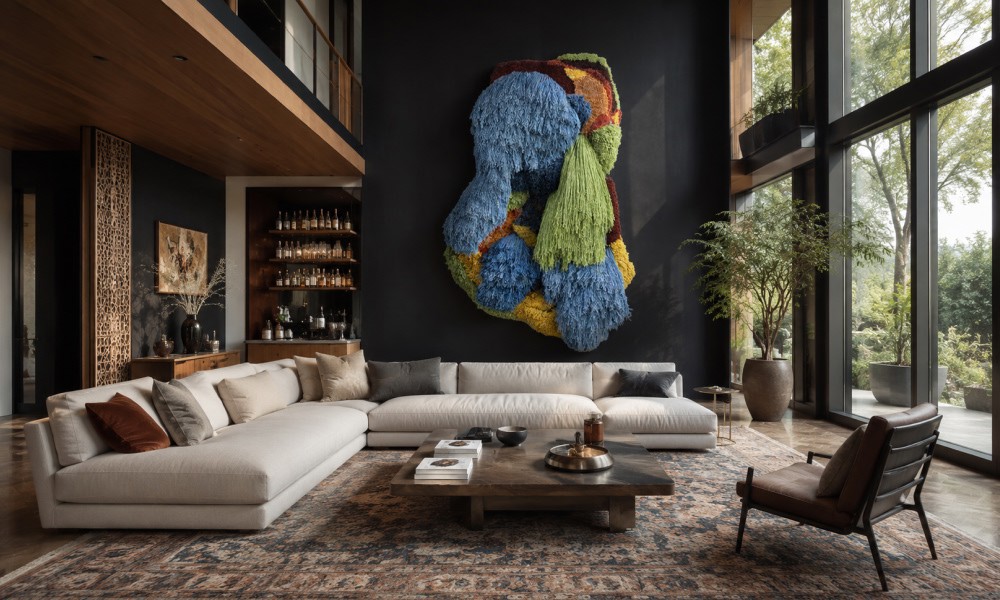
-
10 July 2026
- ∙
-
10 Min Read
How to Pair Indian Wall Art with the Right Rug Pattern: A Room-by-Room Guide
Choosing the right rug to go with your Indian wall art does not have to be guesswork. This guide breaks it down room by room, from the living room to the bathroom and outdoor spaces. Learn how to match colors, patterns, and scale so your wall art and rug always feel like they belong together.
Read Article →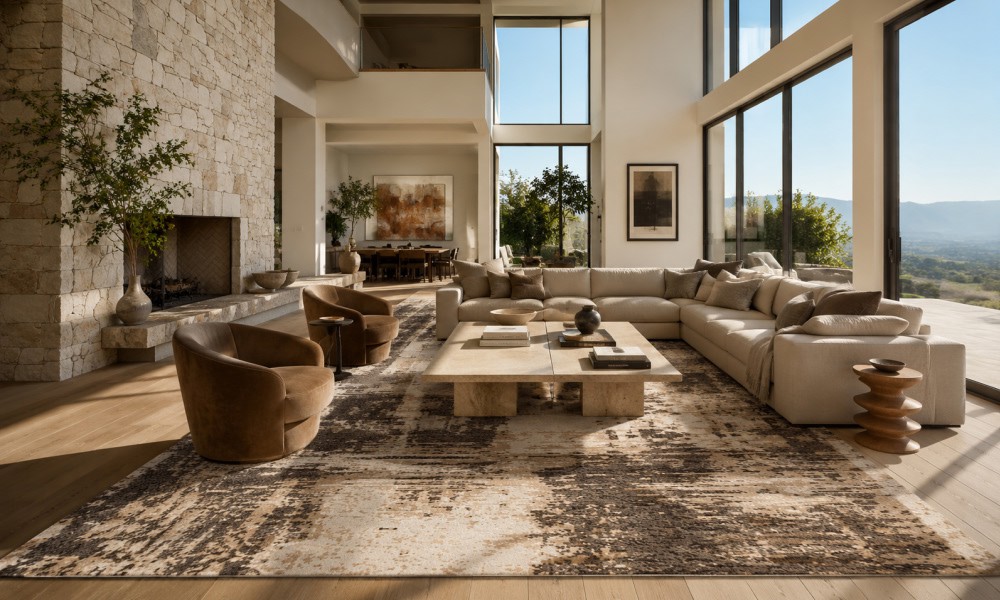
-
07 July 2026
- ∙
-
9 Min Read
How to Tell If a Rug Is Handmade: 7 Signs Experts Look For (Abrash Is One of Them)
Wondering how to know if a rug is handmade? Get an overview of 7 key characteristics that will help you identify if a rug is truly handmade and learn about its differences compared to machine-made rugs, and why they do not lose their value. Here is what to keep in mind when buying a handmade rug.
Read Article →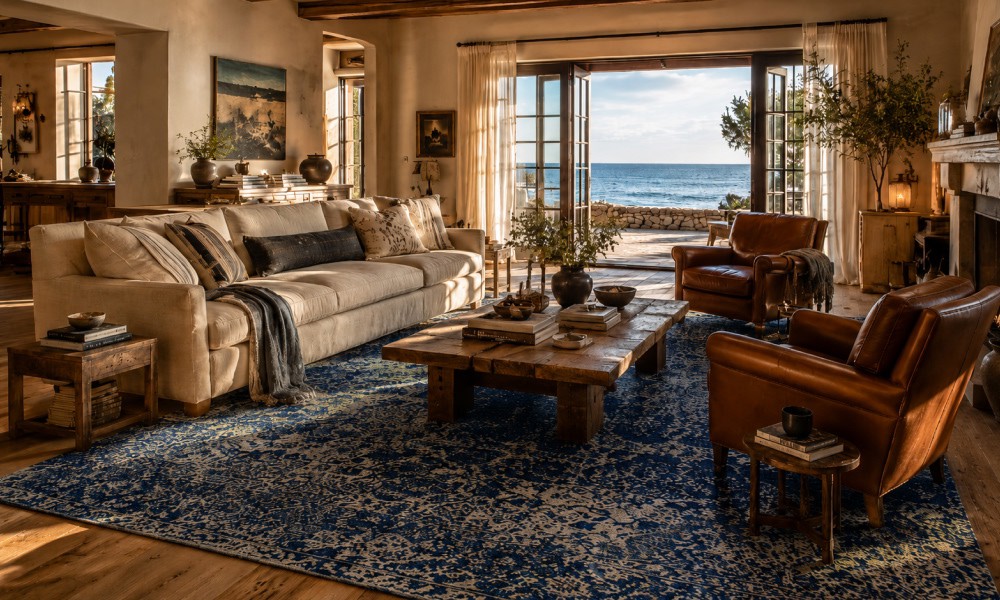
-
04 July 2026
- ∙
-
8 Min Read
Coastal Grandmother Is Evolving: The 2026 "Coastal Heritage" Aesthetic and the Rugs That Define It
The coastal grandmother design is progressing into something new and exciting by 2026. Coastal Heritage introduces texture, craftsmanship, and handmade elements to this popular design style. Here are the various rug types, colors, and decorating ideas to know about this classic coastal design trend.
Read Article →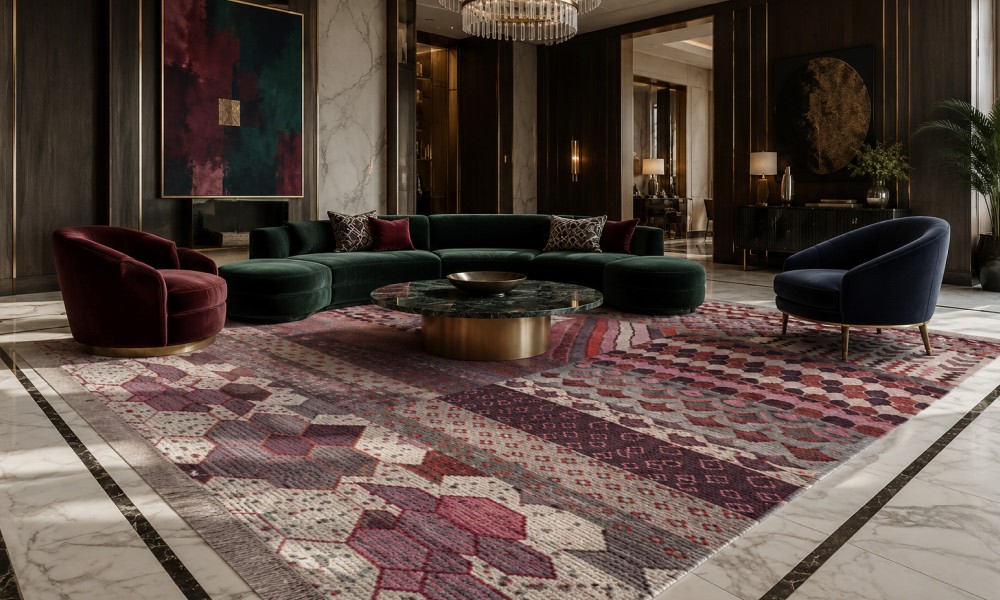
-
22 June 2026
- ∙
-
6 Min Read
Why Top Interior Designers are Switching to Indian Handmade Rugs
High-end interior designers have begun using handmade carpets from India in place of machine-made carpets to enhance their design portfolios and ensure product longevity. The following guide will help you understand why design professionals prefer Jaipur Rugs for creating customized, ethically produced wool-and-bamboo-silk carpet designs for luxurious homes.
Read Article →