You are on our International website. Please select your region to see content specific for your location





 Profile
 Orders
 Wishlist
 Change Password
 Logout


Latest Blogs
rug 101
The Ultimate Guide to Authentic Persian Rugs | Everything You Need to Know
- 29 June 2022
- |
- 9 Min Read
- |
- By Jaipur Rugs


Not all rugs are created equal—Persian rugs stand in a league of their own. Each one is a masterpiece, handwoven with centuries-old craftsmanship, featuring intricate designs that make every piece truly one of a kind. No two Persian rugs are ever identical; the patterns, colors, and weaving techniques are deeply rooted in culture, tradition, and artistry. For those who appreciate exceptional design, rich history, and enduring quality, understanding what makes Persian rugs so special is essential. Whether you’re a seasoned collector or a home decor enthusiast, discovering the world of Persian carpets will open your eyes to a level of beauty and craftsmanship that simply cannot be replicated.
Persian carpets are often seen as top-tier evergreen masterpieces in the textile scene. They have got complex designs with deep historical roots, and craftsmanship that's second to none. You will find these beauties adding elegance to living spaces, royal abodes, and galleries over the ages. But what is a Persian rug, what makes them special as luxury rugs? Whether you are thinking about buying an authentic Persian carpet or just looking to brush up on your facts, this ultimate guide to Persian rugs is your go-to resource for all the information.
What is a Persian Rug?
A Persian rug is a handwoven textile made in Iran (formerly Persia), renowned for its fine craftsmanship, intricate designs, and high-quality materials. These vintage rugs are traditionally made using wool, silk, or a blend of both and feature unique patterns that often reflect the cultural heritage of the region they originate from. Persian carpets are more than just decorative pieces—they are treasured heirlooms that often increase in value over time.
What is a Persian Carpet? Is There a Difference?
The terms Persian rug and Persian carpet are often used interchangeably. However, in some cases, a "rug" refers to a smaller piece, typically under 6 feet in length, while a "carpet" is generally larger. Regardless of terminology, both are handcrafted using traditional weaving techniques that date back thousands of years.
How Are Persian Rugs Made?
Crafting an authentic Persian rug is all about paying attention to details and having a lot of patience. Not like those factory-made ones, Persian carpets are all about the handwork, with skills handed down from one generation to the next. Here’s a breakdown of how they are made:
Selecting the Materials
The most commonly used materials in Persian area rugs are:
-
Wool – Durable, soft, and commonly used in most Persian carpets.
-
Silk – Luxurious and delicate, often used for fine, intricate designs.
-
Cotton – Used as the foundation (warp and weft) in many Persian rugs.
The Weaving Process
Persian rugs are made using the hand knotting rug technique, with each knot meticulously tied by hand to form detailed patterns. The two main types of knots are:
-
Persian (Senneh) Knot – Asymmetrical and allows for finer detailing.
-
Turkish (Ghiordes) Knot – Symmetrical and commonly used in tribal rug designs.
Dyeing the Wool
Traditional Persian rugs use natural dyes derived from plants, minerals, and insects. This results in rich, deep colors that develop a unique patina over time. Common dyes include:
-
Madder Root (Red)
-
Indigo (Blue)
-
Walnut Husks (Brown)
-
Pomegranate Peel (Yellow)
Knot Density and Quality
A key factor in determining the quality of a Persian carpet is its knot density, measured in knots per square inch (KPSI). Higher knot density means greater detail and durability.
Finishing Touches
Once the oriental rug is complete, it is washed, stretched, and trimmed to refine the design and enhance its beauty.

Famous Persian Rug Designs & Patterns
Persian rugs are celebrated for their intricate craftsmanship and timeless beauty, with each design telling a unique story rooted in culture and tradition. From delicate floral rug motifs to bold geometric rug patterns, these rugs showcase artistry that has been perfected over centuries. Here’s a look at some of the most famous
Persian rug designs and patterns, each with its own distinct style and charm.
Tabriz Rugs – Elegance in Every Knot
Renowned for their fine craftsmanship and detailed floral designs, Tabriz Persian rugs often feature elaborate medallions, hunting scenes, or intricate landscapes. With a high knot density and exceptional quality, these rugs exude elegance and are highly sought after by collectors.
Isfahan Rugs – The Art of Perfection
Made with fine silk and wool, Isfahan Persian carpets are known for their central medallions and curvilinear patterns, often inspired by Persian architecture and gardens. Their exquisite detail and rich color combinations make them a symbol of luxury.
Kashan Rugs – The Classic Beauty
Kashan rugs are distinguished by their deep red, ivory, and blue rug color palettes, often featuring elaborate floral motifs and arabesque designs. Known for their exceptional wool quality and fine knotting, they bring a sense of grandeur to any space.
Qom (Qum) Rugs – The Silk Marvel
Qom rugs are among the most luxurious Persian rugs, often made entirely of silk or silk-wool blends. Their intricate patterns and luminous sheen make them a prized choice for collectors and those looking for a statement piece.
Heriz Rugs – Bold & Geometric
Known for their rugged durability and striking geometric patterns, Heriz rugs feature bold medallions and angular designs, often in earthy tones. These highly durable rugs are perfect for high-traffic areas and add a strong character to any interior.
Nain Rugs – Soft & Sophisticated
Nain rugs are famous for their delicate floral motifs, intricate detailing, and soft pastel hues. Often featuring silk highlights, they exude elegance and are perfect for adding a touch of refinement to any space.
Gabbeh Rugs – Rustic & Minimalist
A stark contrast to the detailed designs of traditional Persian carpets, Gabbeh rugs are known for their coarse texture, thick pile, and simple, tribal-inspired patterns. These Persian abstract rugs have a charming, rustic appeal, making them ideal for modern and bohemian interiors.
Why Invest in a Persian Rug?
Picking a real Persian carpet puts a slice of history right in your living room. We are talking about a rug woven by hand with age-old techniques. If you want an antique rug that makes your place look better & is a luxurious heritage investment for the future, a designer Persian rug is a solid choice.
Unmatched Craftsmanship – A Legacy in Every Thread
Every Persian rug is the result of countless hours of meticulous hand-knotting, using skills passed down through generations of master weavers. These artisans dedicate months—sometimes even years—to creating each rug, ensuring flawless detailing, rich textures, and exceptional durability. Unlike machine-made rugs, which are mass-produced and lack character, a Persian carpet is a true testament to human artistry and patience. The hand-knotting technique ensures that each rug remains strong, flexible, and resistant to wear, making it a lifelong companion for your home.
Unique, One-of-a-Kind Designs – A Story Woven in Every Knot
No two Persian rugs are ever identical. Each rug carries the distinct imprint of the weaver’s artistic vision, cultural heritage, and personal touch. The intricate motifs, symbolic patterns, and stunning color palettes are more than just decoration—they tell stories of Persian tradition, folklore, and historic glory. Owning a Persian rug is like owning a piece of art—one that evolves in meaning and beauty over time.
Durability That Lasts Generations – Built to Stand the Test of Time
A well-crafted Persian carpet is not just designed to last—it is meant to be passed down as a cherished family heirloom. Our Persian rugs outlive their owners, with some surviving for over a century or more while maintaining their structure and beauty. The secret lies in the natural materials—high-quality wool, silk, and cotton—combined with the expert hand knotting process. Unlike synthetic rugs that deteriorate within a few years, Persian rugs become softer, richer, and more valuable with time.
Increases in Value Over Time
Unlike mass-produced rugs that depreciate in value, authentic Persian carpets are highly sought after by collectors and interior designers worldwide. In fact, many high-quality Persian rugs have been appreciated over the years, making them an intelligent financial investment. Vintage and antique Persian rugs, in particular, can fetch significant prices at auctions, often being sold as valuable works of art. Just like a fine painting or rare collectible, a Persian rug holds its value, ensuring that it remains a treasured asset for years to come.
Adds Timeless Elegance to Any Space
A Persian flatweave rug has the extraordinary ability to glorify any space, bringing in a wave of luxury, character & comfort. Whether you have a minimalist modern home, a classic vintage setting, or a contemporary loft, the versatility of a Persian rug ensures that it seamlessly complements any decor. The rich colors, detailed motifs, and handcrafted quality create an inviting atmosphere, offering immense luxury and refinement. It’s not just about decoration—it’s about adding a piece of history, culture, and soul to your home.

How to Identify an Authentic Persian Rug?
With so many imitations in the market, it’s essential to know how to identify a genuine vintage Persian rug. Here are some key tips:
-
Check the Back – The knots should be visible, uneven, and hand-tied.
-
Look for Natural Dyes – Colors should be rich yet slightly uneven, a sign of natural dyeing.
-
Handwoven vs. Machine-Made – Machine-made rugs have uniform knots, while handmade rugs have slight imperfections that add to their charm.
-
Feel the Texture – Genuine Persian carpets are soft yet firm due to high-quality wool and silk.
-
Test the Fringes – Authentic Persian rugs have fringes that are an extension of the rug, not sewn on separately.
Summing Up..
Whether you are a collector, a homeowner looking for a stunning centerpiece, or someone who appreciates fine craftsmanship, Persian rugs are a remarkable investment in both beauty and quality. Understanding what Persian rugs are, how they are made, and the different types available can help you make an informed decision when purchasing one.
FAQs
What's So Special About Persian Rugs?
Persian rugs are handwoven masterpieces, known for their intricate designs, rich history, and exceptional craftsmanship. Made using traditional techniques and high-quality materials like wool and silk, each rug is unique, durable, and often increases in value over time.
How to Tell If a Persian Rug Is Real?
A genuine Persian rug is hand knotted, not machine-made. Look for an uneven, hand-tied fringe (not sewn on), a detailed pattern visible on both sides, and slight imperfections in the weave—signs of authentic craftsmanship. A label indicating the country of origin as Iran or Asia is also a strong clue.
What Is the Difference Between Oriental and Persian Rugs?
Oriental rugs are a broad term for rugs made in various Asian countries, while Persian rugs specifically come from Iran and follow distinct traditional designs and weaving styles. Persian rugs are often more detailed and highly valued due to their superior craftsmanship.
Is Persian Carpet Expensive?
Yes, authentic Persian carpets can be expensive due to their handwoven nature, fine materials (like silk or high-quality wool), and the time-consuming craftsmanship involved. Prices vary based on size, design complexity, and materials used.
How Can You Tell If a Carpet Is Persian?
A true Persian carpet is hand-knotted in Iran, features intricate traditional motifs, and has a woven (not glued) backing with clear knotwork visible on the reverse side. The patterns often include medallions, floral designs, or geometric shapes, depending on the region of origin.
Are Persian Carpets Worth Anything?
Yes! Persian carpets are often considered valuable investments. Over time, their rarity and craftsmanship can make them appreciate in value, especially antique and high-quality silk Persian rugs.
What Is the Most Expensive Type of Carpet?
The silk Persian rug, especially those made in Qom (Qum), Isfahan, and Nain, are among the most expensive. The most costly carpet ever sold is the 17th-century Clark Sickle-Leaf Persian rug, which auctioned for $33.7 million.
Why Are Persian Rugs Always Red?
Not all Persian rugs are red, but red is a common color because it symbolizes happiness, luck, and prosperity in Persian culture. The dyes used traditionally come from natural sources like cochineal, madder root, or pomegranate.
Should You Roll or Fold a Persian Rug?
You should always roll a Persian rug, not fold it, to prevent creasing and damage to the fibers. For long-term storage, wrap it in breathable fabric and keep it in a cool, dry place.


Pic Credits
Jaipur rugs / Abil Dase
Share
-
 Facebook
-
 Twitter
-
 Email
Email
Related Posts
-
30 June 2026
- ∙
-
7 Min Read
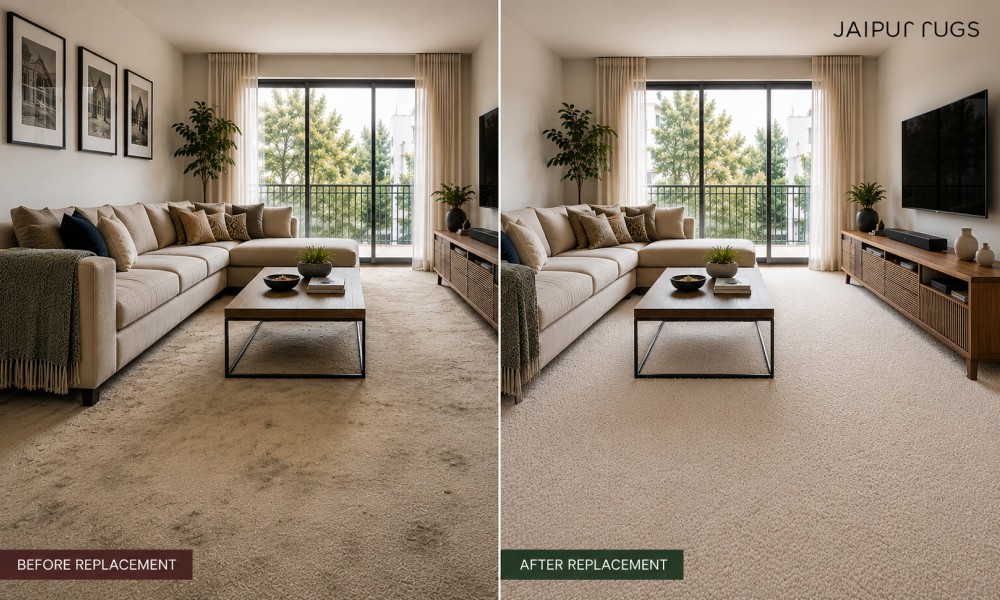
Carpet Replacement: Everything You Need to Know Before You Buy
Wondering if it's time to replace your carpet? This guide breaks down how long carpet really lasts, what affects replacement cost, and the warning signs like mold, smell, and wear you shouldn't ignore. It also compares carpet, hardwood, and area rugs, helping you pick the right flooring for your home, your budget, and your family's health.
Read Article →
-
23 December 2024
- ∙
-
7 Min Read
Why Are Jaipur Rugs' Best-Selling Carpets A Must-Have For Every Home?
Jaipur Rugs' best-selling carpets offer a perfect blend of timeless beauty and luxurious craftsmanship. Hand-knotted with precision, each rug showcases unique designs that elevate any space. From traditional to modern styles, these rugs are crafted to enhance your home’s decor with lasting elegance. Discover the perfect rug to add warmth and style to your living room, bedroom, or hallway.
Read Article →
-
28 February 2026
- ∙
-
6 Min Read
Carpet Pile Height Guide: Measurements, Charts & Best Choices
Choosing carpet without understanding pile height is like buying shoes without checking size. One wrong inch can ruin comfort, cleaning, and durability for years. Low, medium, high, they are not just labels. They change how your room feels and functions. Before you spend a single dollar, read this entire guide. It will change how you choose a designer rug or handmade carpet.
Read Article →
-
27 February 2026
- ∙
-
6 Min Read
The Ultimate Rug Pad Guide: How to Choose the Best Rug Pad?
Most people spend thousands on designer handmade rugs and ignore what sits underneath. The best rug pad controls comfort, grip, noise, insulation, and even floor safety. Thickness, material, and placement all matter more than you think. If you choose wrong, you shorten your rug’s life. Read this complete guide before you buy anything.
Read Article →
-
08 December 2025
- ∙
-
8 Min Read
Understanding and Fixing Carpet Buckling: A Complete Guide That Actually Helps
Carpet buckling appears as waves, ripples, or bumps and is usually caused by moisture, humidity, dragging furniture, or poor installation. The guide explains why carpets wrinkle, how to flatten carpets, and when restretching is needed. It also covers common mistakes, prevention tips, and how different rugs and rug pads affect carpet stability. Perfect for homeowners looking for clear solutions.
Read Article →
-
06 December 2025
- ∙
-
6 Min Read
6 Easy Tips To Clean Carpet at Home Without Professional Help
Tired of seeing your carpet look tired? We have got 6 cleaning tips that actually work, no professionals required. Whether it’s day-to-day messes or deep stains, these simple hacks will have your rug looking fresh again. Want to know the easiest way to keep it spotless? Let’s get into it.
Read Article →