You are on our International website. Please select your region to see content specific for your location




 Living Room
 Dining Room
 Bedroom
 Kids Room
 Outdoor
 Irregular
 Runner
 Hand Knotted
 Hand Tufted
 Hand Loom
 Flat Weaves
 Shag
 Modern
 Transitional
 Traditional
 Minimalist
 Bohemian
 Eclectic
 Maximalist
 Monochromatic
 Neutrals
 Pastels
 Vibrant
 Abstract
 Oriental
 Moroccan
 Distressed
 Floral
 Geometric
 Graphic
 Solid
 Patchwork
 Genesis
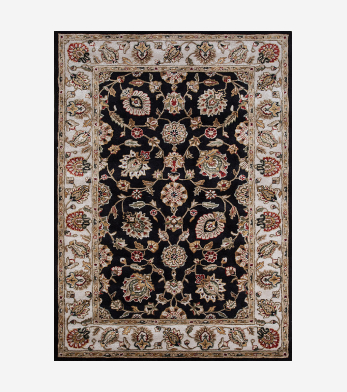 Kasbah
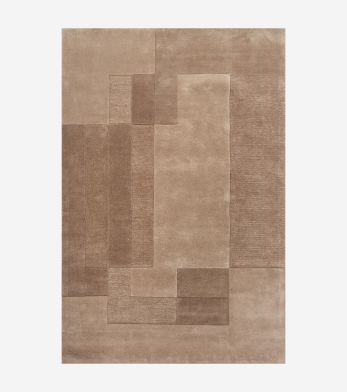 Cera
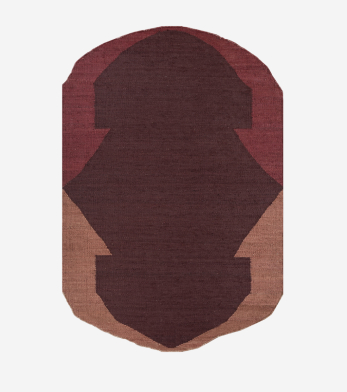 Daaira
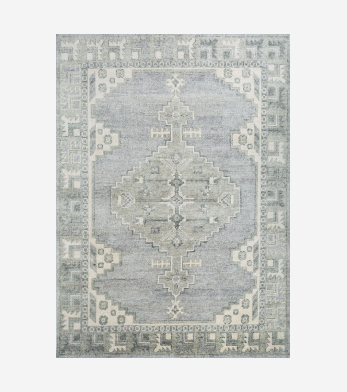 Savana
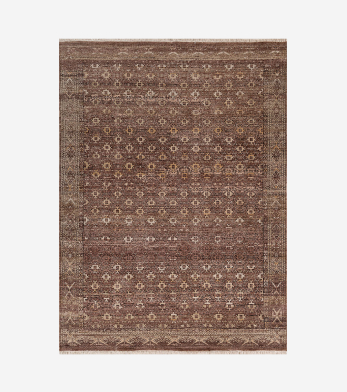 Someplace In Time
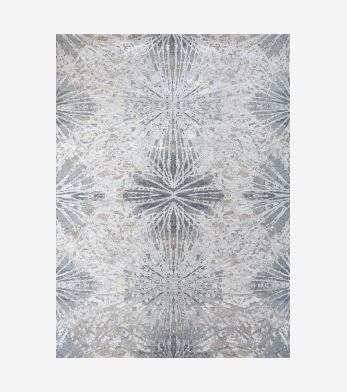 Chaos Theory By Kavi
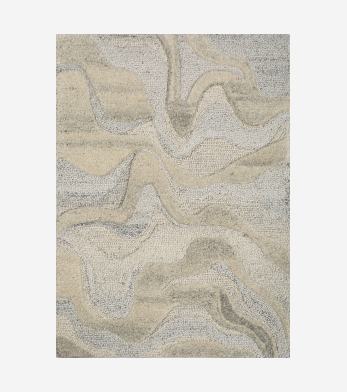 Pathways
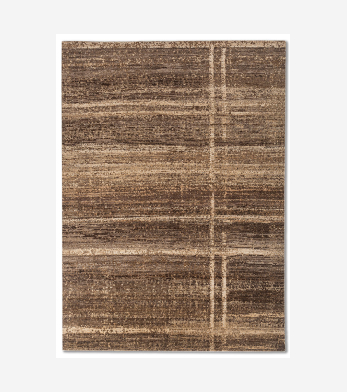 Manifest
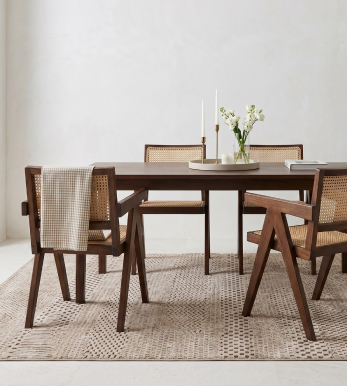
 Kengo Kuma
 VIMAR 1991
 Bodour Al Qasimi
 Richard Hutten
 Peter D'ascoli
 Vinita Chaitanya
 Tatiana De Nicolay
 Keith Pillow
 Kunaal Kyhaan Seolekar
 Pavitra Rajaram
 Ashiesh Shah
 Matteo Cibic
 Tania & Sandeep Khosla
 Gauri Khan
 Abin Chaudhuri
 Kavi
 Gabriel Hafner NEW
 Neeraj Patel
 Princess Pea
 Gurjeet Singh
 Lorenzo Vitturi
 Rug Warranty
 Stain Resistance
 Track Order
 The Founder
 The Company
 The Craft
 Sustainability
 Hospitality
 Retail
 Aviation
 Yacht
 Residential
 View all
 Stores
 My Account

 Trade
 Email Us
 Contact Us
 WhatsApp Chat
 Book Appointment
 Track Order


 Profile
 Orders
 Wishlist
 Change Password
 Logout


Latest Blogs
ideas and inspiration
Brutalist Interior Design: Why Hard Architecture Needs a Soft Floor
- 28 September 2026
- |
- 7 Min Read
- |
- By Jaipur Rugs
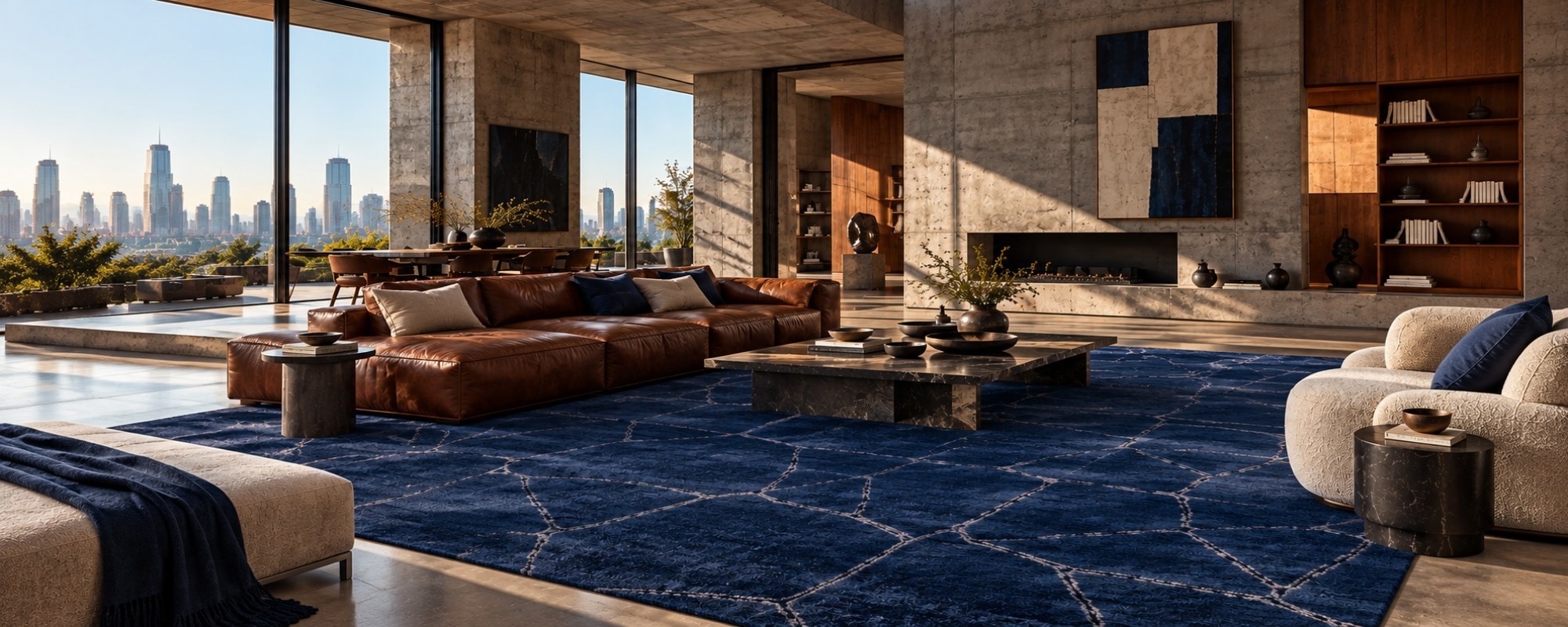
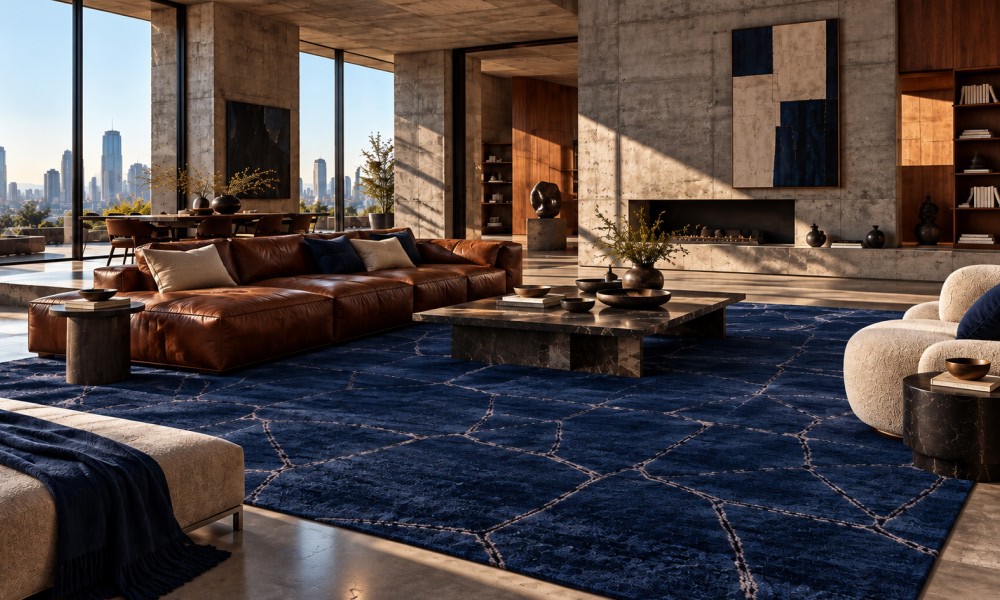
Brutalist interior design uses raw concrete, stone, and heavy sculptural forms, but it can feel cold to live with. The fix is soft brutalism: warm lighting, natural wood, and textured wool. The best rug for concrete floors is a dense, hand-knotted wool rug on a pad. Undyed wool in natural tones suits the style best, matching its honest, raw materials.
Concrete walls look incredible on Instagram. Then you walk across one of those rooms barefoot in January, and you get it.
Brutalist interior design is having a real moment. Board-marked concrete, heavy stone, low monolithic furniture. It's bold, honest, and a little defiant.
But living in it is different from admiring it. The brutalist rooms that actually work all share one thing. Something soft on the floor.
What Is Brutalist Interior Design?
Brutalist interior design is a style built on raw, unfinished materials and heavy, sculptural forms. Think exposed concrete, rough stone, and solid wood kept close to its natural state. Nothing is hidden, painted over, or dressed up.
The name comes from béton brut, French for "raw concrete." Le Corbusier made it famous with buildings like the Unité d'Habitation in Marseille, completed in 1952. British critic Reyner Banham gave the movement its name in his 1955 essay "The New Brutalism."
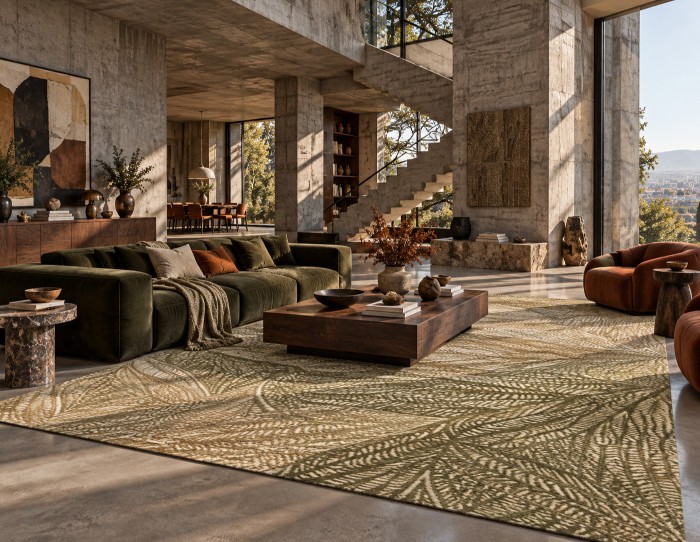
So no, it has nothing to do with being brutal. It's about being truthful.
Brutalist home decor follows the same rules as the architecture. Walls stay in concrete or textured plaster. Furniture is blocky and low, with real weight.
The palette sticks close to stone and earth. And every material shows exactly how it was made.
Is Brutalism Too Cold To Live With? Enter Soft Brutalism
On its own, often yes. Concrete holds cold and bounces sound. Under flat daylight, it can look severe.
A room made only of hard surfaces echoes. It feels like a gallery, not a home.
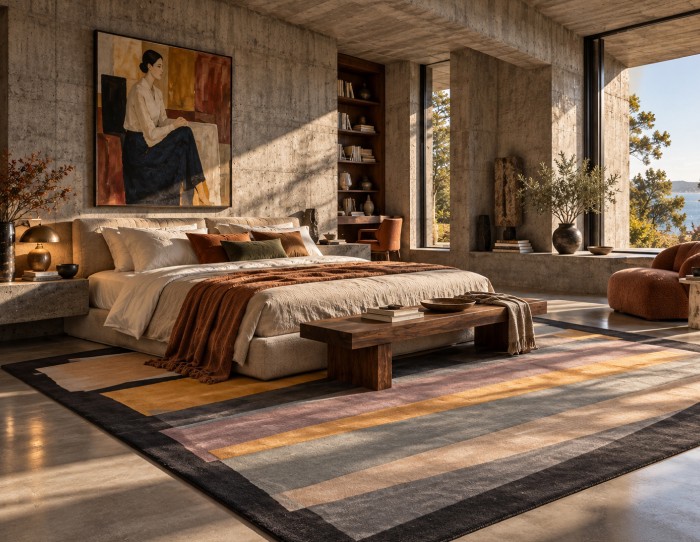
That's where soft brutalism comes in. The architecture stays raw, but the layers inside get warmer. Wool, linen, timber, low lamps, a few plants. The point isn't to hide the concrete. It's to give it something to push against.
How Do You Soften A Brutalist Living Room Without Losing The Edge?
Add softness through texture, not decoration. Florals, ruffles, and glossy finishes fight the architecture. Matte, natural materials work with it.
-
Lower the light. Swap cool white bulbs for warm white ones and place lamps low. In the evening, grey concrete starts to look almost honey-toned.
-
Bring in wood with visible grain. Oak, walnut, or reclaimed timber. The rougher, the better.
-
Nudge the palette warmer. Pure white can feel clinical against grey concrete. A beige rug pulls the room a few degrees toward comfort without breaking the look.
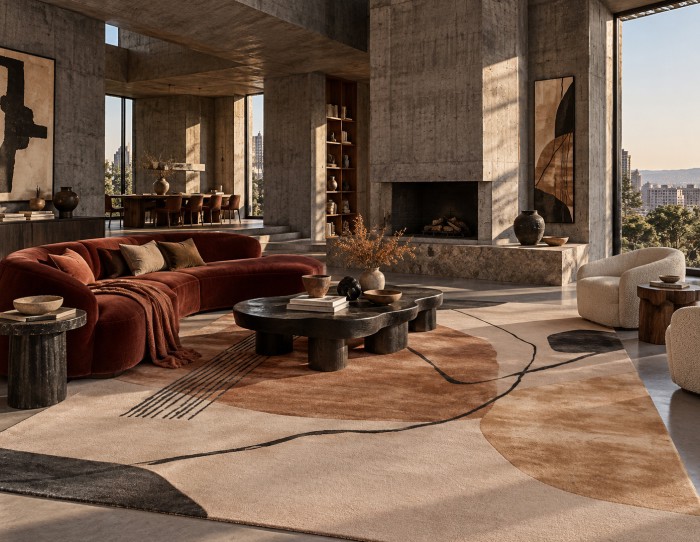
And start with the floor. In a brutalist living room, it's the largest soft surface you can add, and the one your body actually touches. A textured rug changes the acoustics, the temperature underfoot, and the space's whole mood.
Why Undyed Wool Belongs In A Concrete Room?
This is where brutalism and good rug-making share the same idea.
Brutalist architects left concrete raw because they believed materials should look like what they are. An undyed wool rug follows the same logic.
No dyes, no chemical baths. The color comes straight from the sheep, so it shifts with the fleece. That natural variation gives the rug a quiet, tone-on-tone depth.
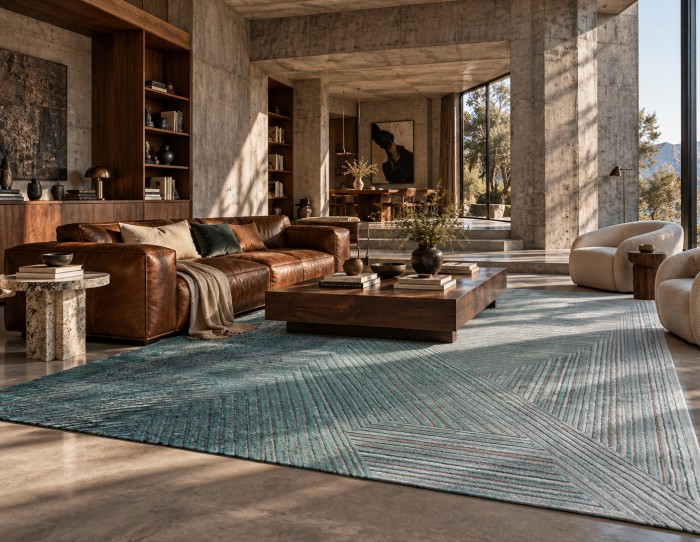
Think of it as the textile side of raw-material interiors. Against concrete, a natural wool rug doesn't look added. It looks like it was always meant to be there.
Texture matters as much as color. Concrete walls often carry the grain of the wooden boards they were cast in, and a rug with carved pile echoes that relief underfoot.
Why Does Making Matters As Much As The Material?
Brutalism was never about perfection. Board marks, uneven edges, the trace of the process. A rug knotted by hand carries the same kind of evidence.
At Jaipur Rugs, every hand-knotted rug passes through around 180 pairs of hands. The artisans who make them work across 600 villages in India. Small irregularities in the knots aren't flaws. They're fingerprints.
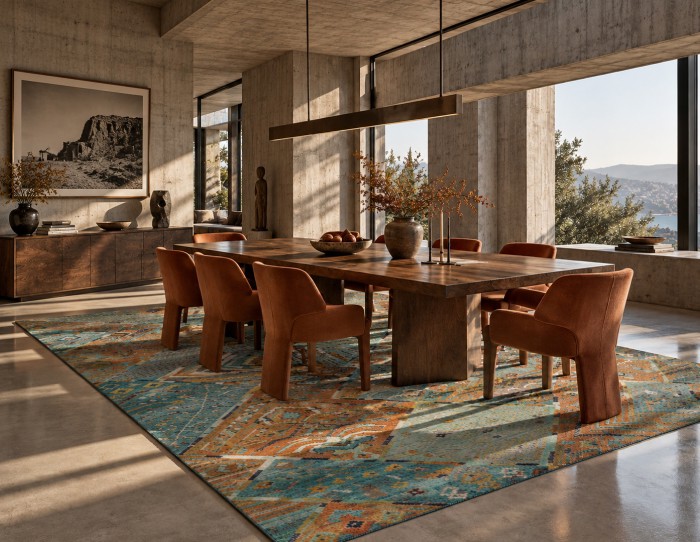
The Uvenuti collection works abstract mesh textures into undyed whites and soft greys. Modern Relic pairs undyed white with warm tan, which sits beautifully against cool concrete. And if your space leans on strong geometric lines, the [Aakar collection] picks them up without competing.
What A Brutalist Room Looks Like With The Right Rug?
Picture a grey concrete floor, a charcoal linen sofa, and a heavy walnut coffee table. Right now, it reads like a hotel lobby.
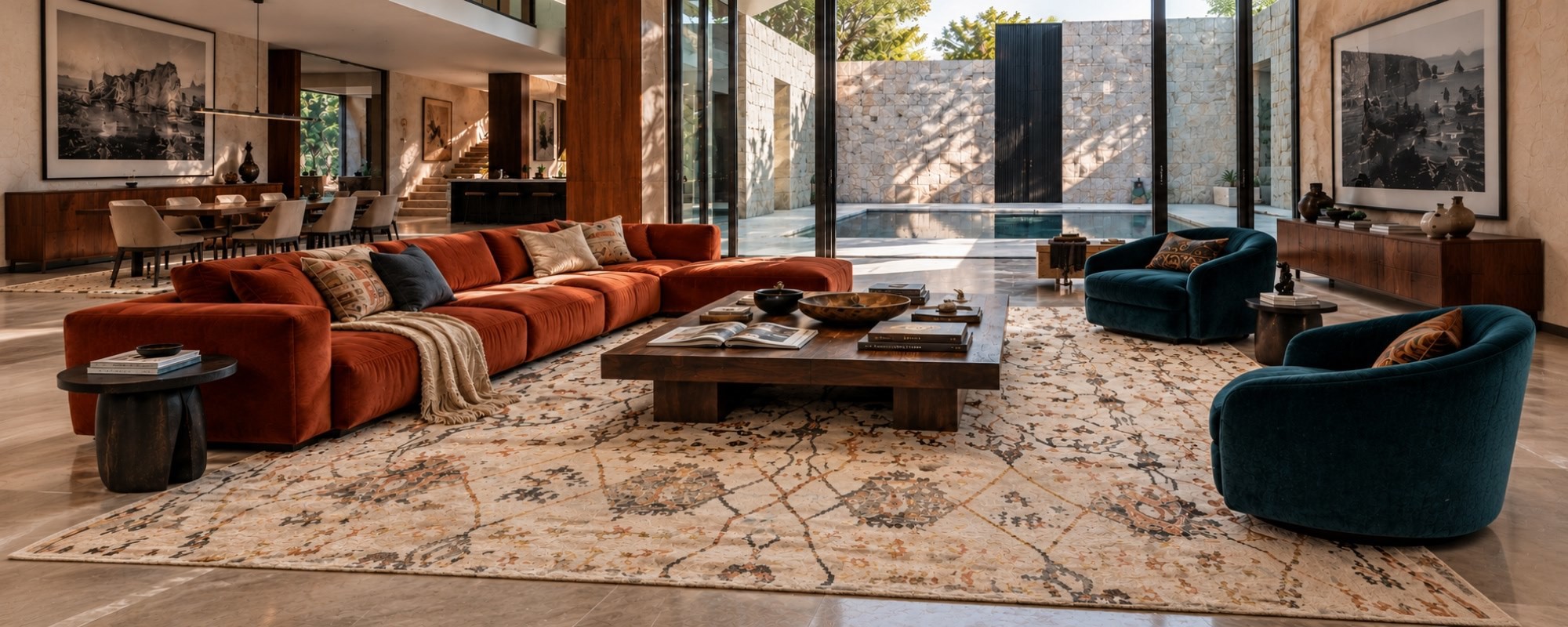
Add a 9x12 ivory wool rug with a softly carved surface. The sofa suddenly looks intentional. The walnut warms up, and the room starts feeling like somewhere you'd spend a Sunday.
Prefer something moodier? Flip the contrast. A charcoal rug under a pale linen sofa grounds the space and makes it feel a little cinematic.
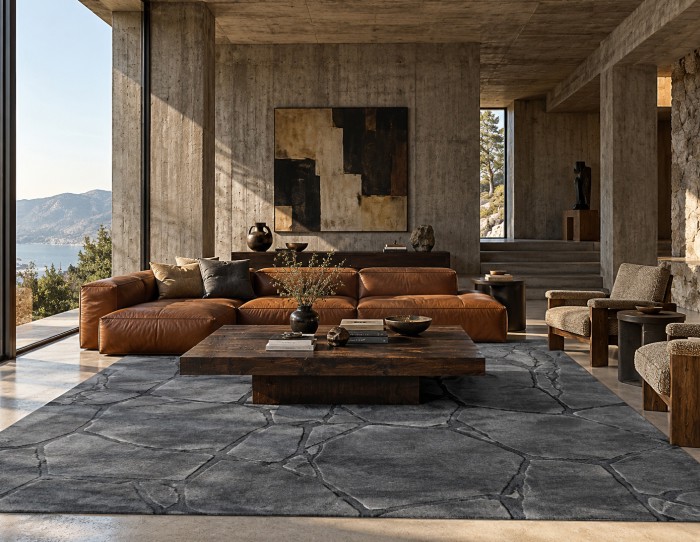
Whichever way you go, pick a textured wool rug over a flat, printed one. In a room this restrained, the surface holds all the interest.
What Rug Works Best On Concrete Floors?
A dense hand-knotted wool rug on a good pad works best on concrete floors. Wool insulates against the cold, absorbs sound, and handles humidity better than synthetics. The pad stops sliding and protects the rug's foundation.
If you have underfloor heating, choose a low-pile wool rug and a thin pad so the warmth still comes through.
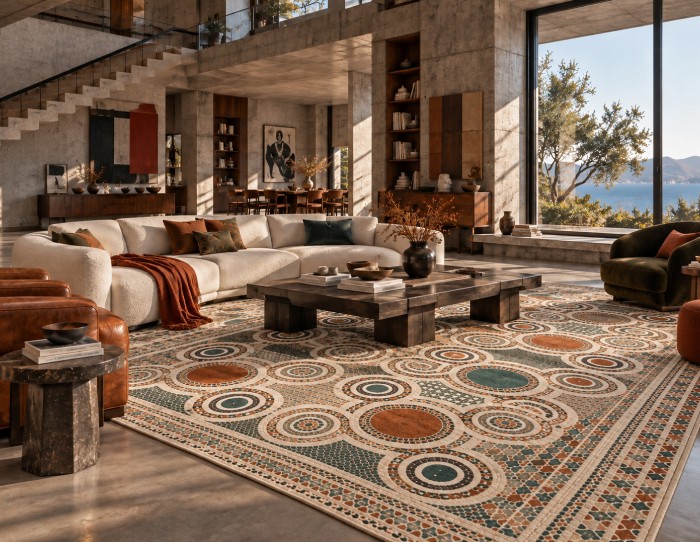
Tone matters on darker slabs, too. In a basement den or a north-facing room, an oatmeal rug bounces light back into the space without looking stark.
Go bigger than you think. At least the front legs of every seat should rest on the rug, which usually means 8x10 or 9x12 feet. For the full picture, here's why hard floors need a rug in the first place.
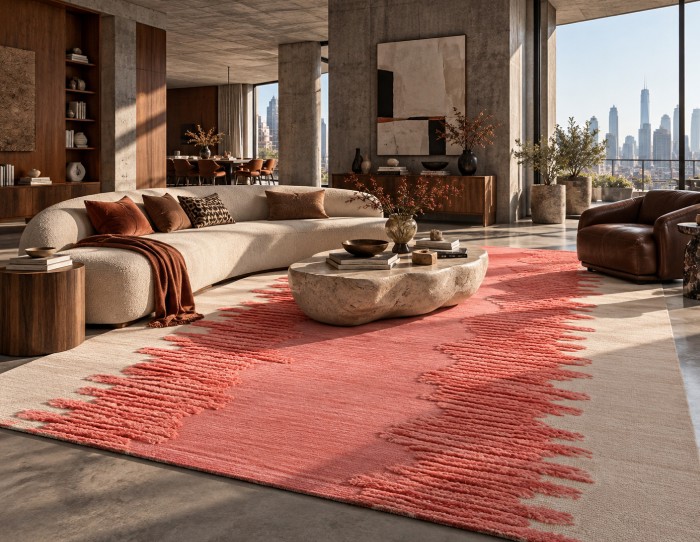
Brutalism Vs Minimalism (And Industrial, And Wabi-Sabi): What's The Difference?
Brutalism vs minimalism is the mix-up that comes up most. Industrial and wabi-sabi get pulled into the same conversation. They're related, but they aren't the same.
-
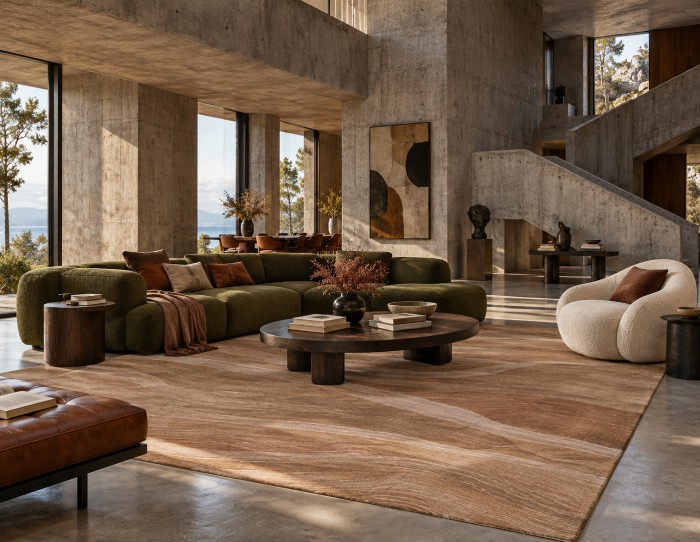
Brutalism is about mass and rawness. Heavy forms, exposed concrete, materials left honest. It wants a rug with a deep pile and visible texture.
-
Minimalism is about reduction: fewer objects, clean surfaces, lots of space. A flatweave rug suits it best because it stays low and quiet.
-
Industrial is about exposed utility. Brick, steel beams, and factory fittings, often in converted warehouses. A handwoven rug with more pattern holds its own against all that metal.
-
Wabi-sabi is about imperfection and age. Where brutalism feels raw, wabi-sabi feels weathered. A wabi-sabi rug leans faded and irregular, closer to worn than new.
Also read: How Wabi Sabi Style Embraces Imperfection Like Never Before?
Where To Start
If you're living with concrete, don't fight it. Give it a partner.
Start with your biggest room and its biggest soft surface. Look for undyed tones and a pile you can see from across the room.
Still weighing tones? This guide to choosing a neutral rug is a good next read.
Then walk on it barefoot. You'll know.
Explore handmade rugs with natural texture at Jaipur Rugs.
FAQs
What colors work in brutalist interiors?
Brutalist interiors work best in a restrained, earthy palette drawn from the materials themselves: stone, concrete, wood, and wool. Accents stay muted, like rust or olive. A grey wool rug is the easiest starting point, because it sits in the same family as concrete without matching it exactly.
Is an ivory rug practical on concrete floors?
Yes, if it's made of wool. Wool's natural oils help it resist spills better than most people expect. Keep an ivory rug away from entry points, blot accidents quickly, and it'll stay bright for years.
Can you put a rug on a polished concrete floor?
Yes. A rug adds warmth, softness, and sound absorption to polished concrete. Use a rug pad, since polished concrete is slippery. Dense wool works especially well because it holds its shape and insulates against the cold surface.
Is an undyed wool rug durable?
Yes. An undyed wool rug is just as durable as a dyed one. Hand-knotted versions can last for decades with basic care. Their natural, varied tones also hide everyday dust better than flat, solid colors.
What is soft brutalism?
Soft brutalism keeps brutalism's raw architecture but layers in warm, tactile materials. Wool, linen, timber, and low lighting balance the hardness of concrete and stone. The result is still bold, but it's a space you can actually live in.


Pic Credits
Jaipur rugs / Abil Dase
Share
-
 Facebook
-
 Twitter
-
 Email
Related Posts
-
30 October 2026
- ∙
-
8 Min Read
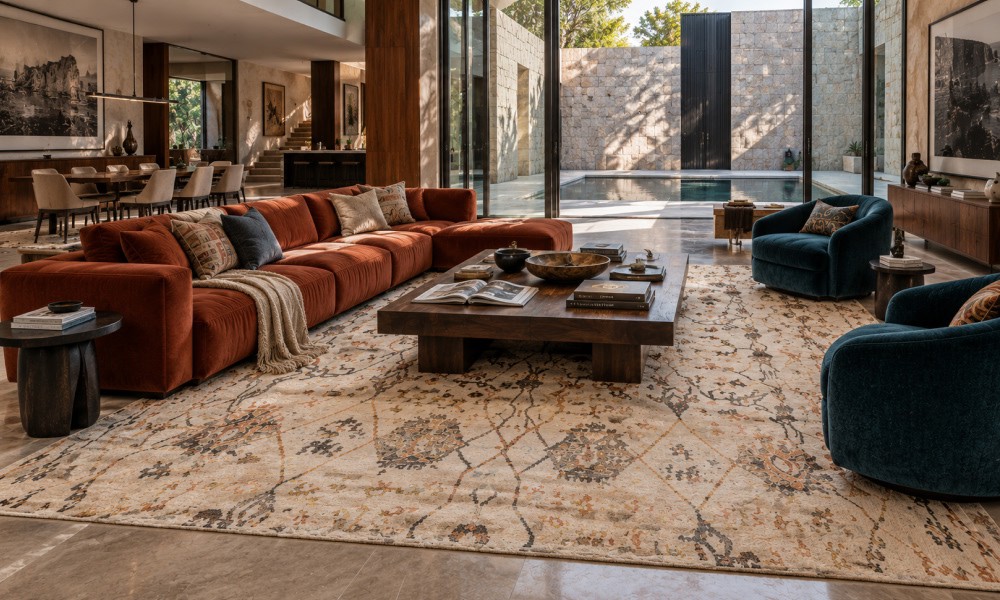
Formal Living Room Ideas That Start With the Rug
Learn how to choose the right rug for a formal living room, from selecting the correct size and placement to finding colours, patterns, and materials that suit your space. Explore traditional, transitional, and modern rug styles, along with tips on wool, silk, and hand-knotted rugs to create a living room that feels elegant, comfortable, and welcoming.
Read Article →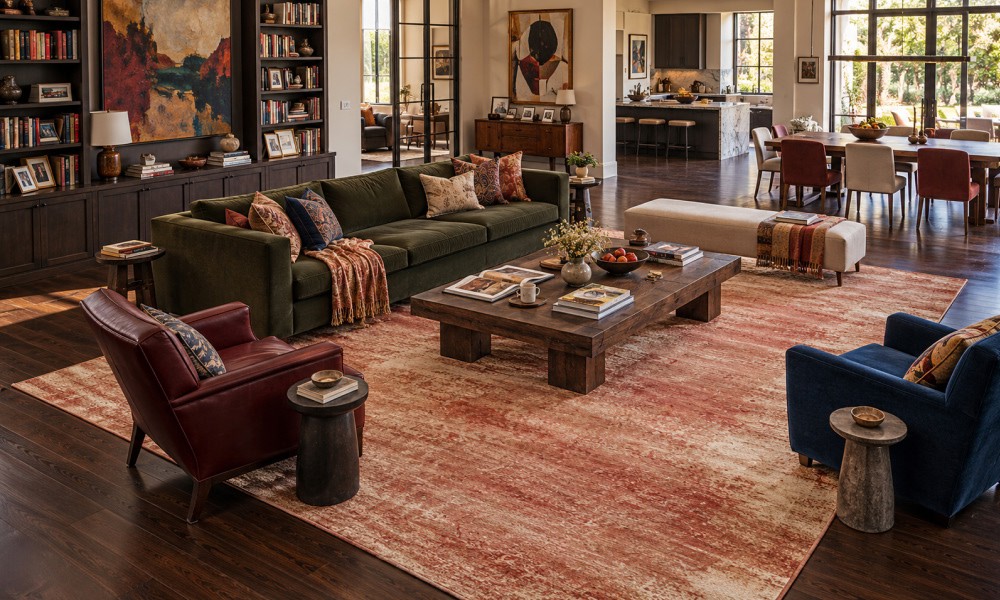
-
29 October 2026
- ∙
-
9 Min Read
Terracotta Rugs: How to Style 2026's Warmest Colour Trend
Terracotta rugs bring warmth, depth and earthy character to modern interiors. This guide explores the best colour pairings, from cream and sage green to dusty blue, along with styling ideas for living rooms and bedrooms. Learn how to choose the right rug size, compare traditional and contemporary designs, and understand why hand-knotted wool rugs offer lasting beauty and natural texture.
Read Article →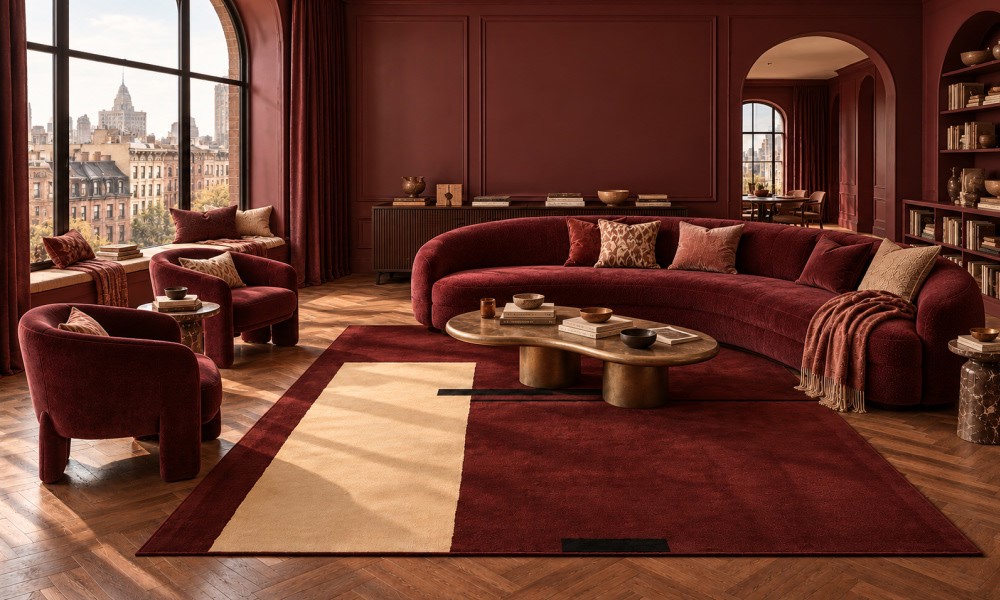
-
28 October 2026
- ∙
-
11 Min Read
Monochromatic Color Scheme: How to Design a One-Color Room That Never Feels Flat
A monochromatic color scheme uses different shades, tints and tones of one colour to create a cohesive interior. Learn how to style monochromatic living rooms, bedrooms and kitchens using colour, texture, furniture and rugs. Explore monochromatic colour scheme examples, understand the difference between monochromatic design and colour drenching, and find practical ideas for creating balanced, visually interesting spaces in modern homes.
Read Article →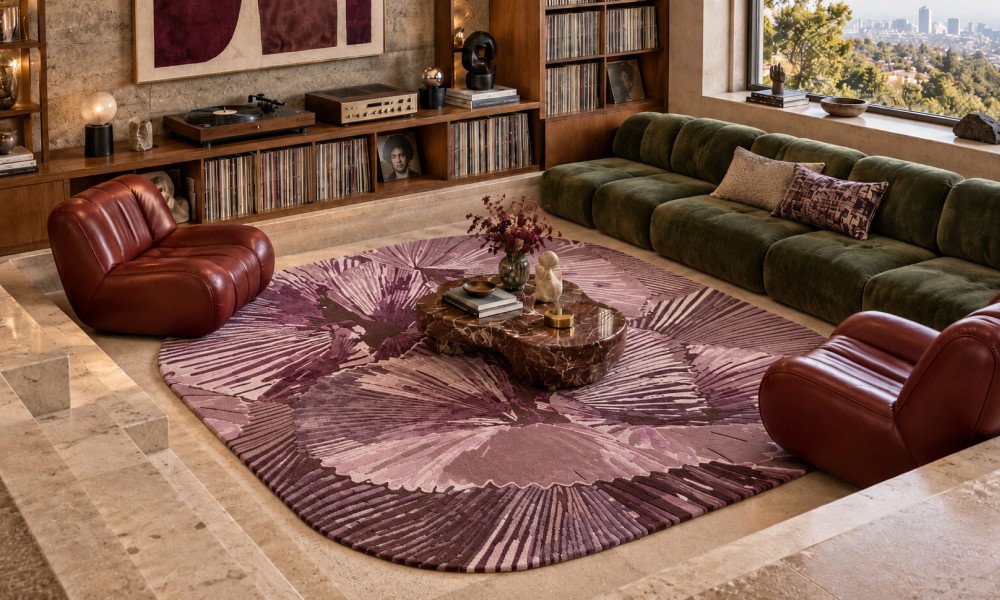
-
22 October 2026
- ∙
-
8 Min Read
Conversation Pits Are Back: How to Choose the Right Rug for a Sunken Living Room
Conversation pits are back, and the right rug makes or breaks them. This guide explains what a conversation pit is, how to get the look without a sunken floor, and which rug shapes suit pits. It covers sizing, low-pile safety near steps, hand-tufted versus hand-knotted options, custom shapes, and styling a 70s living room so it feels fresh, not dated.
Read Article →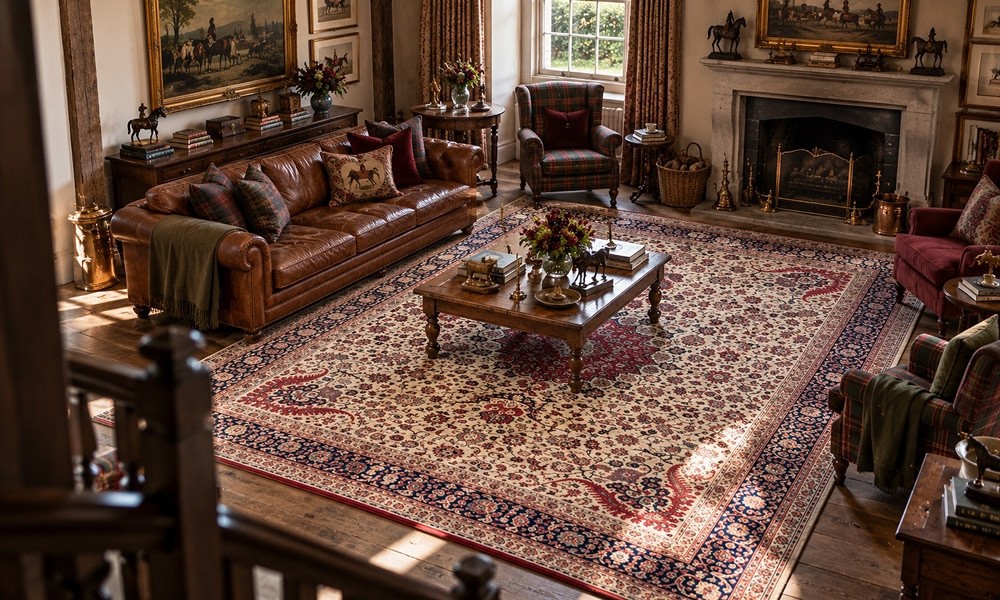
-
21 October 2026
- ∙
-
7 Min Read
Old Money Interiors: The Understated Rugs Behind the Look
Old money interiors look collected, not decorated, and the rug is often what makes them work. This guide covers the rugs that suit the style: hand-knotted wool, wool-silk, and antique-wash finishes. You’ll also find the muted colours that define it, room-by-room styling tips, how it differs from quiet luxury, and why heirloom craft matters for a home built to last.
Read Article →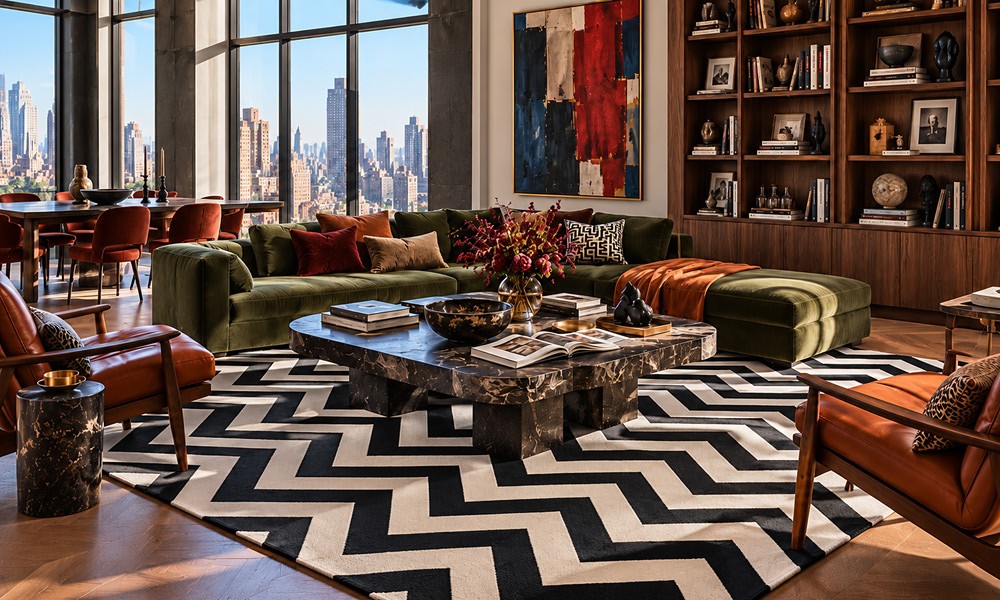
-
19 October 2026
- ∙
-
7 Min Read
Herringbone Rugs: A Designer Pattern for Timeless Rooms
Herringbone is one of the few rug patterns that never dates. This guide explains how herringbone differs from chevron, when to choose flatweave or hand-tufted, which pattern scale suits small and large rooms, and which direction the zigzag should run. It also covers room-by-room placement, pet-friendly choices, and simple weave-specific care, so your herringbone rug always looks designed.
Read Article →